
Last updated November 25, 2026
 Wrought iron
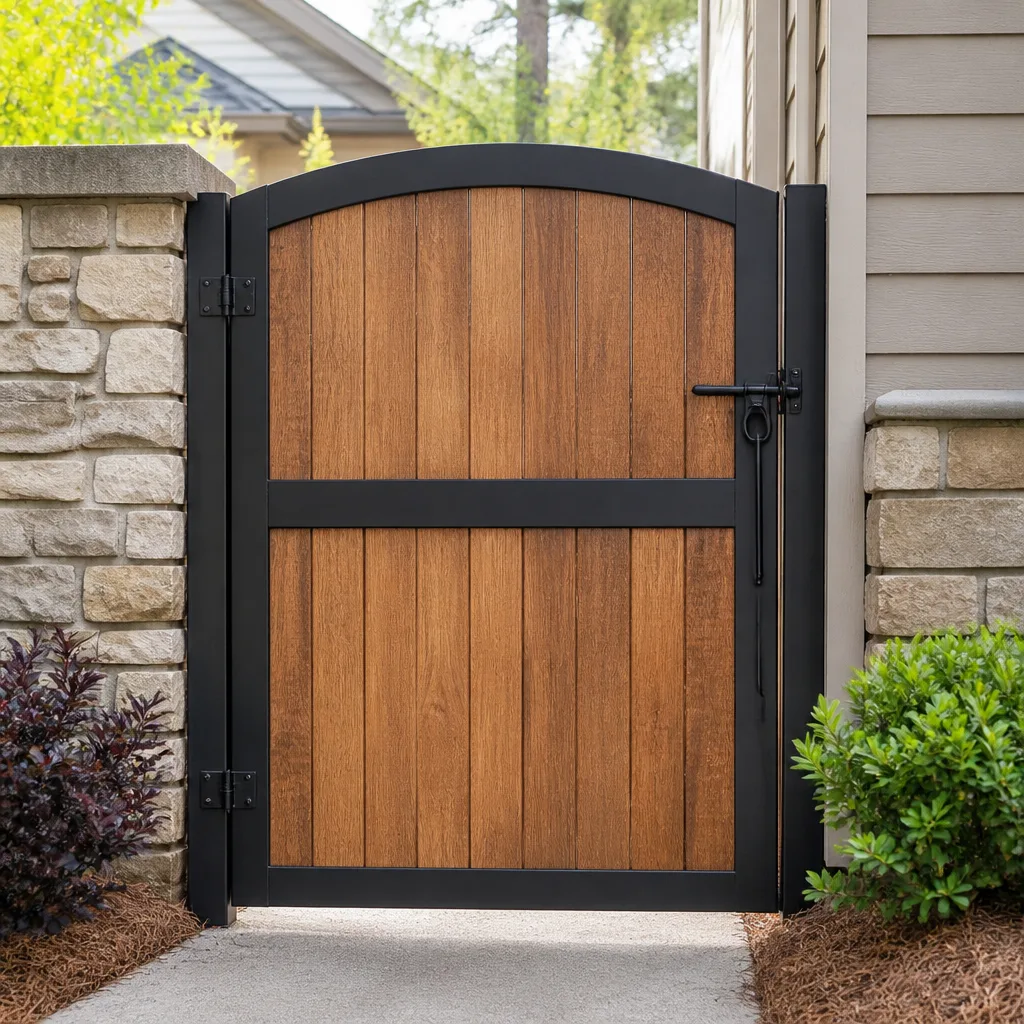 Wood & steel frame
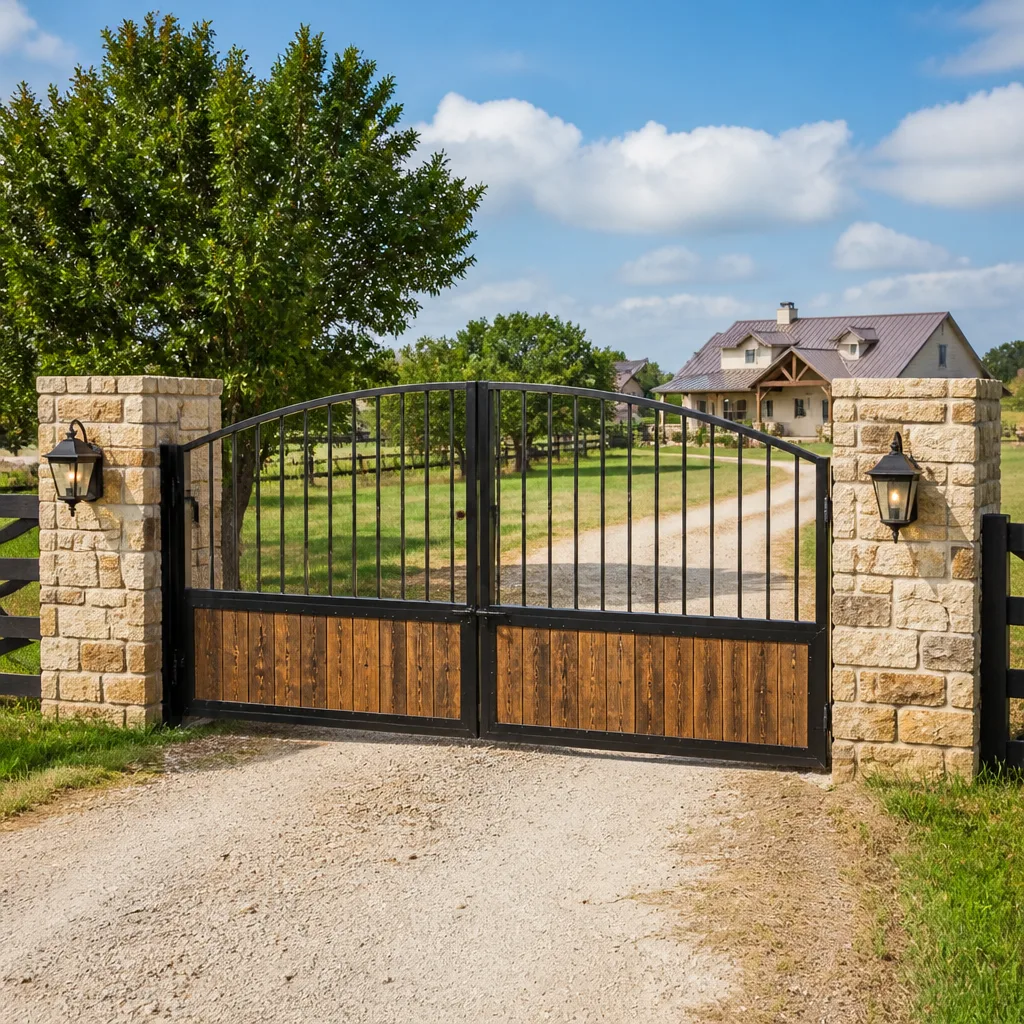 Farm & ranch
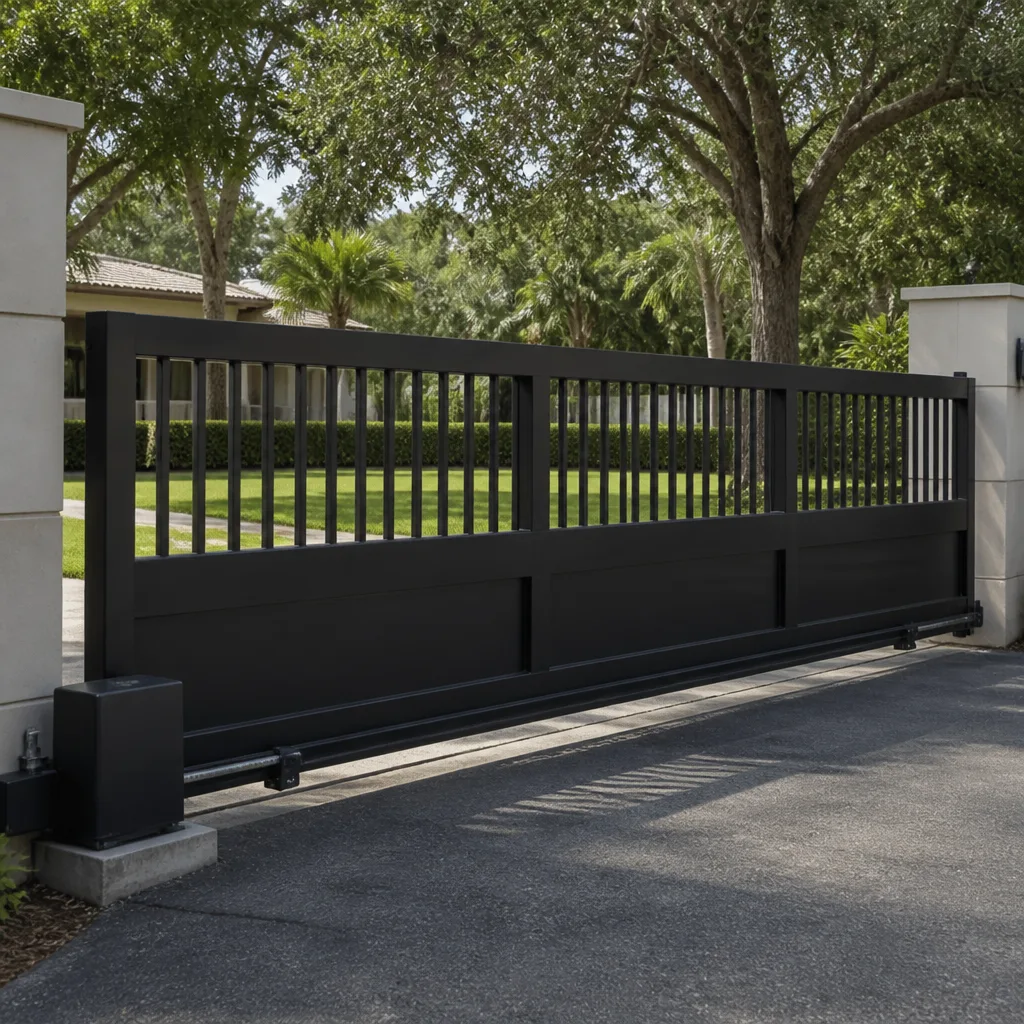 Sliding driveway gates
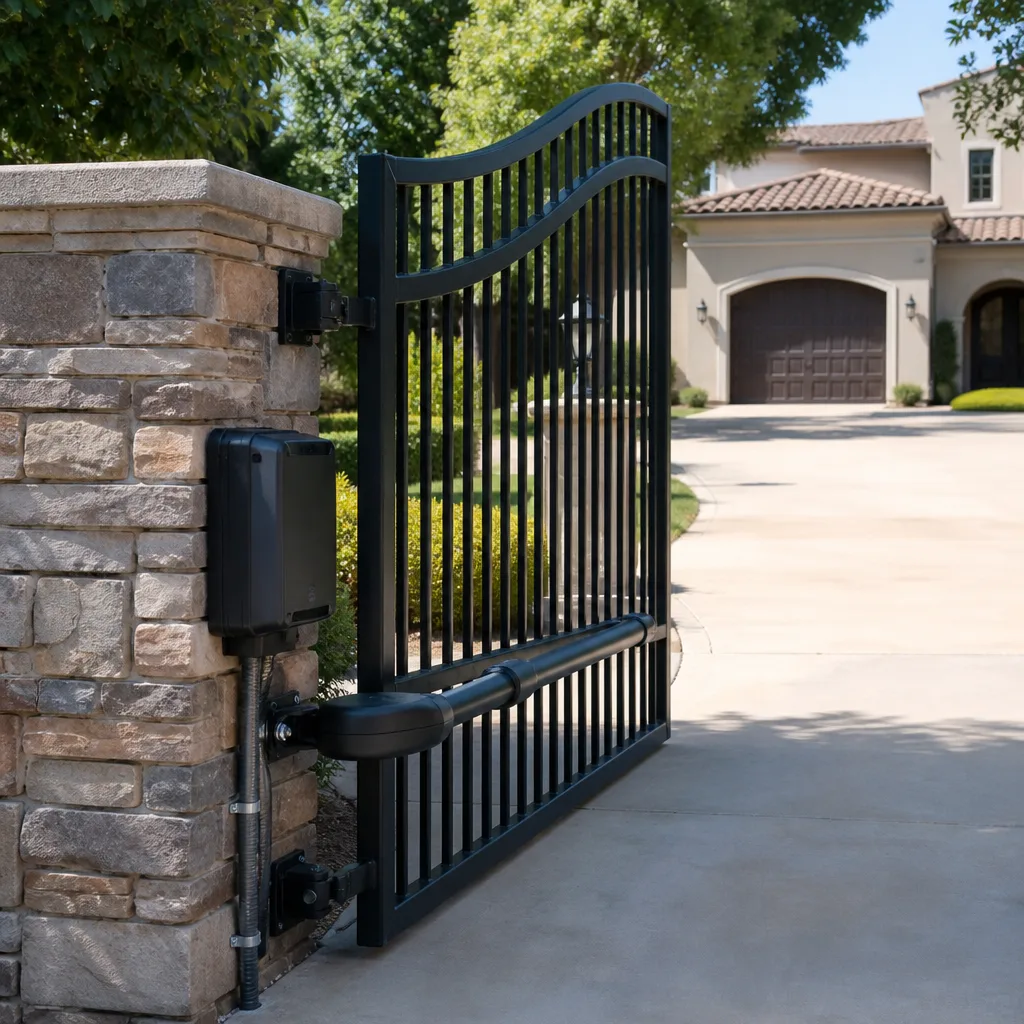 LiftMaster operators
Free on-site gate assessment - hinges, posts, and your LiftMaster or Nice gate operator checked before anything is quoted
The assessment is free and the quote is the invoice.
Get your free estimateGate Repair Emergency Preparedness Guide for Highland Park Homes
Most gate emergencies aren’t really about the gate. They’re about the fifteen minutes after it stops moving, when a homeowner realizes they don’t know where the manual release is, whether the gate failed open or closed, or what to tell a technician on the phone. Freezing rain and lake-effect wind off Lake Michigan turn a stalled operator into a blocked driveway fast, and the homeowners who come through it calmly are the ones who already know their system. This guide walks through both kinds of failure, the release steps by operator brand, what to have ready before you call, and the small kit that makes the whole thing shorter. It’s written from our work across Highland Park.
Quick Answer
A gate emergency in Highland Park comes down to one question: did your gate fail open or fail closed? A gate stuck open is a security problem, so secure it physically and cut power to the operator right away. A gate stuck closed is an access problem, so use your operator’s manual release before anything else. Know your brand and release method in advance, keep a small emergency kit near the gate, and call (833) 513-8561 to book a technician who can bring the right parts.
Styles & brands we work with
- Wrought iron
- Wood & steel frame
- Farm & ranch
- Sliding driveway gates
- LiftMaster operators
Table of Contents
- Fail Open vs. Fail Closed: The Two Gate Emergencies
- Manual Release Procedures by Operator Type
- How to Secure a Gate That Failed in the Open Position
- What to Have Ready Before You Call for Gate Service
- Storm Protocols for Highland Park Ice and Wind Events
- Building Your Gate Emergency Kit
- Weather Damage vs. Mechanical Failure: Telling Them Apart
- When to Call a Professional
Fail Open vs. Fail Closed: The Two Gate Emergencies
Every automated gate failure lands in one of two buckets, and they call for opposite responses. Fail closed means the gate is stuck shut: the operator won’t run, the arm won’t extend, or a limit has tripped and the gate sits in the closed position. Fail open means the gate won’t close: a sensor is blocked, a limit switch is confused, or the operator has lost a command and the gate rests open to the world.
Fail closed is inconvenient and sometimes a lockout. Fail open is a security exposure. That distinction changes what you do in the first minute. A gate stuck closed on a Highland Park driveway during a snow or ice morning means you can’t get the car out, and the fix usually starts with the manual release. A gate stuck open after a wind event means anyone can walk or drive in, and the fix starts with securing the opening and cutting power so the gate doesn’t move on its own while you sort it out.
One thing worth knowing before either happens: an automated gate fails in a particular direction based on how it’s built and wired, and most residential systems in Highland Park default to leaving the gate where it stopped when power drops. So the position it’s in when something goes wrong is usually the position it stays in. That’s exactly why the release method matters. Which brings us to the next section.
- Fail closed: gate stuck shut. Access problem. Start with the manual release.
- Fail open: gate stuck open. Security problem. Start with physical securing and power isolation.
- Fail mid-travel: gate stopped partway. Treat as fail open until you can inspect it, because a partly open gate isn’t secure.
Manual Release Procedures by Operator Type
A gate that won’t move on command is not always broken. Very often the operator has lost power, lost a sensor signal, or tripped a limit, and the gate wants to be released so you can move it by hand. The steps differ by brand, and the release should be learned before you need it. Here’s how it works on three operator families we work with regularly.
LiftMaster operators
- Locate the release mechanism on the operator housing, usually a lever or pull handle on the side or underneath the arm.
- Turn off power to the operator at the breaker if you can reach it safely. This prevents the gate from trying to run while you have your hands on it.
- Follow the release lever or handle according to the operator’s label, then move the gate slowly by hand. Don’t force a gate that resists; a jammed gate can be a mechanical problem, not an operator problem.
- Once the gate is free, leave it in a safe, secured position and note what happened so you can tell a technician.
Viking operators
- Viking swing and slide operators typically have a manual release key or lever on the unit; the keyed version releases the drive so the gate swings or slides freely.
- Cut power at the breaker first if it’s easily accessible.
- Release per the label, then move the gate by hand. A slide gate that won’t roll freely is a track or roller issue, not an operator issue.
Slide and swing operators generally
On most slide operators there’s a release on the motor housing that disengages the drive gear. On most swing operators there’s a release arm on the operator that lets the gate move freely. Both should be demonstrated to every adult in the household at least once, and that includes anyone who might be closing up a Highland Park property for a family member. If the release procedure is unclear, get it clarified before the next storm, not during one.
A caution here: heavy gate panels can crush, and a gate that drops or swings unexpectedly is genuinely dangerous. Never put your hands or body between the gate and a post or wall to stop it. The job in an emergency is to get the gate out of the way or secure it, not to muscle it into place. If you’re not sure of your release, leave the gate where it is and get help.
How to Secure a Gate That Failed in the Open Position
Fail open is the harder of the two to handle at home because there’s no release to pull; the gate is already out of the way, and your problem is that it should be back. The goal is a temporary hold that keeps the gate safe and secure until a technician arrives, plus isolation so the gate doesn’t move on its own.
Start with the operator. If the gate opens on its own, tries to close, or makes a repeated start-and-stop motion, cut power at the breaker and leave it off. Then secure the opening, and this depends on whether the gate is a swing or slide.
- Swing gates: close the gate by hand and secure it against a solid object or with a locking latch if the gate has one. A heavy chain and lock around the gate and a fixed post works as a temporary hold. On double gates, close both leaves and secure the center.
- Slide gates: slide the gate to the closed position by hand and drop a pin or lock into the track or into the gate’s own lock point. If the gate won’t stay, a strap or chain to a fixed anchor will hold it for a short time.
- Access-controlled entrances: if the gate has a keypad or intercom, disable the operator and leave the gate secured. Don’t dismantle the operator or reach into the housing to “help” it close. That’s how people get hurt.
One more point: if the gate failed open, don’t assume it’s a sensor everyone forgot to check. It could be a photoelectric safety edge with a damaged beam, a limit switch that slid, or a control board fault. All three need proper diagnosis. A tied-up gate is fine as a stopgap, but it isn’t a fix.
What to Have Ready Before You Call for Gate Service
The fastest gate call is the one where the caller already knows what they have. The information below is what a technician uses to decide whether to load parts or come out on a diagnostic visit. It’s the difference between getting the fix on the first trip and needing a second one.
- The operator brand and model. Brand matters most, and if you know the model it’s even better. We work with nine brands, including LiftMaster, FAAC, BFT, Linear, Viking, Ghost Controls, DoorKing, Elite, and Mighty Mule, so we can tell you straight away whether your system is one we service directly.
- What the gate is doing. Stuck open, stuck closed, partway, runs and stops, reverses on its own, or no response at all. Every one of those points to a different likely cause.
- Gate type. Swing or slide, and single or double. Panels that are heavy or old matter for a repair.
- Access features. Keypad, intercom, remote, phone app, badge reader, or loop sensor. Access control on a Highland Park home is often interlocked with the operator, and the tangle is sometimes the issue.
- Whether the gate is secured and the power is off. That tells us if anyone’s exposed while we schedule the visit.
- What changed before it failed. A storm, a power outage, a gate that’s been sluggish for weeks, or a click-and-nothing. That first clue saves diagnostic time.
Bring those to the call and the conversation is much shorter. It also lets us tell you whether the gate should stay secured until the visit. For the walk-through of what repair involves, see our gate repair page.
Storm Protocols for Highland Park Ice and Wind Events
Two weather patterns cause most gate emergencies here: freezing rain and ice, and high wind. They fail gates in different ways, and it helps to know which.
Ice and freezing rain are the obvious one. Water gets into a limit switch, a photo-eye, a release lever, or the lock, and freezes. The operator can’t complete a cycle, or the gate physically can’t swing because of ice on the hinge side. A gate that fails during or right after an ice event is usually weather-induced, and the fix is often clearing ice from the moving parts and letting the system dry out. That’s not a job to do with a hammer or by pouring hot water on the operator housing; that can crack housings and damage electronics.
High wind is subtler. A wind event can bend a gate frame, knock a swing gate off its hinge, drive a slide gate off its track, or trip a limit so the operator no longer knows where the gate is. Those are mechanical failures that need real repair, not just clearing. The weather only revealed them.
- Before a forecast ice event: run the gate through one full cycle and confirm the manual release works. Clear ice-melt from the swing path.
- After a wind event: walk the gate open and closed by hand if it’s safe and short. If it binds or drags, don’t run the operator. Stop and schedule service.
- After an ice event: if the operator is dead but the gate moves freely by hand, the problem may be electrical or electronic. Don’t bang on the housing to free the gate.
Building Your Gate Emergency Kit
This is not a toolbox. The point is to have the things that make a gate emergency shorter and safer without reaching for a wrench. Five items, kept close to the gate in a weather-tight box.
- The operator manual and the service paperwork. The manual tells you the brand, model, and manual release procedure for your exact gate. If you’ve had work done, keep the paperwork with it. Both get a technician to the right fix on the first trip.
- A heavy chain and padlock. Cut to the right length for your gate and post, and stored with a key kept somewhere you can reach in the dark.
- A bright flashlight and fresh batteries. A gate failure usually happens after dark. You need to see the release and the operator label.
- A sturdy strap or pin for a slide gate. Something that will hold the gate in the closed position temporarily when you can’t lock it.
- A quick note of your gate’s brand and the service number. Tape it inside the box. Call (833) 513-8561 and you’ll have a technician’s context before you’ve even reached the gate.
If your gate has access control, add a spare keypad code or key to the box. A homeowner or property manager who’s locked out of their own gate because the code is with someone who’s away is a genuine emergency, and it’s fixable if the information is stored with the gate.
Weather Damage vs. Mechanical Failure: Telling Them Apart
Distinguishing weather damage from a mechanical failure answers the practical question: does this need a technician today, or is there something safe you can do first?
A gate that moved fine yesterday and stopped during a storm is usually a weather failure. Ice in a photo-eye, snow packed against a hinge, or a release that’s frozen are all typical. The first move is to clear the obstruction safely, without prying at the operator or hitting it. If the gate runs a clean cycle after that, it may be fine. Watch it a few times; if it hesitates or reverses, that’s a sign of a stuck limit or a sensor issue that’s worth a look.
A gate that’s been slow, noisy, or stubborn for weeks and then stopped is a mechanical failure with a storm as the last straw. Signs include the gate drifting off its track, sagging at a hinge, scraping on the ground, or an operator that sounds labored. That’s not a release problem and not an ice problem. It needs the full system diagnosed, and operating it further can make it worse.
- Weather failure: sudden, tied to a storm, gate moves freely by hand once clear. Watch it and reassess.
- Mechanical failure: gradual warning signs, gate binds or drags. Stop operating it and schedule service.
- Access control failure: gate runs fine but the keypad, intercom, or remote won’t trigger it. That’s a programming or access-control issue for a specialist, separate from the gate’s movement.
When the gate motor itself is suspect, the walk-through of how we diagnose it lives on our gate motor & opener page. For systems where the entry point has a keypad, intercom, or automated entry for multiple units, the detail is on our gate access control page.
Common Mistakes to Avoid
- Forcing a gate that’s jammed. Pushing hard on a gate that won’t move can bend a hinge, snap a roller, or snap a gate frame. On a heavy panel, it can also hurt someone badly. If it resists, stop and let the technician diagnose it.
- Not knowing the manual release before a storm. The worst time to learn the procedure is standing in the cold at 10pm with a gate that won’t open. Walk through the release on a calm day with every adult in the household.
- Leaving a gate that failed open unsecured. A gate resting open is an open door. Secure it with a chain or lock, and cut power to the operator so it doesn’t close on its own. This is especially important for a property manager responsible for a Highland Park building’s entry.
- Prying or hammering the operator housing. Clearing ice around the gate is fine. Banging on the housing, pouring hot water on it, or reaching inside is not. It damages the electronics and can get you hurt.
- Calling without the brand or model. A technician can bring the right parts only if they know what you have. A brand-level detail saves a visit. “It won’t open” doesn’t.
- Ignoring a gate that’s been slow or noisy for weeks. The slow gate and the noisy gate are telling you something. Deal with them before a storm finishes the job.
- Assuming the gate is a sensor problem. A gate won’t close for a lot of reasons beyond the photo-eye. A limit switch, a control board, a damaged safety edge, or a power fault all look similar. Let a specialist diagnose it.
See the difference
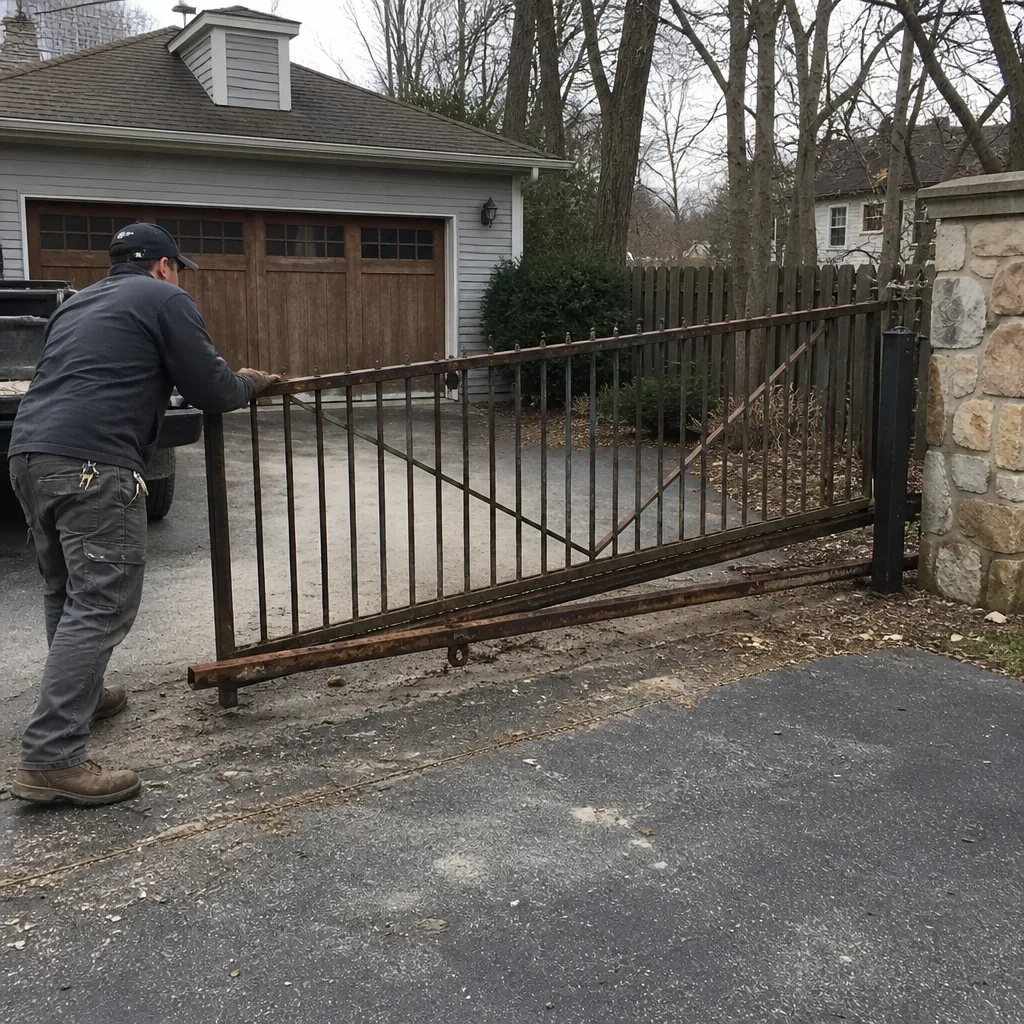 Before
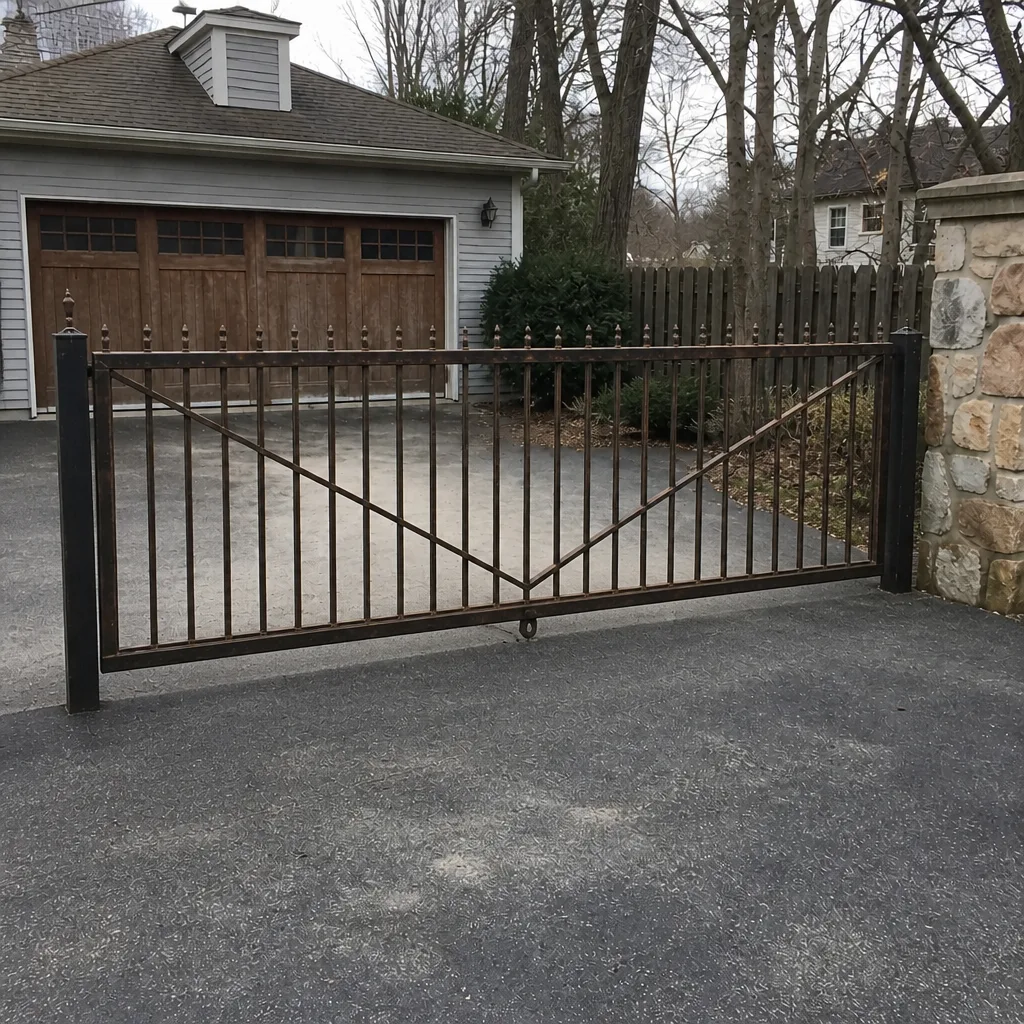 After
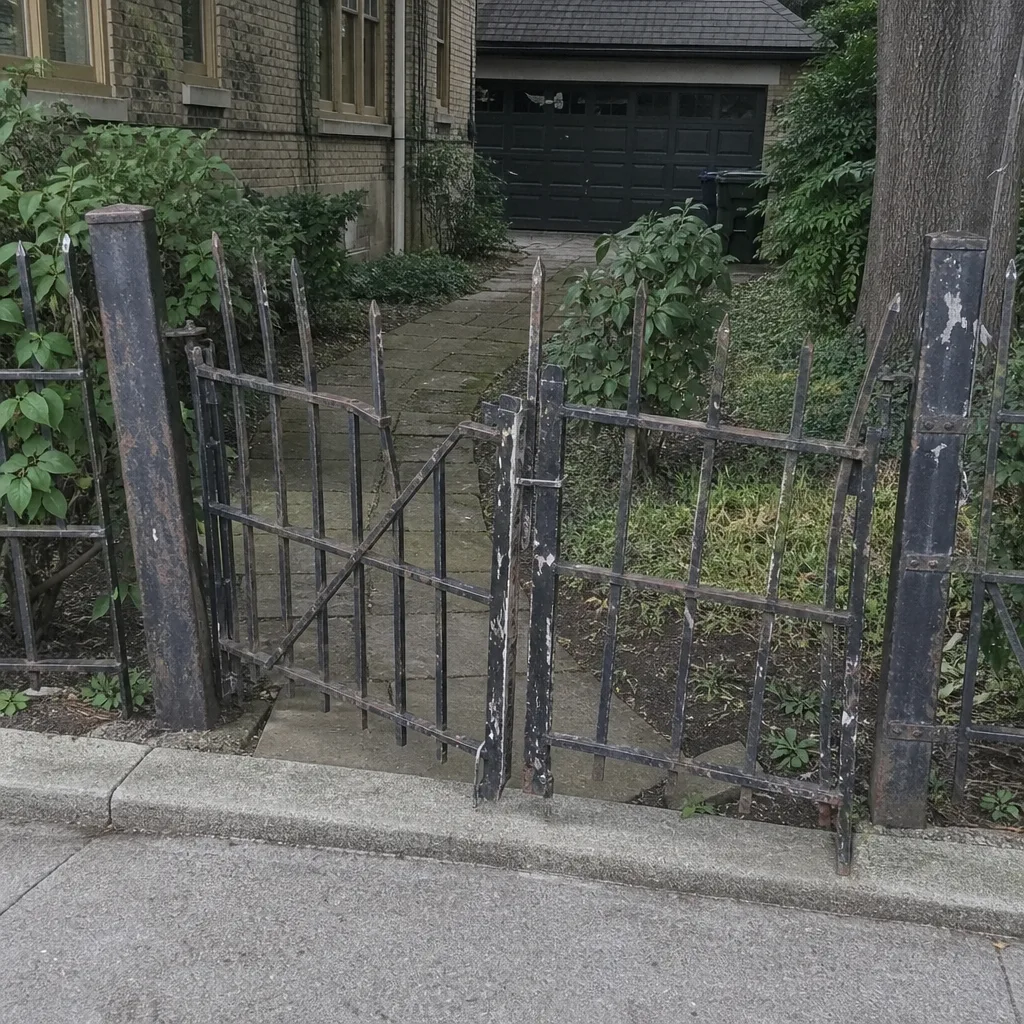 Before
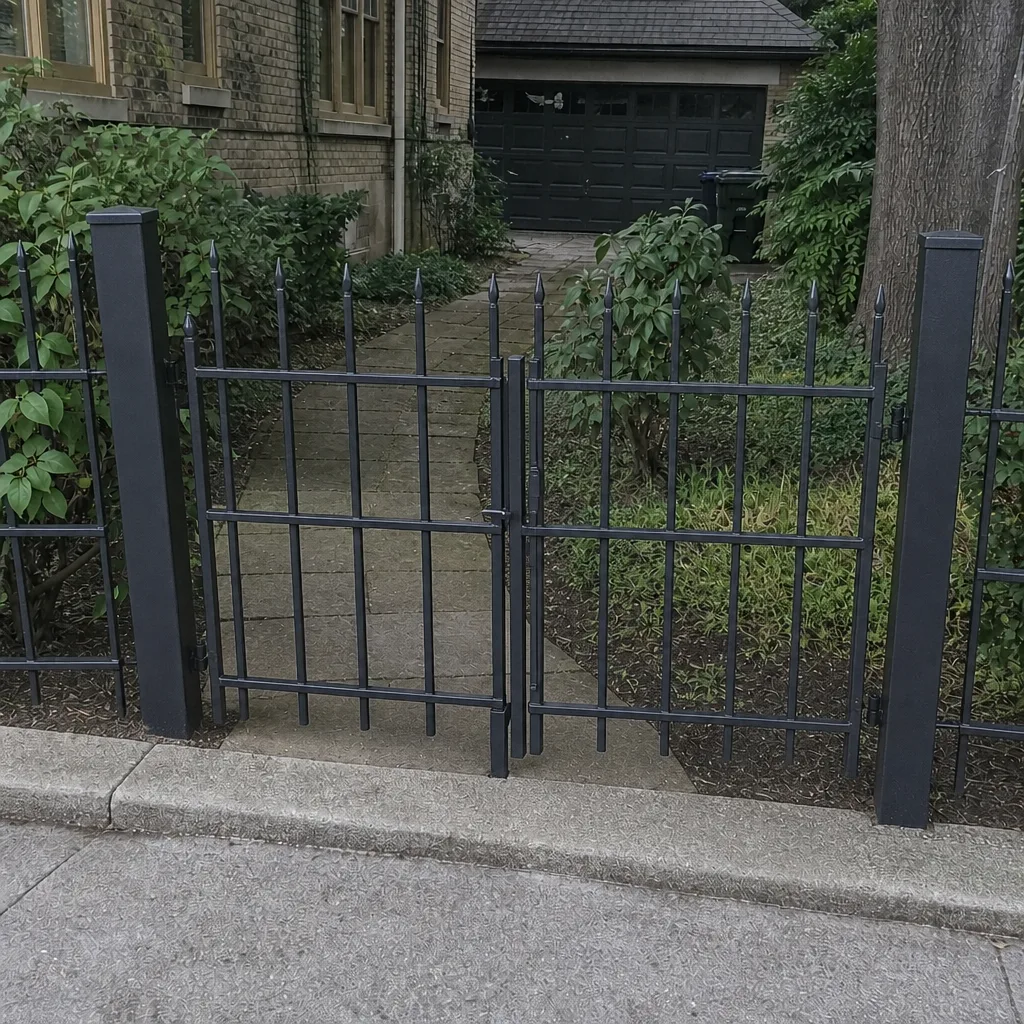 After
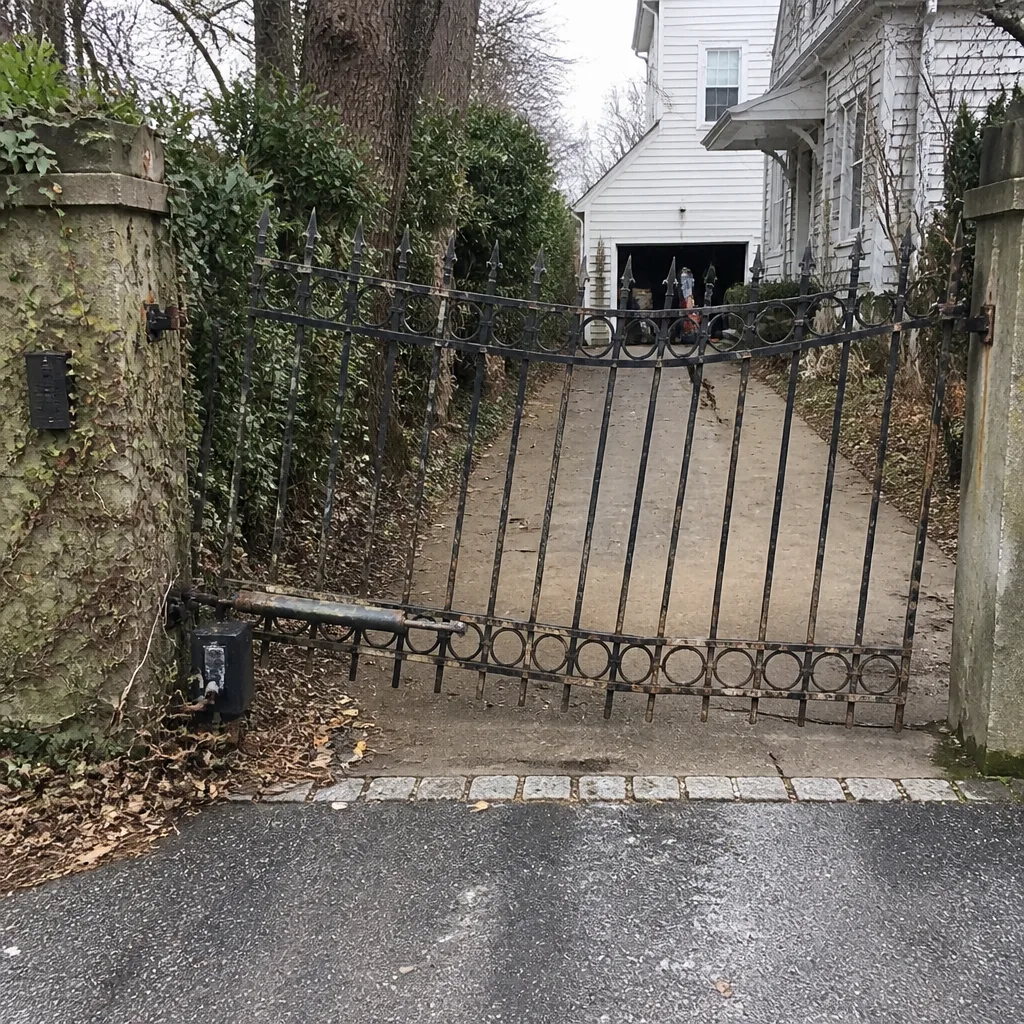 Before
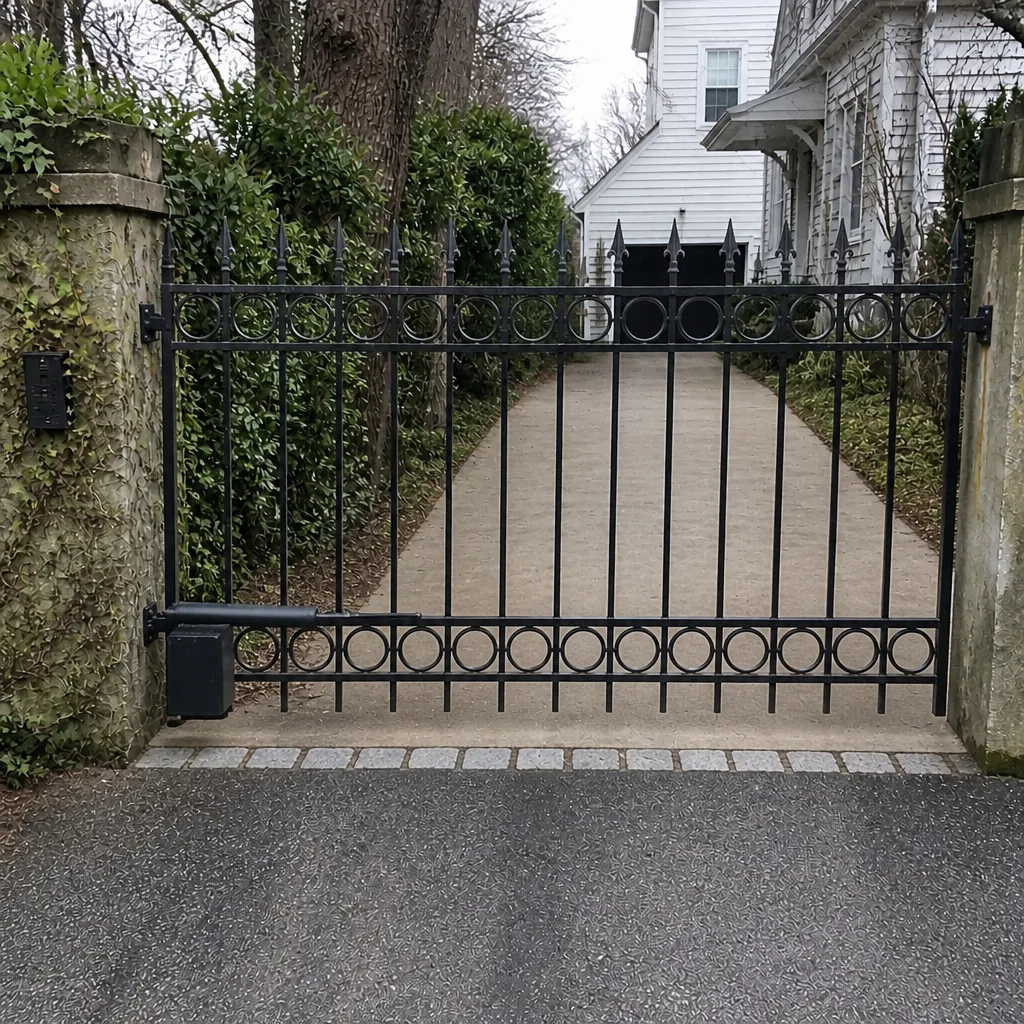 After
When to Call a Professional
Call a technician when the gate won’t move at all and the manual release doesn’t free it, when the gate failed open and you can’t secure it, or when the operator housing is sparking, smoking, or tripping a breaker. Also call when a gate that’s been sluggish for weeks stops or a slide gate comes off its track. Reaching inside an operator or loosening a safety device yourself can create a crush hazard on a heavy gate, which is why those jobs belong with a specialist. We work on LiftMaster, FAAC, BFT, Linear, Viking, Ghost Controls, DoorKing, Elite, and Mighty Mule, plus access control and full gate installation. Highland Park Gate Repair Pros offers free estimates in Highland Park – call (833) 513-8561 to schedule. We answer 24/7. Fast dispatch from 7am to 7pm, Sunday through Friday. Our technicians have up to 11 years of experience.
Frequently Asked Questions
First check whether the operator has power and whether a safety edge or photo-eye is obstructed, then use the manual release to move the gate by hand if the operator won’t run. If the gate moves freely by hand after release, the problem is likely the operator or its controls, not the gate itself. If it binds, stop forcing it and book a technician. Call (833) 513-8561 for an exact quote – estimates are free.
The exact steps depend on the operator brand and model, but every manual release follows the same pattern: cut power at the breaker if you can reach it safely, locate the release lever or keyed handle on the housing, follow the label to disengage the drive, then move the gate slowly by hand. Learn the release on your specific unit before you need it, because a brand-level demonstration takes minutes and a frozen gate doesn’t wait.
A gate that fails open is a security problem: it’s resting out of the way and anyone can enter. Secure it physically and cut power to the operator. A gate that fails closed is an access problem and usually a release job. Treat a gate that stopped partway as fail open, because it isn’t secure until you’ve sorted it.
Yes. Repair visits cover the operator, the motor, the safety edges, and the wiring that feeds them. On an access-controlled gate we also handle keypads, intercoms, remotes, and multi-unit entry configurations, which often fail separately from the mechanical gate. If the reason your gate won’t move is a power or control fault rather than the gate itself, that’s covered too.
Have your operator’s brand and model, the gate type (swing or slide, single or double), what the gate is doing now, whether it’s secured, and what changed before it failed. That lets a technician decide whether to bring parts or diagnose on site, and it shortens the call considerably. Call (833) 513-8561 – estimates are free.
An ice-storm gate failure is usually weather-induced: ice in a limit switch, a frozen release, or snow packed against a hinge. Those are often cleared, but they can also hide a mechanical issue that the storm only exposed. A mechanical repair is a full system diagnosis. We treat both on the same visit, so tell the person on the phone whether the gate was already slow or noisy before the storm.
The Bottom Line
Gate emergencies in Highland Park split into fail open and fail closed, and the first move depends entirely on which one you’re facing. Secure a gate that failed open and cut power to it; release a gate that failed closed and stop if it binds. Know your operator’s brand and release method before a storm, not during one. Keep the manual, a chain and lock, a flashlight, a strap, and your service number in one box near the gate. Then, when the gate stops, the call is short and the fix lands on the first visit. We handle repair, motors, access control, and installation on all nine brands we work with, so a call covers the whole system. Highland Park Gate Repair Pros offers free estimates in Highland Park – call (833) 513-8561 to schedule. We answer 24/7. Fast dispatch from 7am to 7pm, Sunday through Friday.
If you’d like to see the full range of what we handle in the community, start at Highland Park Gate Repair Pros.
Written by the team at Highland Park Gate Repair Pros.