
Last updated November 25, 2026
 Wrought iron
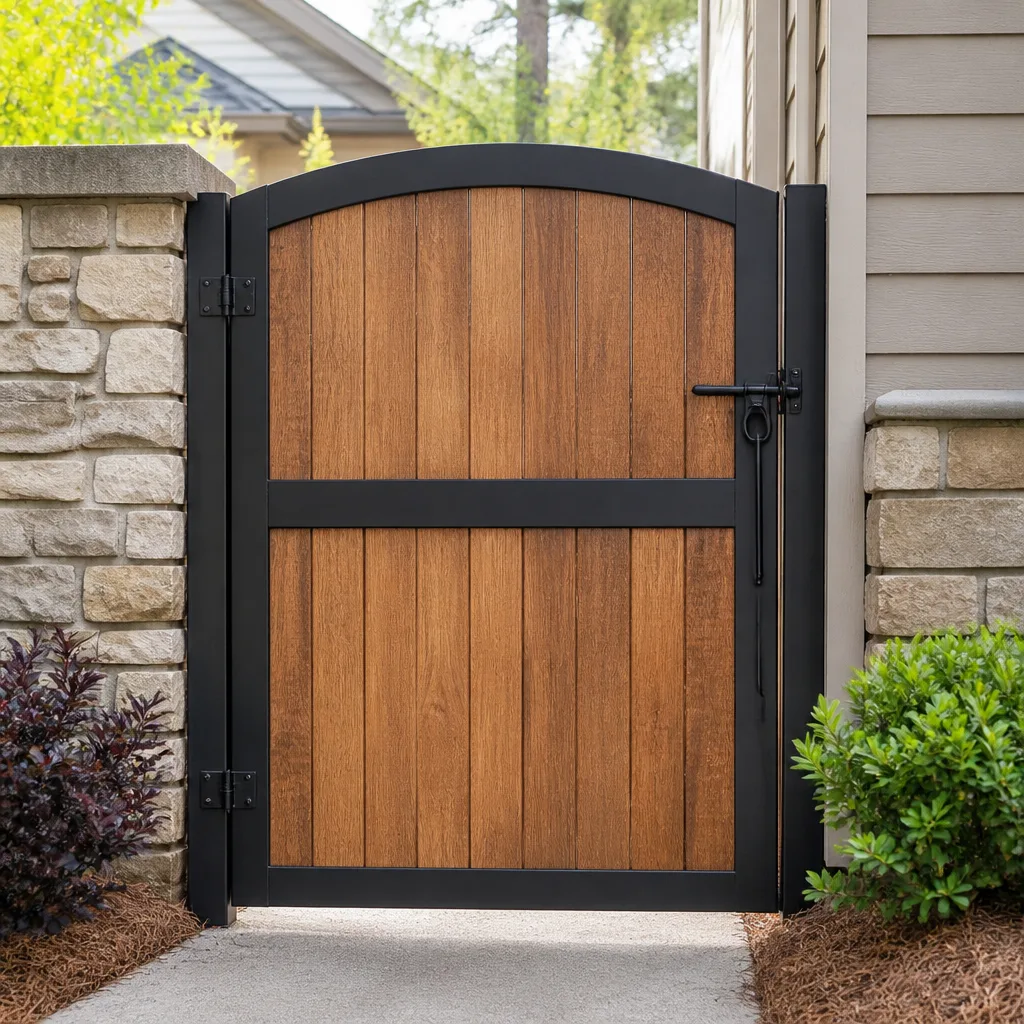 Wood & steel frame
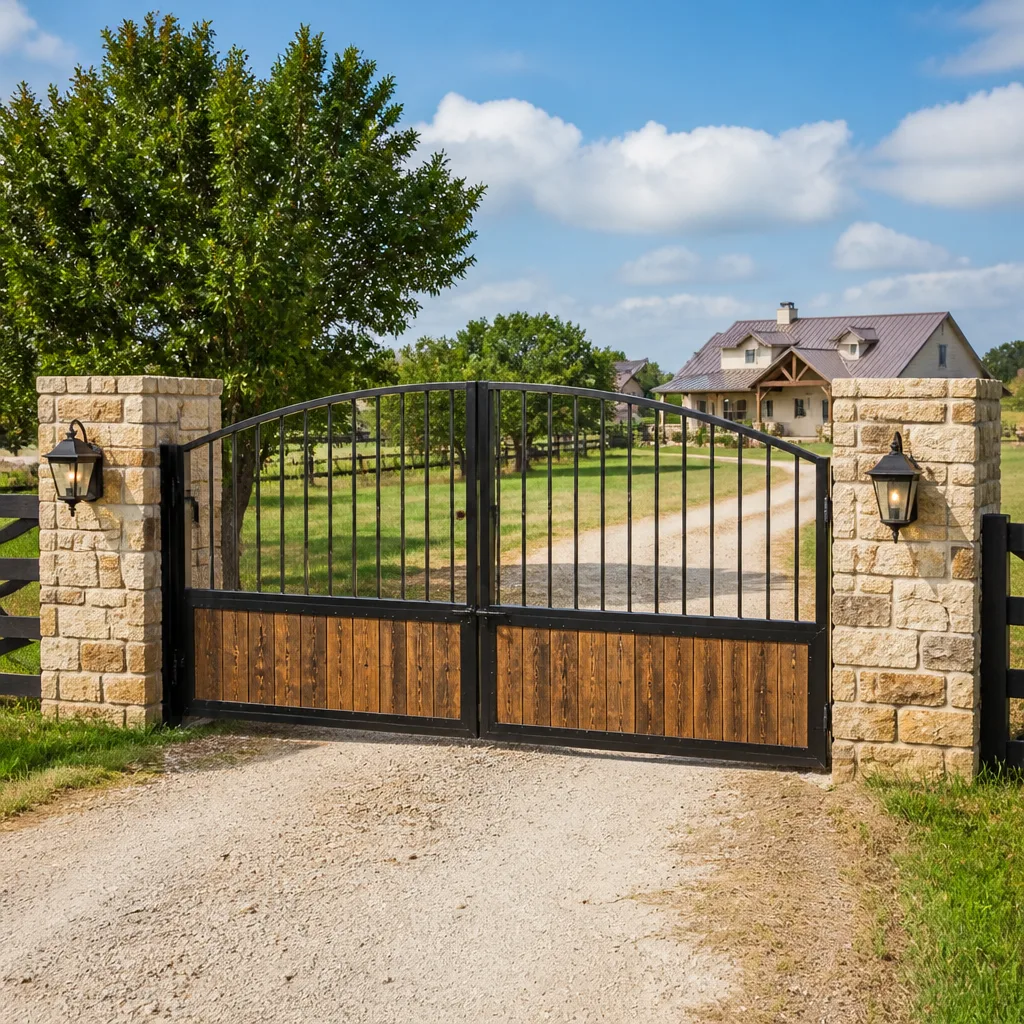 Farm & ranch
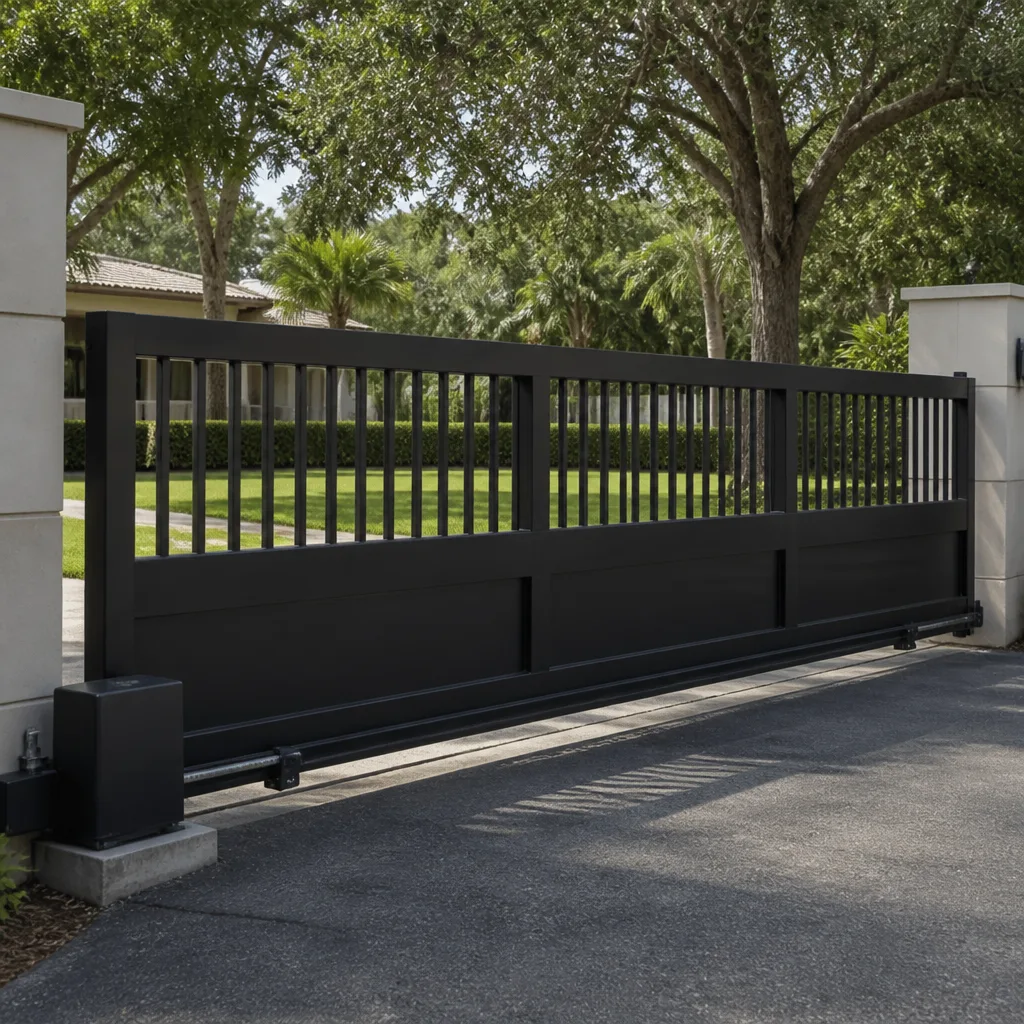 Sliding driveway gates
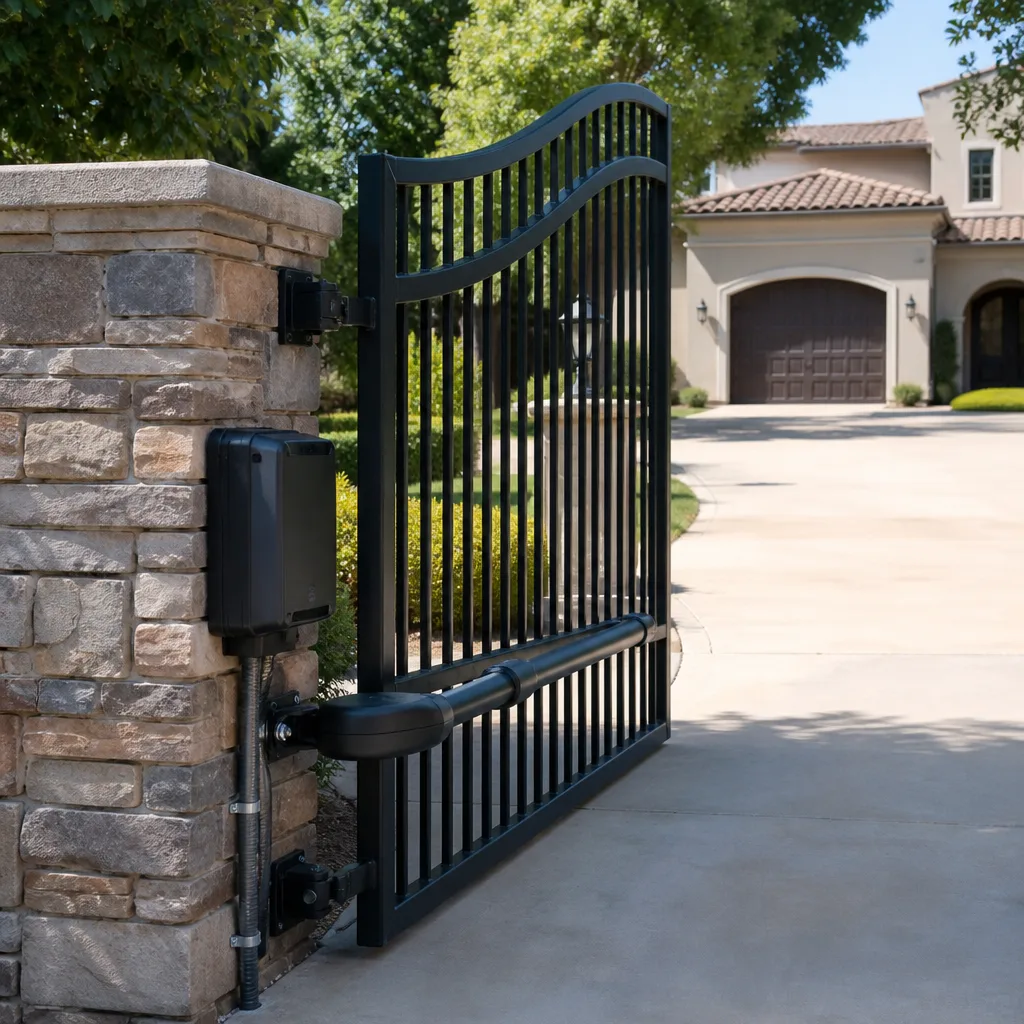 LiftMaster operators
Free on-site gate assessment - hinges, posts, and your LiftMaster or Nice gate operator checked before anything is quoted
The assessment is free and the quote is the invoice.
Get your free estimateDIY vs Professional Gate Repair: The Highland Park Homeowner’s Decision Guide
Replacing a dead backup battery in a gate operator is a twenty-minute job you can do with a screwdriver and a little patience. Adjusting the entrapment-protection sensor threshold on that same operator is a compliance issue under UL 325, and the hardware looks nearly identical. That gap between a task that is genuinely yours to handle and one that carries real liability is where most Highland Park homeowners get into trouble. A gate is a machine with a motor, a control board, safety sensors and a power connection, and not every part of it should be touched by whoever happens to own the property. This guide draws that line clearly, so you know exactly what is safe to take on yourself, what voids a warranty the moment you open the housing, and what a professional repair actually costs compared to a DIY attempt that has to be redone. We work on gates across Highland Park every week, and we’ve seen what happens when the line gets blurred.
Styles & brands we work with
- Wrought iron
- Wood & steel frame
- Farm & ranch
- Sliding driveway gates
- LiftMaster operators
Quick Answer
Some gate repairs are safe and legal for a Highland Park homeowner to do themselves, including battery replacement, keypad battery swaps, remote re-pairing, visual inspections and clearing debris from the gate’s path. Anything involving the motor, the control board, entrapment-protection sensors, or the 120-volt power connection should be handled by a trained gate technician, not because homeowners lack skill, but because those parts create liability and often void the manufacturer’s warranty the moment an unqualified person opens the housing. The safest rule: if the repair touches the motor, the safety system, or household wiring, call a professional.
Table of Contents
- Where the Line Actually Sits: Serviceable vs. Off-Limits
- The Gate Repairs That Are Genuinely Yours to Do
- How DIY Repairs Void Operator Warranties
- UL 325 Entrapment Protection: Why This Isn’t a DIY Call
- The Pre-Call Diagnostic That Saves You Money
- DIY Parts-and-Time vs. Professional Repair: The Real Math
- Common Mistakes to Avoid
- When to Call a Professional
- Frequently Asked Questions
- The Bottom Line
Where the Line Actually Sits: Serviceable vs. Off-Limits
The DIY question for a gate is not really about how handy you are. It’s about which parts of the system create legal exposure, safety risk, or a warranty breach the moment someone unqualified handles them. In our experience, the cleanest way to think about it is a simple split: exterior, user-facing parts on one side and the motorized, energized, safety-critical parts on the other.
Here’s the split we use when we talk with a Highland Park homeowner on the phone. Everything on the “safe” list involves no tools beyond a screwdriver, no power to the operator, and nothing that changes how the gate behaves around a person or a vehicle. Everything on the “off-limits” list involves either the control board, the safety system, or line voltage.
Genuinely safe for a homeowner
- Replacing the backup battery in the operator housing per the manufacturer’s instructions
- Swapping batteries in a wireless keypad or intercom
- Re-pairing a remote control to the operator using the manufacturer’s documented pairing sequence
- Clearing leaves, gravel, snow and debris from the gate’s travel path
- Visual inspection of hinges, rollers, chains and tracks for obvious wear
- Lubricating hinges and rollers with the lubricant the gate’s manufacturer specifies
- Resetting a tripped household circuit breaker that feeds the operator
Requires a trained gate technician
- Diagnosing or replacing the control board
- Adjusting, relocating or bypassing entrapment-protection sensors
- Any work on the 120-volt power run to the operator
- Motor replacement, gear and drive-train repair
- Replacing a slide-gate track, carriage or v-wheel assembly
- Access-control programming for openers, intercoms or keypads that won’t take a new code
- Anything that requires opening the sealed portion of the operator housing on a warranted unit
Note that the safe list is short and specific. That’s deliberate. On a gate, the safe DIY surface area is genuinely narrower than on a garage door or a furnace filter. A gate has an operator that a manufacturer stands behind, and that guarantee has conditions.
The Gate Repairs That Are Genuinely Yours to Do
The homeowner-serviceable part of a gate is real, and it’s worth doing carefully before you ever pick up the phone. When a gate stops responding, a surprising share of calls we take in Highland Park turn out to be something on this short list. Doing these correctly is the difference between a quick fix and an unnecessary service visit.
Here’s the sequence we recommend when a gate won’t open, in order. Each step takes a few minutes and eliminates one category of cause before you call anyone.
- Check the power. Is the operator showing any light at all? If the control board is dark, check the breaker that feeds the operator’s circuit. A tripped breaker looks identical to a dead operator from a distance.
- Check the backup battery. Many operators run on battery backup during an outage, and a battery at the end of its life can disable the gate entirely. If your operator’s manual documents a battery test or replacement procedure a homeowner can perform, follow it exactly.
- Test the remote. If the wall control works but the remote doesn’t, the problem is almost always the remote’s battery or its pairing, not the operator. Re-pair using the manufacturer’s documented sequence and see if the gate responds.
- Clear the path. A single stone or an ice dam in the gate’s swing or slide path will trip the reverse function. Clear it, then test the gate’s travel end to end.
- Walk the hardware. Hinges, rollers and slide-gate carriages wear visibly. A sagging gate that drags on the ground will eventually stall the motor. Lubricate what the manufacturer says to lubricate and note anything that looks bent or loose.
If those five steps clear the fault, you’re done and you’ve saved yourself a service call. If they don’t, you now have specific information about which part of the system is failing, which is exactly what you’ll need for the next section. For the parts of a gate we service directly as a shop, our gate repair work starts with the same five steps before anything gets opened.
How DIY Repairs Void Operator Warranties
Here is the part of the DIY conversation most homeowners never hear before they pick up a wrench. Gate operator warranties are not just about defects in materials. They almost all contain language that limits coverage to installation and service performed correctly, and many explicitly exclude damage caused by improper installation, adjustment, or repair by anyone other than a qualified technician. That language appears across brands, from residential units like a Mighty Mule to commercial-grade LiftMaster and FAAC operators, and it is the single biggest hidden cost of a DIY repair gone wrong.
The typical warranty exclusion is not subtle. It usually reads something like: the warranty is void if the unit is modified, improperly installed, or serviced by anyone other than a trained installer or service technician. What that means practically is that opening the sealed portion of the operator housing to “just take a look” or “just try replacing the board” can eliminate your coverage on the whole unit, not only on the part you touched. A board replacement you do yourself is cheap; a failed operator with a voided warranty can cost far more than the original repair would have.
There’s a second layer to this. When a Highland Park homeowner calls us with an operator that failed after a DIY attempt, the first question we have to answer is whether the unit is still under warranty at all. If it is, we route the claim through the manufacturer’s process, which is faster and cheaper for the customer. If it’s not, we quote a full replacement. That decision is made in the first five minutes of the visit, and it turns entirely on what the previous repair attempted. Our gate motor & opener work handles warranty claims routinely, and the difference the coverage makes is not small.
The practical rule for warranty protection: stays outside the housing unless the manual explicitly documents the procedure for a homeowner. Battery replacement and remote pairing usually qualify. Motor, gear, control board and sensor work almost never do.
UL 325 Entrapment Protection: Why This Isn’t a DIY Call
UL 325 is the standard that governs automated gate operators, and its central purpose is protecting people from being caught, crushed or struck by a moving gate. Every automated gate in Highland Park falls under it, whether it’s a driveway gate on a residential lot or an entry gate serving a multi-unit property. The standard requires two independent means of entrapment protection on a sliding or swinging gate operator: typically a primary means built into the operator (such as an inherent reversing feature) plus a secondary means like a photo-eye, an edge sensor or a gate-loop detector.
What that means for a homeowner is simple: the safety sensors are not a “leave well enough alone if it works” part of the system. They are the part of the gate that decides whether a child or a pet walking behind the gate gets hurt. Adjusting, moving or bypassing a photo-eye, an edge sensor or a reversing threshold is not a skill question. A homeowner with twenty years of electrical experience still should not be re-tuning the entrapment threshold on their own gate, because the point of the standard is that the system has been set up and verified to a known behavior by someone accountable for it.
The liability picture is equally direct. If an automated gate injures someone and the safety system was modified, bypassed, or wired by a party who wasn’t qualified to do it, that fact becomes the central question in any subsequent claim. A homeowner who bypassed a photo-eye to “make the gate faster” has created a documented exposure that no insurance policy is designed to cover. This is the one part of the decision guide where we don’t hedge: entrapment protection work belongs with a trained technician, full stop.
In our experience in Highland Park, the most common safety-system failures we see are photo-eye lenses fogged or blocked by landscaping, and edge sensors that stopped responding after years of weather without anyone noticing. Both look like “the gate is acting up” and both are solvable, but the fix is a technician verifying the whole entrapment system, not a homeowner guessing at which sensor is misbehaving. If your gate’s access control side needs the same care, that’s the gate access control side of our work, and it very often ties into the same safety configuration.
The Pre-Call Diagnostic That Saves You Money
The most valuable DIY contribution a Highland Park homeowner can make to a gate repair is not the repair itself. It’s the diagnostic before the call. A technician who arrives knowing the operator brand, the symptom, and what has already been tested can often arrive with the right parts and finish the job in one visit. A technician who arrives cold has to spend the first chunk of the visit gathering information that could have been gathered by phone.
Here is the diagnostic sheet we recommend. Write the answers down before you call, or have them ready when you dial:
- Operator brand and model. The manufacturer’s nameplate is usually inside or on the outside of the operator housing, and the model number is on it. Knowing whether you’re running a LiftMaster, a FAAC, a BFT, a Mighty Mule or another brand tells us immediately which failure modes to expect.
- Gate type. Sliding or swinging? Single or double leaf? Approximate width and weight if you know them.
- What the gate does when you try to open it. Nothing at all? Starts to move and stops? Moves halfway and reverses? Moves but makes a new noise? Each behavior points at a different subsystem.
- What you’ve already tried. Breaker, battery, remote, path clearing. Say which steps you completed and what happened.
- When it started. Right after a storm, right after a power outage, gradually over weeks, or suddenly one morning. The timing is diagnostic.
- Any safety sensor lights. Many operators have diagnostic LEDs that indicate photo-eye status. Note what they show.
- Access-control setup. Keypad, intercom, smartphone app, gate loop, or all of the above. Which one stopped working first?
That seven-item list is the difference between a call that ends in a fix and a call that ends in a second appointment. It’s also the reason we ask brand-specific questions up front. Our technicians have up to 11 years of experience across nine brands, so a nameplate and a symptom description lets us load the right diagnostic path before we arrive.
DIY Parts-and-Time vs. Professional Repair: The Real Math
Here’s the comparison most DIY guides avoid. The cost of a DIY gate repair is not just the part. It’s the part, your time, and the odds that the first attempt doesn’t fix the problem and you end up paying for the part plus a professional repair anyway. That last piece, the rework rate, is where the math usually stops favoring DIY on anything beyond the safe list above.
The table below shows which parts of a typical gate repair favor DIY and which don’t. The ranges are typical of what we see in the Highland Park area; the written estimate sets the final price, always quoted and agreed before any work starts.
Cost comparison by repair type
| Repair | Typical DIY cost | Typical professional cost | Who should do it |
|---|---|---|---|
| Backup battery replacement | Cost of the battery | Battery plus a service visit | Homeowner |
| Remote battery or pairing | Cost of the battery | Visit plus a small part | Homeowner |
| Debris clearing and lubrication | Cost of lubricant | Not usually needed | Homeowner |
| Photo-eye realignment or replacement | Do not attempt | Estimate quoted per job | Professional |
| Control board replacement | Part cost, often the wrong board | Estimate quoted per job | Professional |
| Motor or gear replacement | Rarely worth attempting | Estimate quoted per job | Professional |
| Access-control reprogramming | Do not attempt | Estimate quoted per job | Professional |
The trap in this table is that the DIY side of the lower rows looks cheaper on paper, right up until the rework rate kicks in. In our experience, the two DIY repairs we’re most often called in to correct are control-board replacements (wrong board, wrong revision, board damaged on installation) and photo-eye adjustments that turned out not to fix the actual problem. Both of those calls cost more than if the homeowner had called first, because we’re now diagnosing over the top of an incomplete repair.
The honest summary: DIY saves money on the safe list, and it costs money on anything below it. The reasonable middle ground is the diagnostic. Do the pre-call diagnostic yourself, call us with the answers, and let the analysis and the repair be done correctly the first time. Call (833) 513-8561 for a free estimate. We answer 24/7. Fast dispatch from 7am to 7pm, Sunday through Friday.
Common Mistakes to Avoid
These are the mistakes we see most often in Highland Park gate calls, in roughly the order we see them.
- Bypassing the photo-eye to “test” the gate. This seems like a harmless diagnostic, and it’s the single riskiest thing a homeowner can do to an automated gate. Leave the safety system intact, and if the gate won’t run with the sensors in place, that’s the symptom to report, not to work around.
- Opening the sealed operator housing on a warranted unit. Even a “look inside” can give the manufacturer grounds to refuse a warranty claim if the repair goes wrong later. If the unit is still under manufacturer warranty, call before you open anything.
- Replacing a control board without matching the revision. Boards look physically interchangeable and often aren’t, and a mismatched board can leave the gate in a worse state than the fault it replaced.
- Ignoring a slow, dragging gate because it still moves. A gate that drags on the ground or its track will eventually overload the motor or strip a gear. Highland Park’s freeze-thaw cycles can shift a gate’s footing slightly each winter, and a small misalignment compounds.
- Tightening or bending safety-sensor brackets to make the gate “line up”. Bending the bracket back a few degrees to “fix” a photo-eye alarm changes the sensor’s alignment to the gate, which is the thing the system is trying to protect. Realign only with the documented procedure, or call.
- Trying to reprogram a keypad or intercom without the original installer’s documentation. Many Highland Park homes are on their second or third keypad, with a second or third brand, and the original codes and channel assignments are long gone. Recovering those without the right diagnostic tool can take hours.
- Assuming a dead operator is a dead operator. A dark control board is often a tripped breaker or a failed backup battery. Check the simple causes first.
When to Call a Professional
If the fault involves the motor, the control board, the entrapment-protection sensors, the power run, or the access-control programming, it’s a call. If the gate is dragging, sagging, making new noises, reversing mid-travel, or failing to open only in certain weather, it’s also a call, because each of those symptoms points to a subsystem a homeowner can’t safely investigate without opening the operator or the wiring. And if the unit is still under manufacturer warranty, call first, because opening the housing yourself can void coverage you paid for.
Highland Park Gate Repair Pros offers free estimates in Highland Park. Call (833) 513-8561. We answer 24/7. Fast dispatch from 7am to 7pm, Sunday through Friday. Our technicians have up to 11 years of experience on the nine brands we work with every week: LiftMaster, FAAC, BFT, Linear, Viking, Ghost Controls, DoorKing, Elite and Mighty Mule. We specialize exclusively in gates. It’s all we do.
Frequently Asked Questions
Yes. Backup-battery replacement is one of the safest DIY gate repairs, and if your operator’s manual documents the procedure for a homeowner, follow it exactly. The battery is behind a service panel that opens without tools or with a single screwdriver, and a replacement takes minutes. If the battery is dead and the new one doesn’t bring the gate back, the next step is a call, because a dead operator with a fresh battery points to the control board or the power feed.
Often, yes. Most gate operator warranties from LiftMaster, FAAC, Viking, Mighty Mule and other brands include language that limits coverage to work performed by a qualified installer or service technician, and some explicitly exclude damage from improper adjustment or repair. The safest approach on any unit still under warranty is to call before you open the sealed housing. Our technicians have up to 11 years of experience with warranty claims on these brands, and we can tell you within minutes whether the unit is covered.
Because it’s a UL 325 safety matter, not a skill matter. The entrapment system decides whether a person or a pet behind the gate gets stopped or gets hurt, and it’s the system a manufacturer, an installer and an insurer all rely on to be set up and verified to a known behavior. Bypassing or retuning it yourself creates liability exposure that stays attached to the property and the homeowner. In our experience, the most common sensor faults in Highland Park are blocked photo-eye lenses and aged edge sensors, both of which a technician can verify system-wide and resolve in a single visit.
Pricing is set per job by the written estimate, always quoted and agreed before any work starts, so there’s no invoice surprise. The most useful thing you can do before calling is to have the operator brand and model, the symptom description and the pre-call diagnostic answers ready; that lets us arrive with the right part and often finish in one visit. Call (833) 513-8561 for a free estimate. We answer 24/7. Fast dispatch from 7am to 7pm, Sunday through Friday.
Sometimes, if you have the original manufacturer documentation for both the keypad and the operator and the exact code structure the installer used. In practice, many Highland Park homes are on their second or third access-control setup, often mixed across brands, and the original programming record is gone. In that case the programming is far easier to recover with the diagnostic tools a gate specialist carries than by trial and error. We work on access control across nine brands, so we can recover most setups in a single visit.
Start with the safe list: check the breaker that feeds the operator, check that the path is clear of storm debris, and check the remote battery. If the operator still won’t run, note whether the gate reverses mid-travel, whether any diagnostic LEDs are lit, and what the operator does when you press the wall control versus the remote. Then call (833) 513-8561. We answer 24/7. A gate that fails after a storm often has a tripped safety loop or a shifted sensor, both of which are quick to diagnose and repair on-site.
The Bottom Line
The DIY vs. professional question on a gate repair is not about skill. It’s about scope. Battery replacements, remote pairing, visible hardware checks and path clearing are yours, and doing them carefully saves money. Motor work, control-board work, access-control programming, power wiring and the entrapment-protection sensors are not, because they carry warranty consequences, liability exposure, or both, and the cost of a rework almost always exceeds the cost of the original repair. The most valuable DIY thing you can do on a Highland Park gate is the diagnostic before the call: have the brand, the model, the symptom and the steps you already tried ready to share. That single habit is the difference between one visit and three, and it’s the one every homeowner can do well. When the repair crosses the line, that’s our Highland Park Gate Repair Pros territory. Call (833) 513-8561. We answer 24/7. Fast dispatch from 7am to 7pm, Sunday through Friday.
Written by the team at Highland Park Gate Repair Pros.
See the difference
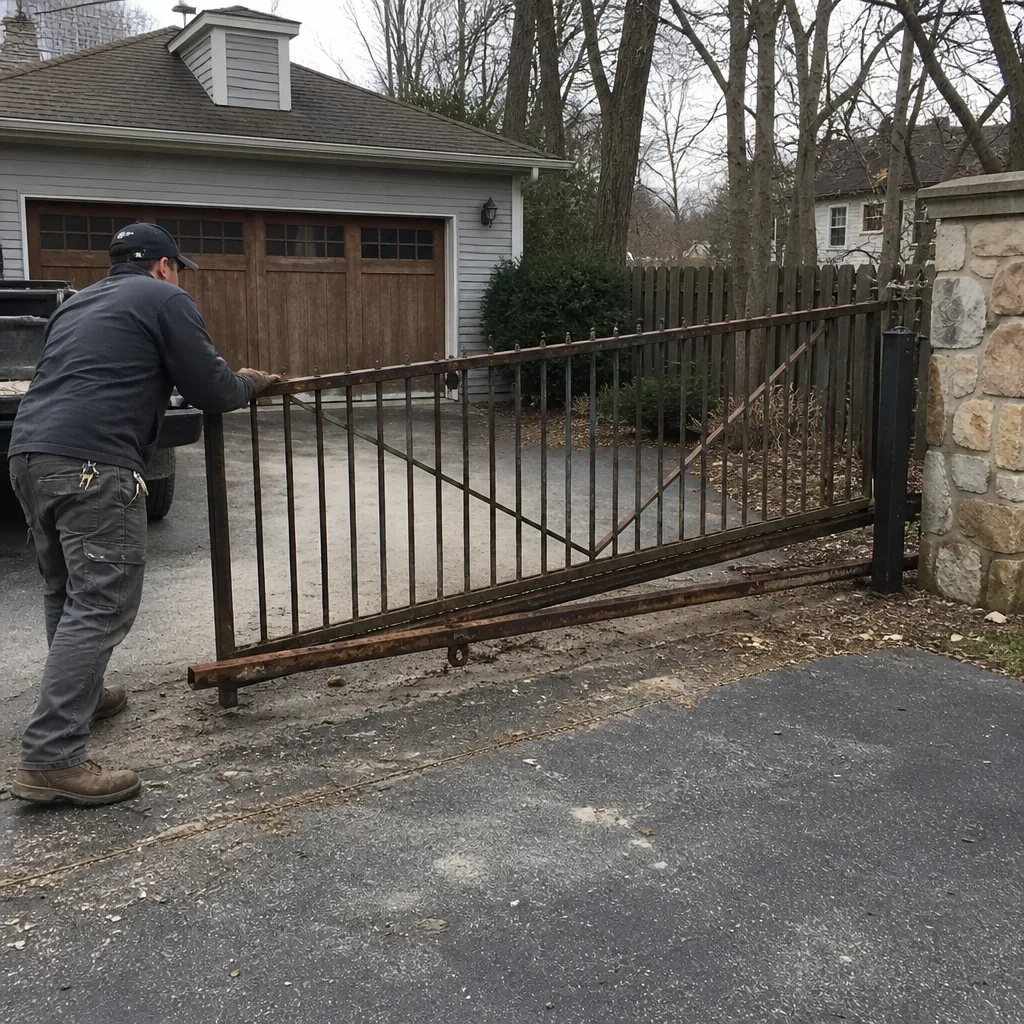 Before
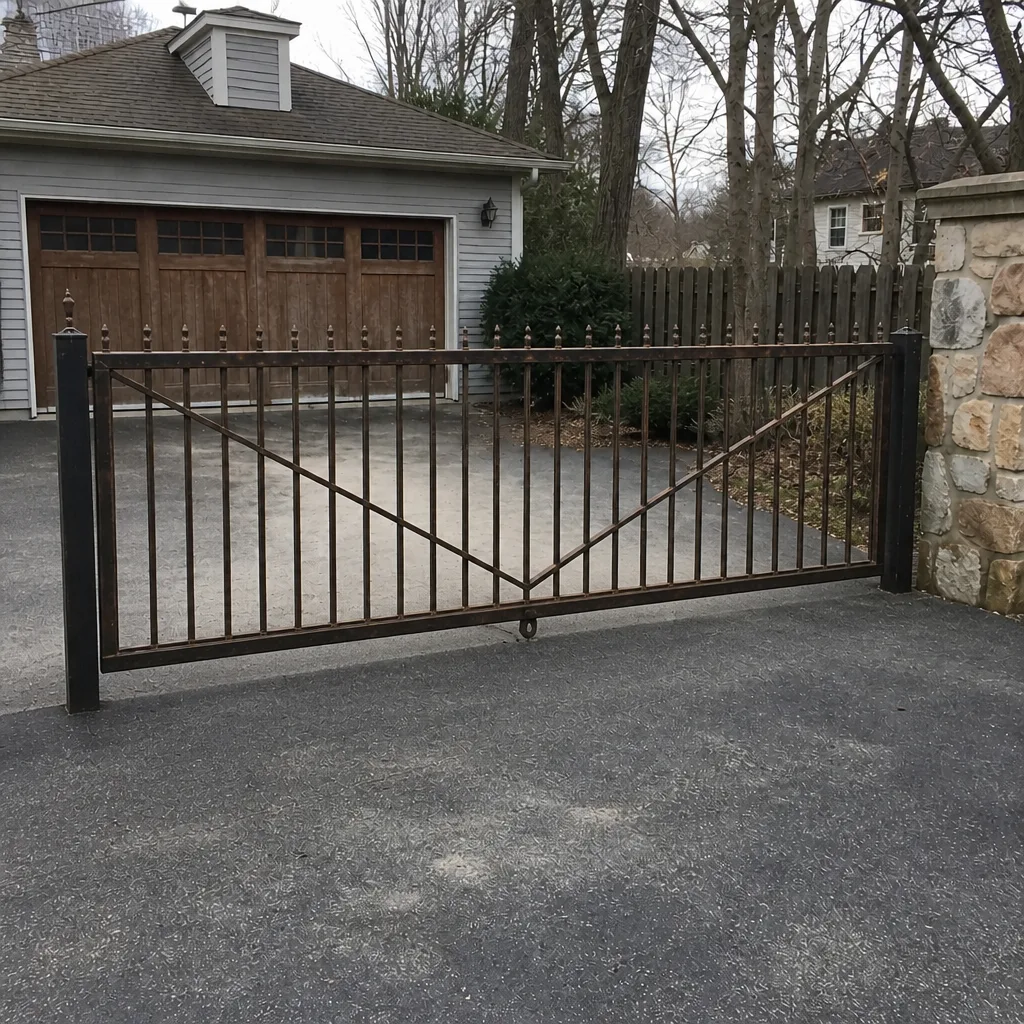 After
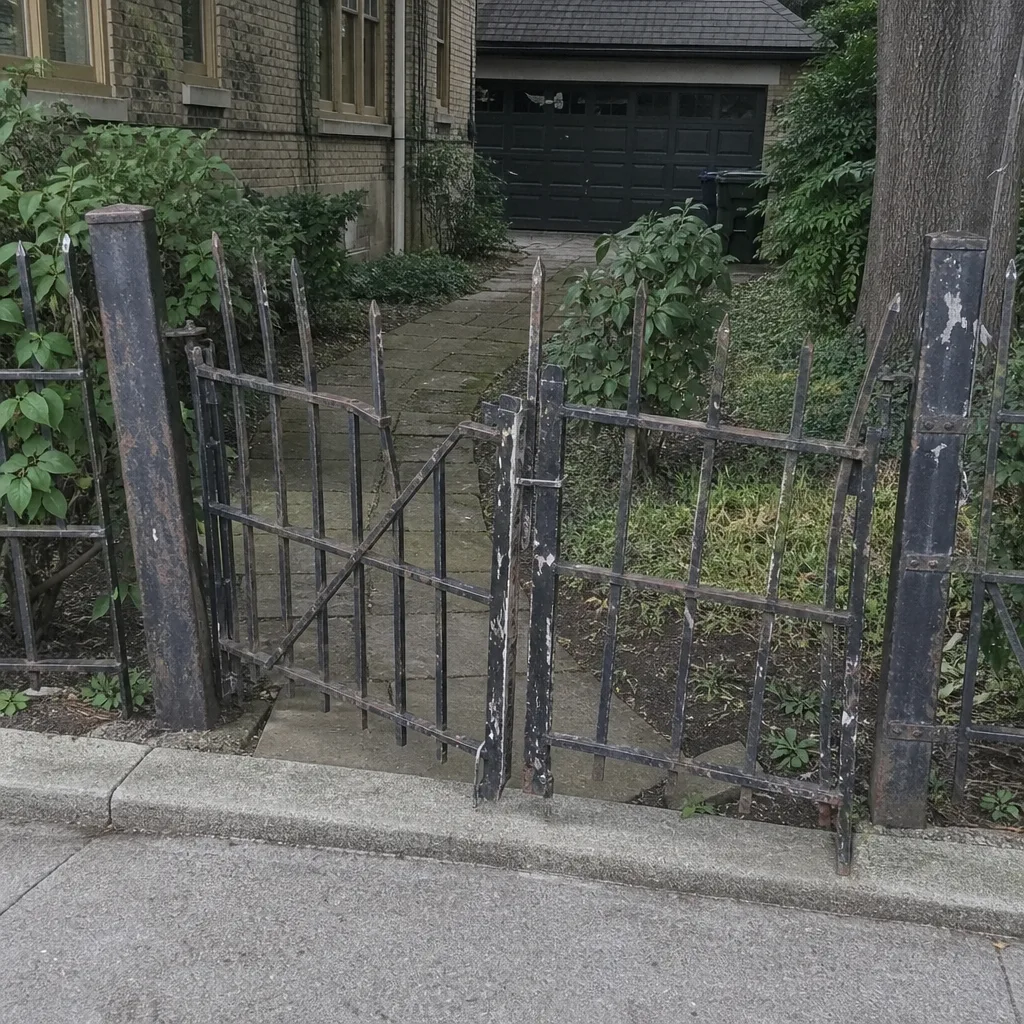 Before
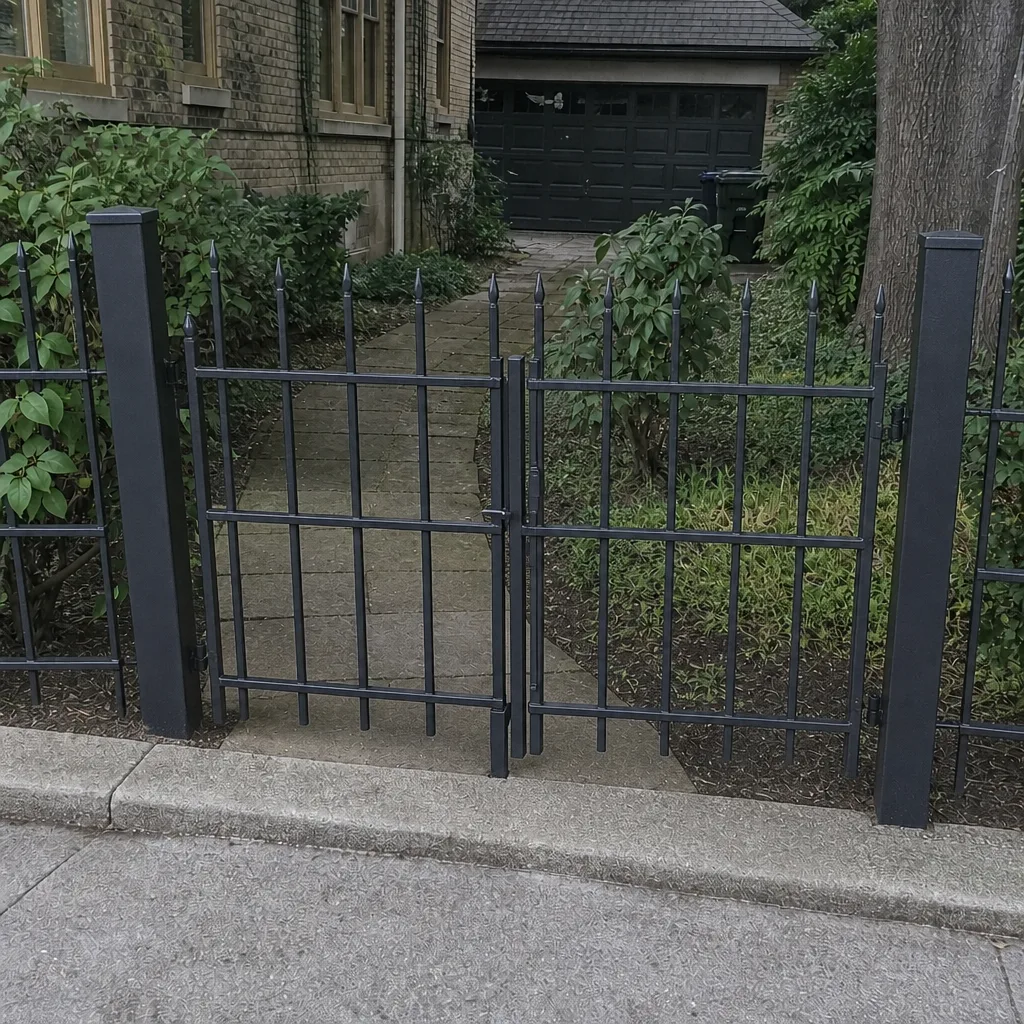 After
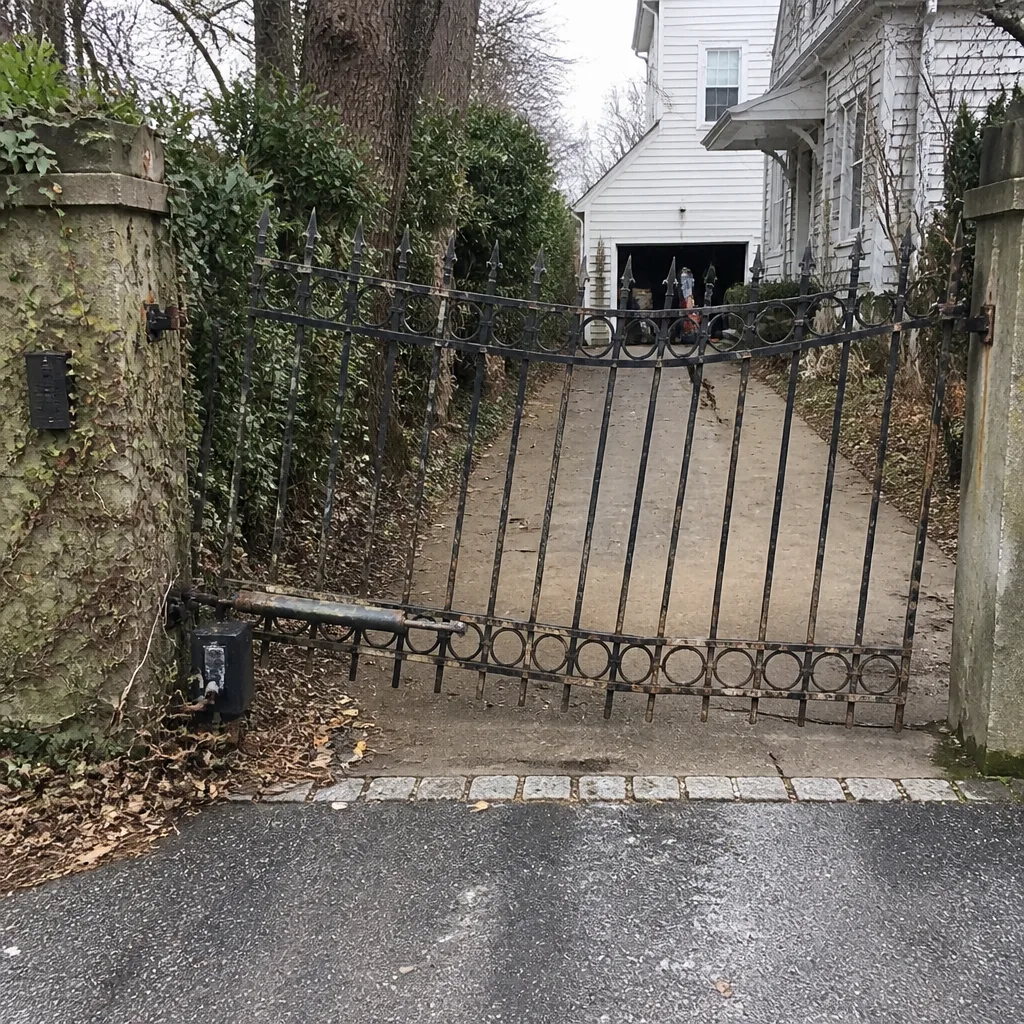 Before
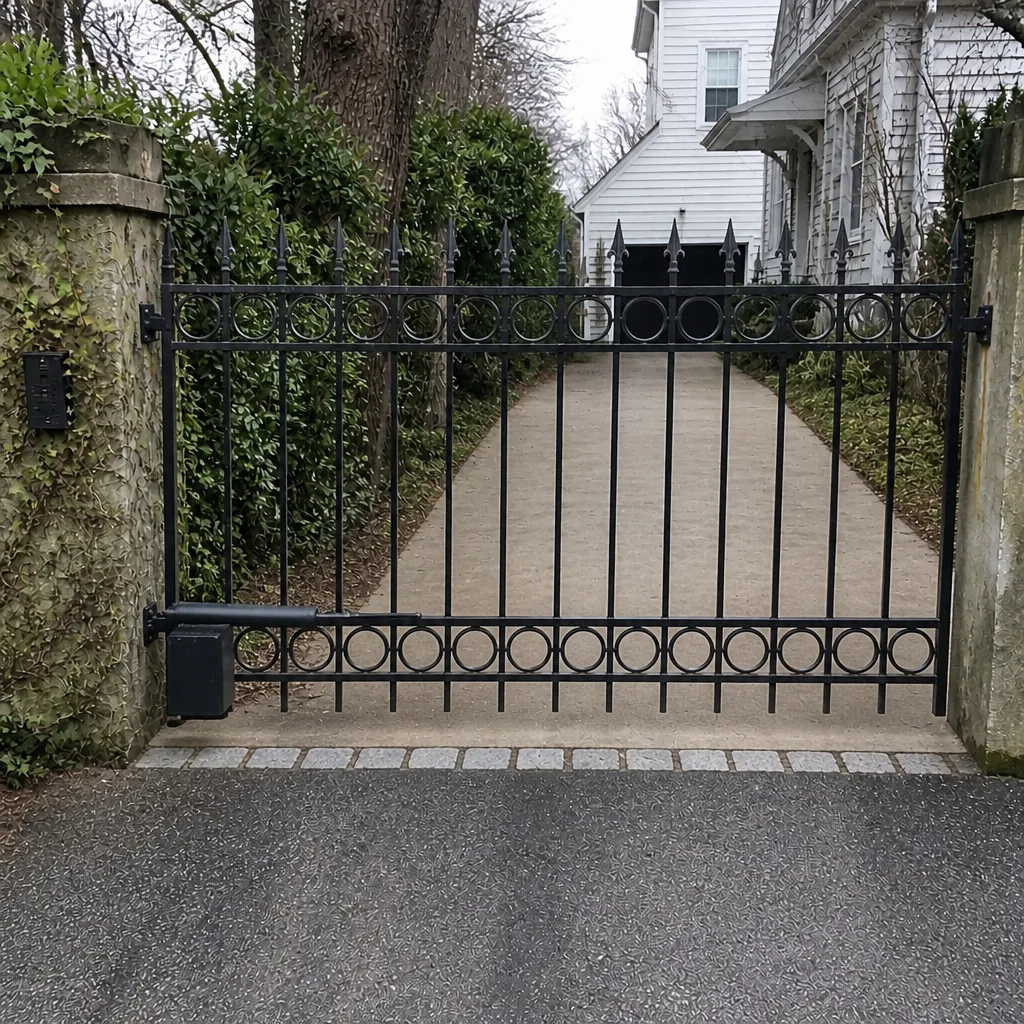 After