
Last updated November 25, 2026
 Wrought iron
 Wood & steel frame
 Farm & ranch
 Sliding driveway gates
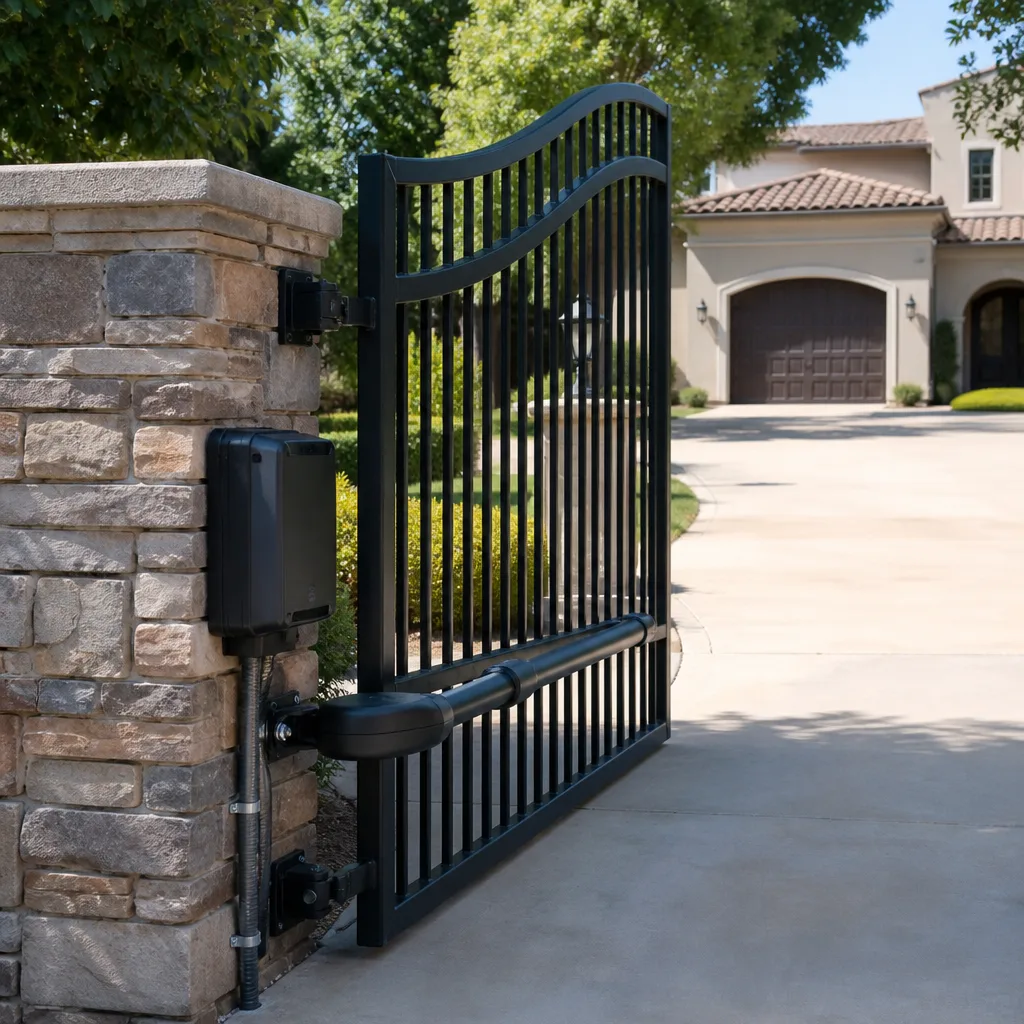 LiftMaster operators
Free on-site gate assessment - hinges, posts, and your LiftMaster or Nice gate operator checked before anything is quoted
The assessment is free and the quote is the invoice.
Get your free estimateGate Repair Permits, Codes & Inspections in Highland Park, IL: What You Need to Know
Most homeowners assume a gate repair is a repair and that repairs never touch the permit desk. That assumption holds often enough to feel safe, and it fails often enough to matter. The line isn’t “repair versus replacement” in the way people picture it. It’s “replacement versus alteration,” and swapping an operator, changing how a gate swings, or raising a post can tip a job from routine service into permitted work. Highland Park enforces its own zoning overlay with setback and height rules, so a decision that looks purely mechanical can land in front of a plan reviewer. This guide explains where the permit line actually falls, what Illinois and UL 325 rules apply to the electrical side, how the Historic Preservation and North Shore Sanitary District layers change gate placement, and how to pull a residential gate permit here. If you’d rather start with who we are, we’re Highland Park Gate Repair Pros.
Quick Answer
In Highland Park, IL, repairing a gate – replacing a hinge, adjusting a roller, fixing a latch, or swapping a like-for-like motor – typically does not require a building permit. Replacing a gate operator, altering a gate’s height, width, or location, or installing a new gate generally does require one, and any 120V line-voltage connection must be made by a licensed electrician under the Illinois Electric Code. Automated operators must also meet UL 325 safety standards, which older systems often don’t. When in doubt, call the City before work begins rather than after.
Styles & brands we work with
- Wrought iron
- Wood & steel frame
- Farm & ranch
- Sliding driveway gates
- LiftMaster operators
Table of Contents
- Repair or Replacement? Where Highland Park Draws the Permit Line
- How Highland Park’s Zoning Overlay Changes Gate Placement
- Historic Preservation and North Shore Sanitary District Easements
- Illinois Electric Code and Who Can Make the Connection
- UL 325 Compliance and Older Operators
- How to Pull a Residential Gate Permit in Highland Park
- What an Inspection Actually Looks At
- Local Conditions That Affect Gates in Highland Park
Repair or Replacement? Where Highland Park Draws the Permit Line
The dividing line in Highland Park isn’t cost and it isn’t whether the gate “feels new” afterward. It’s whether the work changes the gate’s footprint, its dimensions, its structural supports, or the electrical equipment driving it.
Here’s how we describe it to property managers when they ask. If the gate stays where it is, at the same size, on the same posts, and the work restores something that broke, it’s repair. If anything about the gate’s physical presence changes, it’s an alteration, and alterations are where the permit requirement kicks in.
Typical repair – usually no permit
- Replacing rollers, hinges, guide wheels, or a sagging hinge bracket
- Adjusting a latch, striker, or catch
- Repairing or replacing a control board, receiver, or remote in an existing operator
- Replacing a battery in a battery-backed operator
- Replacing a motor of the same model and rating in the existing housing
- Routine service on gate motor & opener units already in place
Usually permitted work – alteration or new installation
- Swapping an operator for a different model, brand, or power class
- Any change to gate height, width, or swing direction
- Relocating a gate or moving a post to a new spot
- Changing a manual gate to an automated one, or adding automation to a swing gate
- New gate installation of any kind
- Adding or rerouting the 120V power feed to an operator
That fourth bullet is the one people miss. A homeowner with a manual driveway gate who decides to automate it isn’t repairing anything – they’re installing an electric gate system, and that’s permitted work in Highland Park. Similarly, replacing a FAAC operator with a Linear unit of different torque and travel characteristics can read as an alteration even though the gate itself never moved. That’s a conversation worth having before the box gets opened.
One more wrinkle: the operator swap is also where UL 325 enters, and we’ll get to that below. If you’re unsure which side of the line your job sits on, that’s a normal question to have, and the City’s building department would rather answer it than issue a stop-work order. For repair work that clearly stays on the repair side, our gate repair service covers diagnosis and the fix.
How Highland Park’s Zoning Overlay Changes Gate Placement
Highland Park’s zoning code sets its own rules for fences and gates – heights, setbacks, and where a gate can sit relative to a property line. Those local rules govern a residential gate in Highland Park, and they’re the layer the Illinois state building code doesn’t replace. Think of it this way: the state code tells you how to build it safely; the local zoning overlay tells you whether you’re allowed to put it there at all.
The practical consequence is that a gate project can pass every structural and electrical test and still get bounced at the zoning desk because the gate is too tall for its location or sits inside a required setback. That’s not a safety issue. It’s a land-use issue, and it’s reviewed separately.
What this means for you before you order anything:
- Confirm the maximum permitted fence and gate height for your zoning district – it can vary block to block in a city with this much zoning variety.
- Confirm whether your gate sits on or near a required side or rear setback line, because a gate that swings into a setback can be treated differently than a fence panel in the same place.
- Map out the swing arc. A gate needs clearance to open, and that clearance needs to stay on your side of the line.
- If your property sits on a corner lot, ask about visibility triangles at the corner – gates and landscaping near the corner often have their own height limits.
This is also the layer where a “simple operator replacement” can surprise you. If the new operator is taller, wider, or mounted differently than the old one, and the old one already sat close to a setback line, the reviewer may want to see the change drawn out. That’s not a reason to avoid the permit. It’s a reason to pull it correctly.
Historic Preservation and North Shore Sanitary District Easements
Two more layers in Highland Park change gate work in ways most homeowners never anticipate. Neither one is unusual in a North Shore city this old, and both are worth checking before you buy a gate.
Historic Preservation overlay
Parts of Highland Park fall under historic preservation review, and a gate visible from the public way in those areas can face additional design scrutiny on top of the standard zoning review. That review isn’t about whether the gate works. It’s about how it looks from the street – material, proportion, finish, and how it reads against the surrounding architecture.
If your property sits in a historic district, plan for a design review step in your permit timeline. That review is a document submission, not a site inspection, and it typically runs before the building permit issues rather than alongside it. Homeowners who order a gate before that review clears sometimes discover the approved design differs from what they ordered. Order after, not before.
North Shore Sanitary District easements
A sanitary district easement crossing a Highland Park property changes what you can build and where. You don’t own that strip of land outright for construction purposes, and a gate footing – especially a heavy slide gate footing – can’t be placed inside it without the district’s permission. This is the single least-anticipated issue we see on Highland Park gate projects, because an easement doesn’t show up in a casual look at the yard. It shows up in a plat, a title search, or a call to the district.
If an easement crosses the only sensible gate location on your property, the options narrow to moving the gate, moving the footing, or seeking the district’s written agreement. All three are solvable. None are quick if you find out mid-install.
Illinois Electric Code and Who Can Make the Connection
Most residential gate operators run on 120V AC, though battery-backed systems are common on Highland Park driveways where running a power line to the gate is impractical. Either way, the electrical side of the work has a hard boundary you need to understand before anyone picks up a screwdriver.
Illinois does not have a statewide electrical licensing requirement. What it does have is the Illinois Electric Code, which follows NFPA 70, the National Electrical Code. Highland Park enforces that standard through its own permitting and inspection process, and Highland Park has its own electrical registration requirements for contractors working within the city. In plain terms: the electrician who connects your gate operator needs to be registered to work in Highland Park, licensed as required, and the work needs to be inspected.
What’s a low-voltage task and what isn’t
- Low-voltage, typically permissible for a gate technician: low-voltage control wiring between an operator and a keypad, intercom, or loop detector; programming a gate access control system; battery connections on a battery-backed operator.
- Line voltage, requires a licensed electrician: the 120V circuit feeding the operator, any new conduit or disconnect, any panel work, and the final connection into the operator’s line-voltage terminals.
- Always an electrician: anything that involves opening a panel, adding a breaker, or running a new circuit.
We’re direct about this boundary with every customer. We handle the gate and the low-voltage side. Your electrician handles the line-voltage connection. The permit needs to cover both, and the inspection will look at both.
Power is genuinely dangerous. If you’re considering reconnecting a gate operator yourself to save a call, don’t – this is one of the few places on a gate project where the risk of serious injury is real and the professional is genuinely required.
UL 325 Compliance and Older Operators
UL 325 is the safety standard for automated gate operators. It covers how an operator behaves when something is in the way, how it detects obstructions, and what safety devices are required for the gate to be considered compliant. It has been updated repeatedly over the years, and that’s the part homeowners miss: an operator that was compliant when it was installed may not meet the standard today.
When you replace an operator in Highland Park, the new installation needs to be UL 325 compliant. That means the gate must have the appropriate safety devices for its type, and the reviewer will want to see them addressed in the permit submittal. For a slide gate that means entrapment protection that detects an obstruction before contact, typically in the form of photoelectric sensors or a safety edge. For a swing gate, the same principle applies with different hardware.
What older gates usually lack
- Photoelectric sensors: a matched pair mounted on either side of the gate opening, looking across the path. Many older systems have none.
- A reversing edge or equivalent: a safety strip that triggers reversal on contact, common on commercial and some residential slide gates.
- An operator with built-in obstruction sensing: modern operators like many FAAC, BFT, and Viking models include this. Older units often rely on a mechanical clutch or nothing at all.
- An audio or visual warning device: required for certain gate classes and often absent on older residential installs.
If you’re replacing an older operator, plan on adding the safety devices the new one requires. That’s not upselling – it’s the standard the operator has to meet to pass inspection. It’s also the reason a “swap the box” job sometimes costs more than the homeowner expected, and why we’d rather price it accurately up front than surprise anyone at the end.
If your existing gate is already automated and you’re not changing anything, UL 325 doesn’t retroactively require an upgrade. But if you’re going to be in the permit process anyway, it’s the moment to look at whether the safety side of the system is where it should be.
How to Pull a Residential Gate Permit in Highland Park
Here’s the sequence, in order, from the City’s perspective. Do these steps in this order and you won’t be re-submitting.
- Call the City of Highland Park building department first. Ask two questions: does my gate project require a permit, and does my property sit in a historic preservation district or a zoning overlay that triggers additional review? Get answers before you buy anything.
- Confirm your property’s zoning and any easements. A plat or title search will show a North Shore Sanitary District easement if one exists. The building department can confirm the setback and height limits for your district.
- Get a site plan drawn. A simple plan showing the gate’s location, its height, its swing or slide direction, and its distance from property lines is what the reviewer needs. Most gate contractors can supply this.
- Assemble the electrical plan. The licensed electrician’s scope, the operator’s model and UL 325 listing, and a note on safety devices. This is often what holds up a submittal, so get it early.
- If historic review applies, submit for that first. Design review may run before the building permit issues. Submitting both together can hold up the permit.
- Submit the residential permit application and pay the fee. The City will tell you what form and what fee applies to your specific project – don’t assume it’s a flat number.
- Wait for the plan review. Be prepared for a comment cycle, particularly if any part of your submittal is unclear. Turnaround varies with the department’s workload and the complexity of the job.
- Pull the permit before work begins. Not “before the inspection.” Before the first post is dug.
The step homeowners most often skip is the first one. A single phone call to the building department before you order a gate or an operator can save weeks. If your property has historic district status or a sanitary district easement, that call surfaces it, and you can plan around it instead of discovering it when the gate is already in the ground.
If you’re also considering an upgrade to how the gate is opened and controlled – keypads, intercoms, or smart-home integration – that work should be folded into the same permit conversation, because it’s part of the electrical scope.
What an Inspection Actually Looks At
An inspection isn’t a design review and it isn’t a vote of confidence. It’s a series of checks against the plans you submitted and the code the permit was issued under. Here’s what the inspector is there to confirm, in broad terms:
- Location: the gate is where the approved plan says it is, within whatever tolerance applies.
- Dimensions: height and width match the drawings.
- Footing depth and construction: the post or footing is built the way the plans describe – this matters more for slide gates than swing gates because slide gates put far more load on the footing.
- Electrical: the connection was made by someone permitted to make it, and it meets the Illinois Electric Code. The electrician usually schedules this separately, and there are often two inspections – a rough-in before backfill and a final afterwards.
- UL 325 safety devices: sensors and safety edges are present, mounted, and functioning as the operator’s instructions require.
- Match to plan: any material change from the approved drawings gets flagged, even if the change is small.
Keep the approved plans and the permit on hand for the inspection. If the inspector arrives and finds the gate has moved, grown, or been swapped for a different model, the result is a re-submittal and a delay – not a pass with a note.
Local Conditions That Affect Gates in Highland Park
Highland Park’s climate is a gate’s constant opponent. The freeze-thaw cycle works on footings and hinge points through every winter, and the ground movement that comes with it is where most of the “the gate used to close fine and now it doesn’t” complaints come from. A gate that passed inspection in October can be out of alignment by March without anything having been done to it.
That matters for permit decisions because it changes what “repair” means here. In a Highland Park spring, resetting a post that frost has heaved is routine service. If the post needs to be replaced, or its footing rebuilt, the work moves closer to the alteration line.
The city’s older housing stock matters too. Mature trees drop material across gate tracks, and the older gates that sit under those trees are the ones most likely to be running on legacy operators without modern safety devices. Before a permit decision, it’s worth knowing what you actually have – many homeowners have a FAAC or BFT system behind the fence and only find out when it stops working. Whether the operator is a Linear or a Viking, we diagnose the brand you have and price the fix against it.
Common Mistakes to Avoid
- Swapping an operator and assuming no permit applies. If the new operator is a different model or power class, it’s an alteration. Get the answer from the City before you buy the unit.
- Ordering a gate before historic review clears. In a historic district, the design that gets approved may differ from the one you ordered. Submit first, buy second.
- Missing a North Shore Sanitary District easement until the footing is dug. A plat or title search is cheap; finding the easement the day the post goes in isn’t.
- Having a gate technician make the line-voltage connection. The 120V side belongs to a licensed electrician registered to work in Highland Park. It’s a legal and safety boundary, not a preference.
- Replacing a non-compliant operator without adding UL 325 safety devices. The inspection will catch it, and it means re-submitting rather than passing.
- Letting a realtor discover the permit issue at closing. Unpermitted gate work discovered during a sale can delay a closing while the paperwork is sorted out. Pull the permit when the work is done and you never have this conversation.
- Building a gate to the state code and ignoring the local overlay. In Highland Park the zoning overlay supersedes the state code on setbacks and height. Check the overlay first.
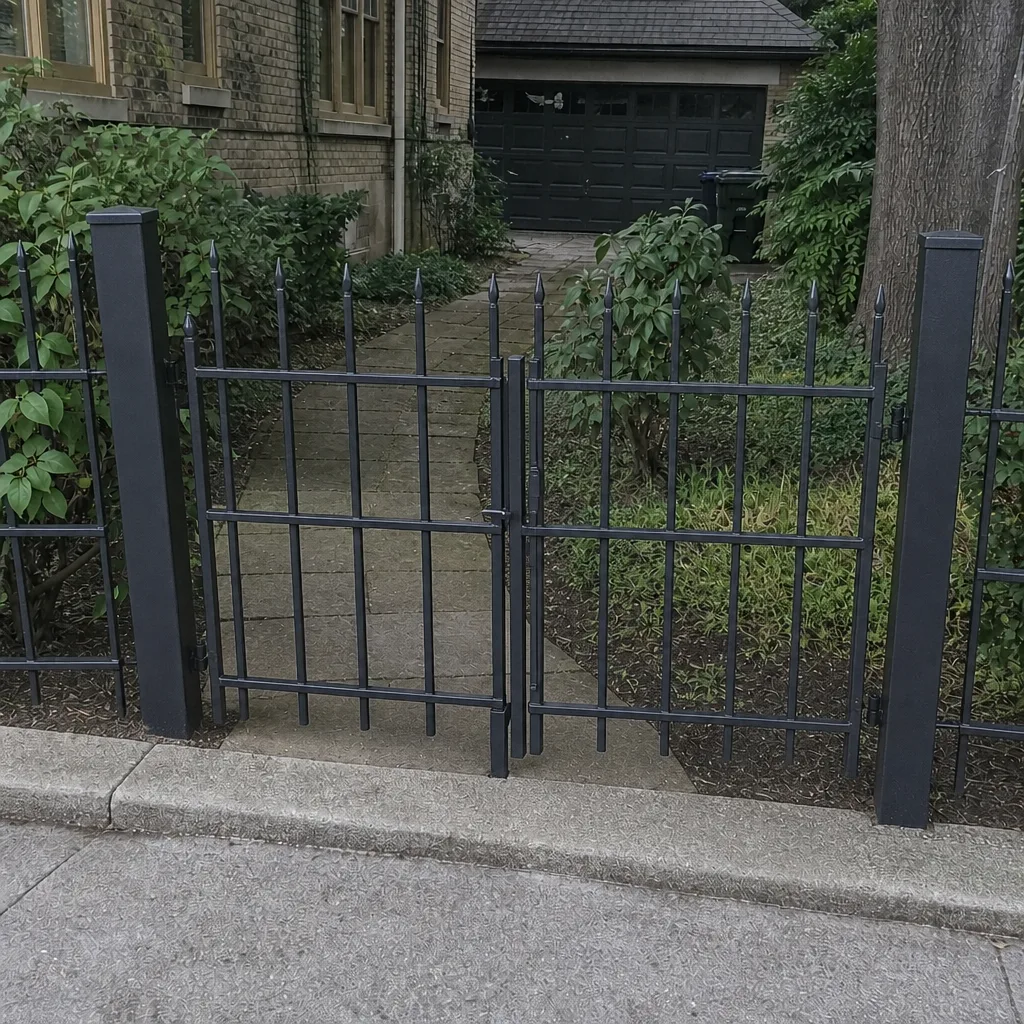
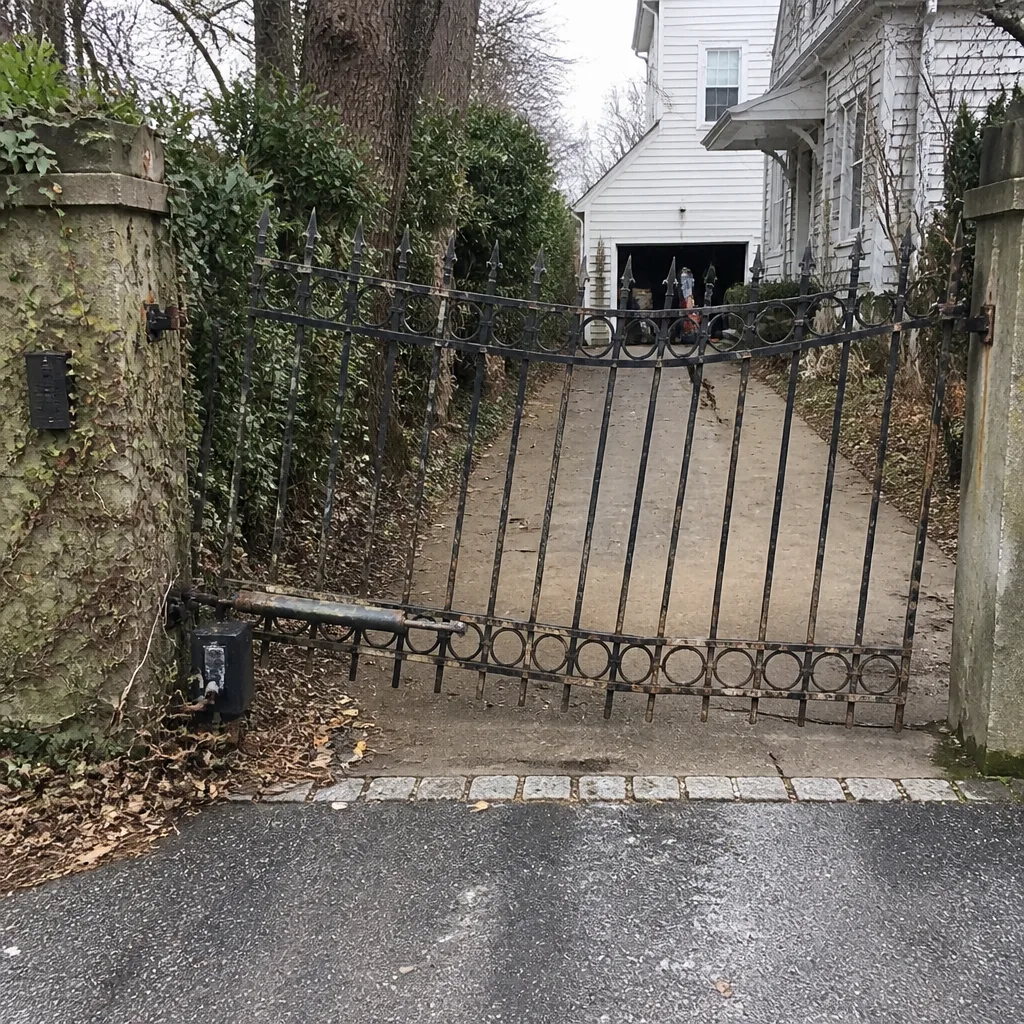
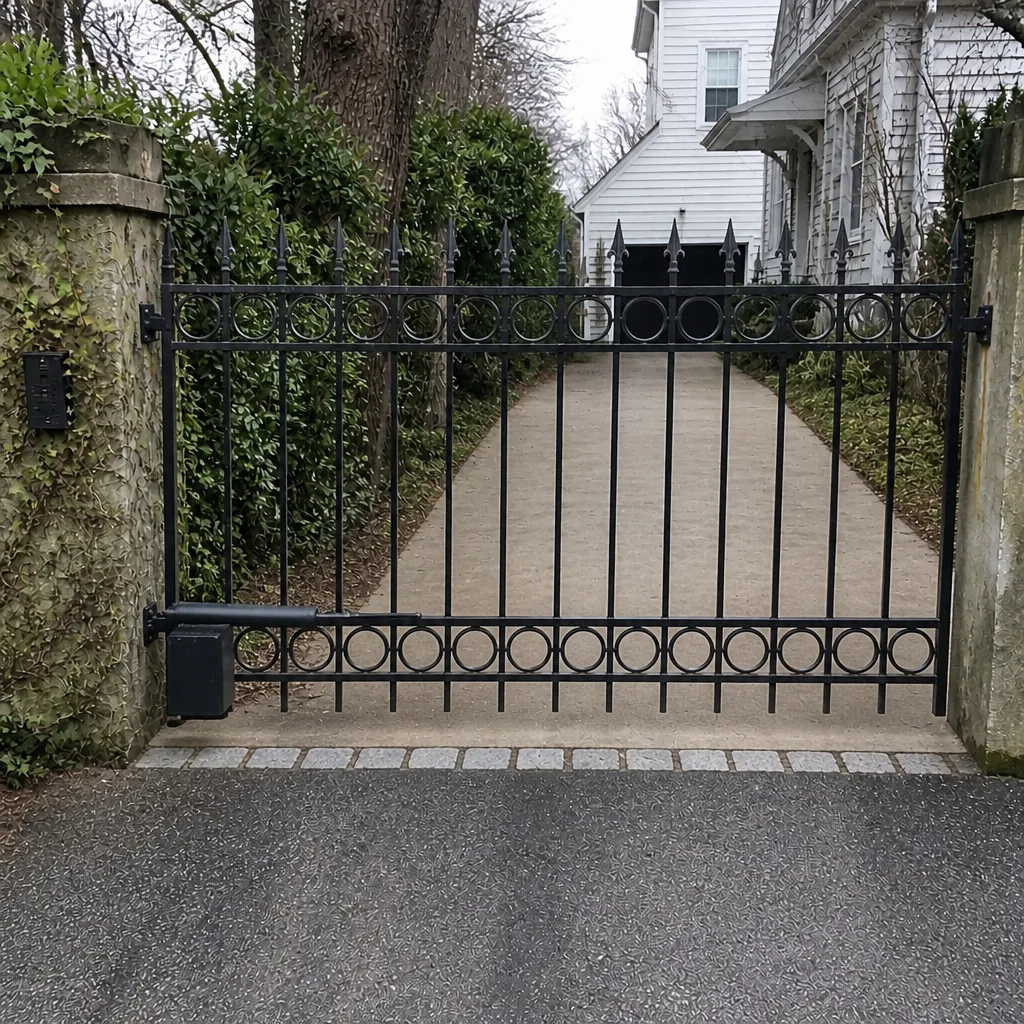
See the difference
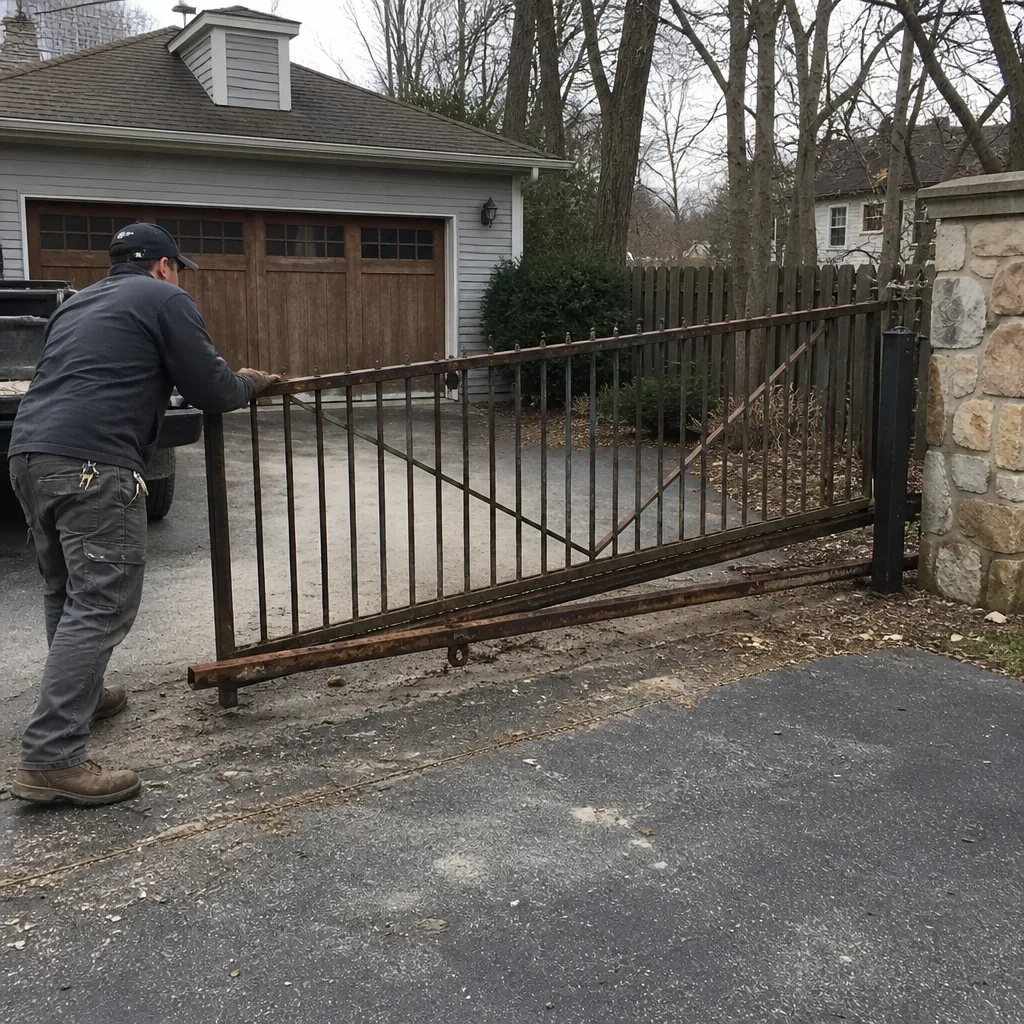 Before
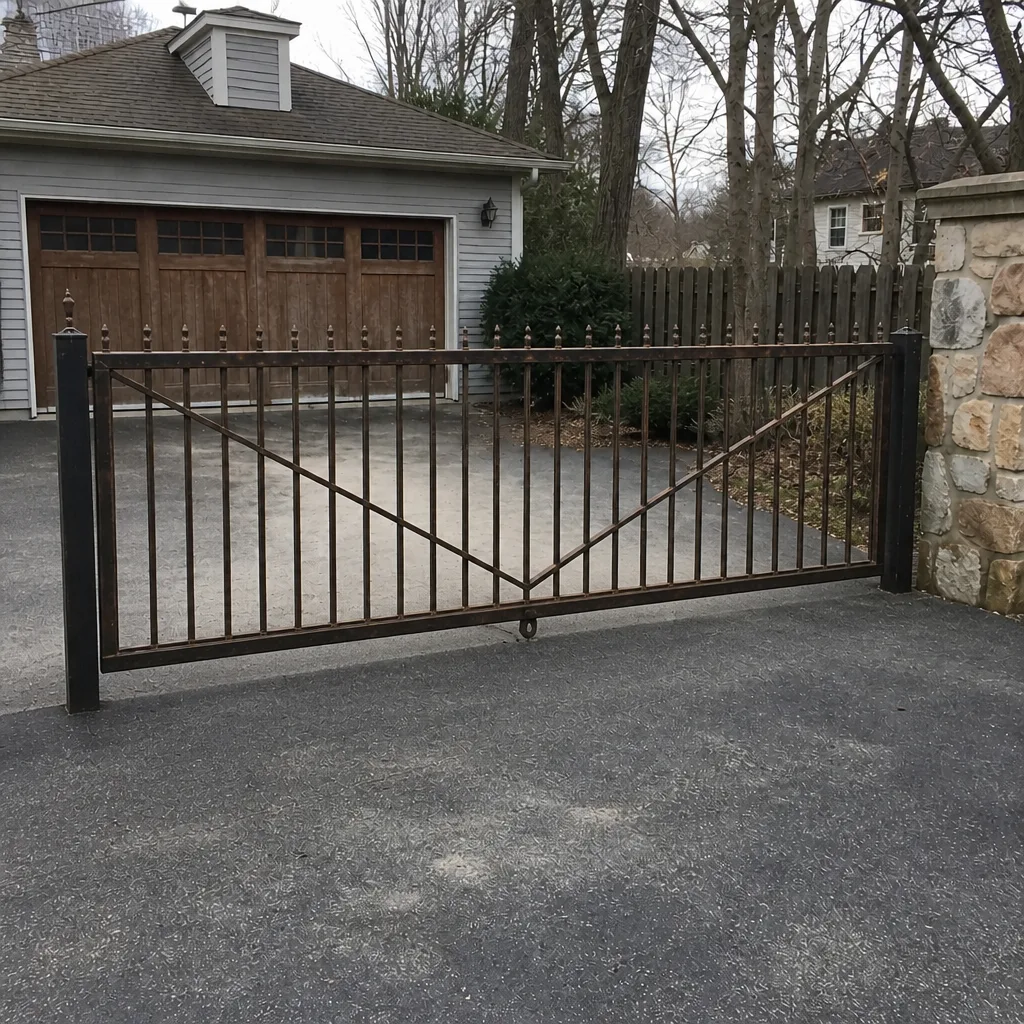 After
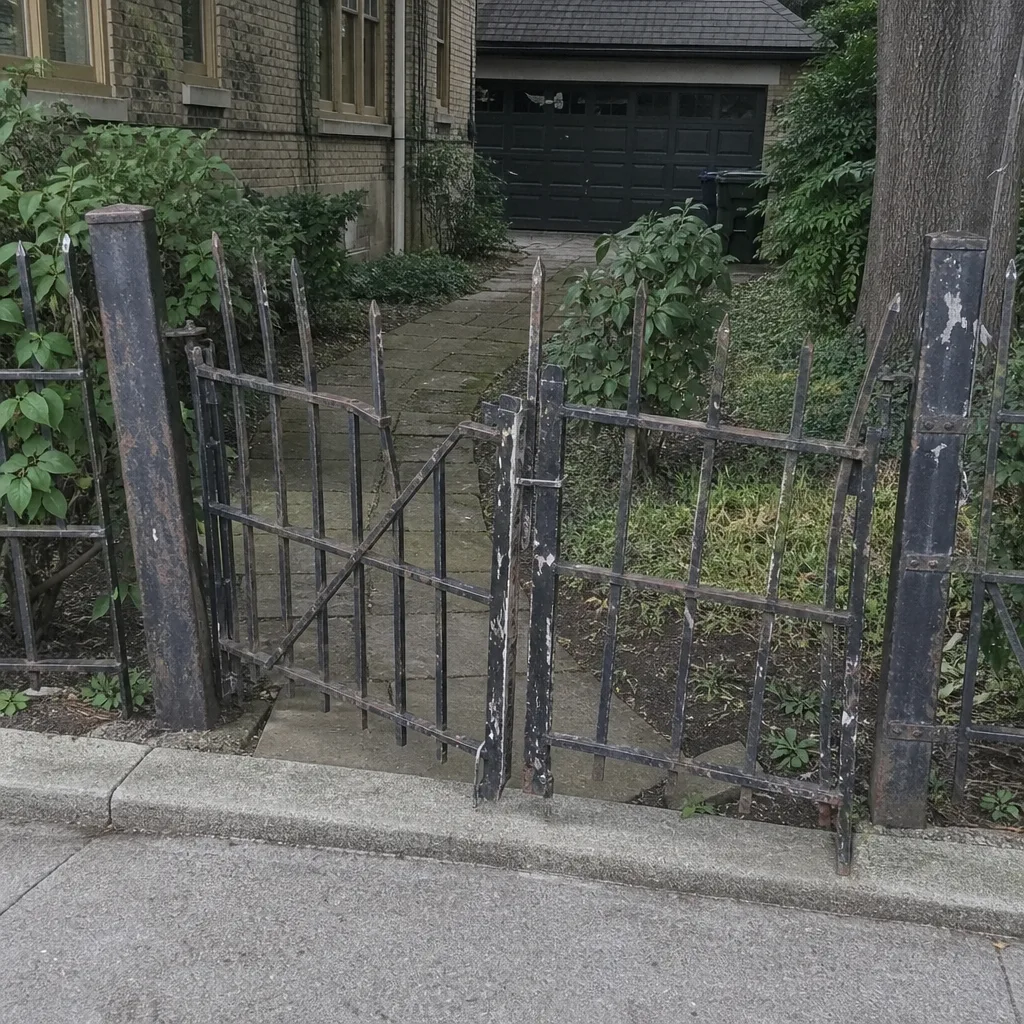 Before
 After
 Before
 After
When to Call a Professional
Call a professional when the gate won’t reverse properly on obstruction, when a post has moved enough that the gate no longer meets the strike, when the operator’s control board is failing, when the gate has stopped responding to remotes or keypads, or when the operator is running on a system old enough that you don’t know whether it meets UL 325. Call if your property sits in a historic district or over a North Shore Sanitary District easement and you’re planning any change at all. And call if you’re simply not sure whether your job is repair or alteration – a single conversation before you order anything is cheaper than sorting it out afterward. Highland Park Gate Repair Pros offers free estimates in Highland Park – call (833) 513-8561. We answer 24/7. Fast dispatch from 7am to 7pm, Sunday through Friday.
Frequently Asked Questions
Usually yes, when the new operator is a different model, brand, or power class than the one it replaces, because that qualifies as an alteration rather than a repair. A like-for-like replacement of an identical motor in the existing housing is typically treated as repair and doesn’t require a permit, but the City has the final say on your specific job. Call the building department before you order the unit – the answer takes one phone call and it prevents a much longer conversation later. Call (833) 513-8561 for an exact quote on the operator work itself; estimates are free.
Not always, because Highland Park’s zoning overlay treats gates and fences under overlapping but separate provisions, and a gate’s swing or slide path can trigger review of its own. The permit type depends on what you’re doing, not just on where the gate sits. Ask the building department which application applies to your specific project rather than assuming a fence permit covers it.
Yes, if your property sits in a designated historic preservation area. A gate visible from the public way in those districts can face design review on top of the standard zoning review, covering material, proportion, and how the gate reads against the surrounding buildings. That review typically runs before the building permit issues, so submit for it first. Ordering the gate before the review clears is the single most common way this goes wrong.
A licensed electrician registered to work in Highland Park. The Illinois Electric Code follows NFPA 70, and the 120V circuit feeding an operator falls under it – including any new conduit, disconnect, or panel work. Gate technicians handle low-voltage control wiring, access control programming, and battery connections on battery-backed systems; the line-voltage connection belongs to the electrician, and the inspection will confirm who made it.
UL 325 is the safety standard for automated gate operators, covering obstruction detection, safety devices, and operator behavior. New installations in Highland Park need to comply. If you’re replacing an older operator, plan on adding the required safety devices – typically photoelectric sensors for a slide gate, plus a reversing edge or equivalent – because the operator won’t pass inspection without them. An existing gate that isn’t being changed isn’t required to upgrade, but a replacement is where compliance comes due.
Turnaround depends on the department’s workload, the complexity of the job, and whether historic review is layered on top, so no single number applies across projects. Plan for a plan review period plus a possible comment cycle, and budget extra time if your property is in a historic district. Get the electrical scope into the submittal up front – an incomplete electrical plan is the most common reason a gate permit sits.
The Bottom Line
The short version: in Highland Park, repairing a gate usually doesn’t need a permit, replacing it or changing its footprint, dimensions, or operator usually does, and the number of layers to check is larger than most homeowners expect. Zoning overlay on top of state code. Historic preservation if you’re in a district. North Shore Sanitary District easements if one crosses your yard. Illinois Electric Code on the 120V side, made by a registered electrician. UL 325 on the operator, met by the new installation, not the old one. Pull the permit before the first post goes in, keep the approved plans, and take the inspection seriously. The call to the building department takes five minutes. The closing delay takes three weeks. Gate access control programming and everything downstream moves faster when the permit is clean.
If you want help sorting out whether your job is repair or alteration, or you’d like a diagnosis on the operator you actually have rather than a sales pitch for a new one, we’re ready. Gate repair is what we do. Call Highland Park Gate Repair Pros today.
Contact Us
Whether your gate needs a repair, a permit-adjacent upgrade, or a full operator replacement, we’ll diagnose your system and give you a written price before any work starts. The estimate is free, and the price on the estimate is the price. Call (833) 513-8561 for a free estimate. We answer 24/7. Fast dispatch from 7am to 7pm, Sunday through Friday. If you call outside dispatch hours, the call is booked into the next opening, Sunday through Friday, 7am to 7pm. Our technicians have up to 11 years of experience with automated and manual gate systems, and we work across LiftMaster, FAAC, BFT, Linear, Viking, Ghost Controls, DoorKing, Elite, and Mighty Mule – brands you’ll find behind fences all over Highland Park. If your gate lets people in, we handle every layer of it.
Written by the team at Highland Park Gate Repair Pros.