
Last updated November 25, 2026
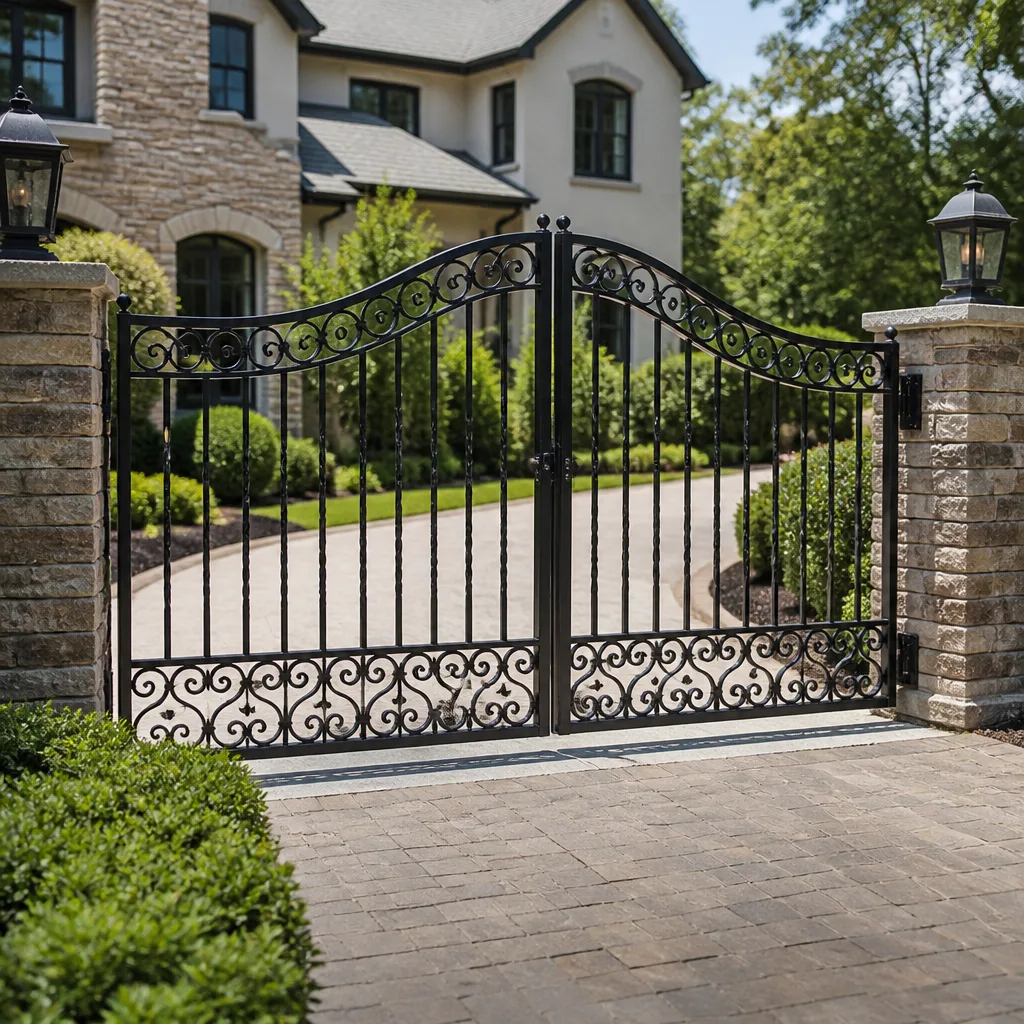 Wrought iron
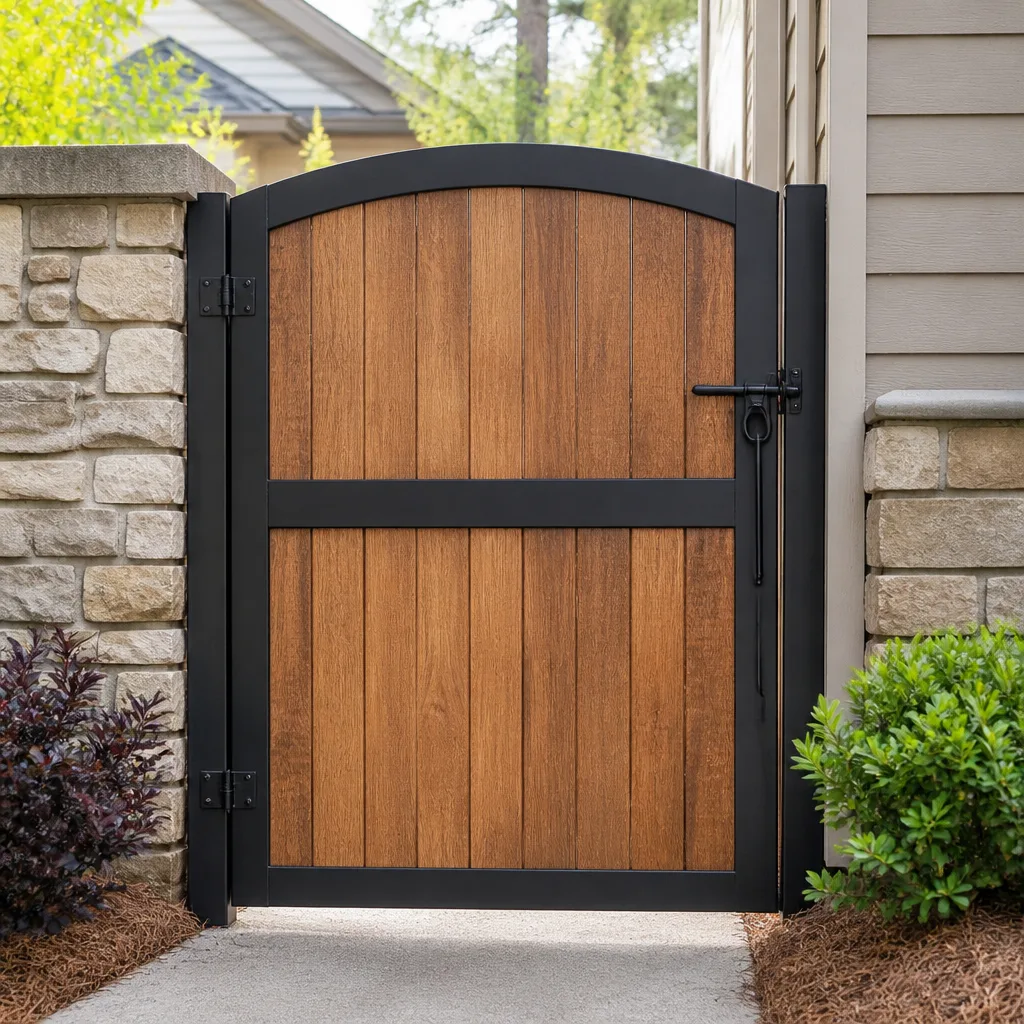 Wood & steel frame
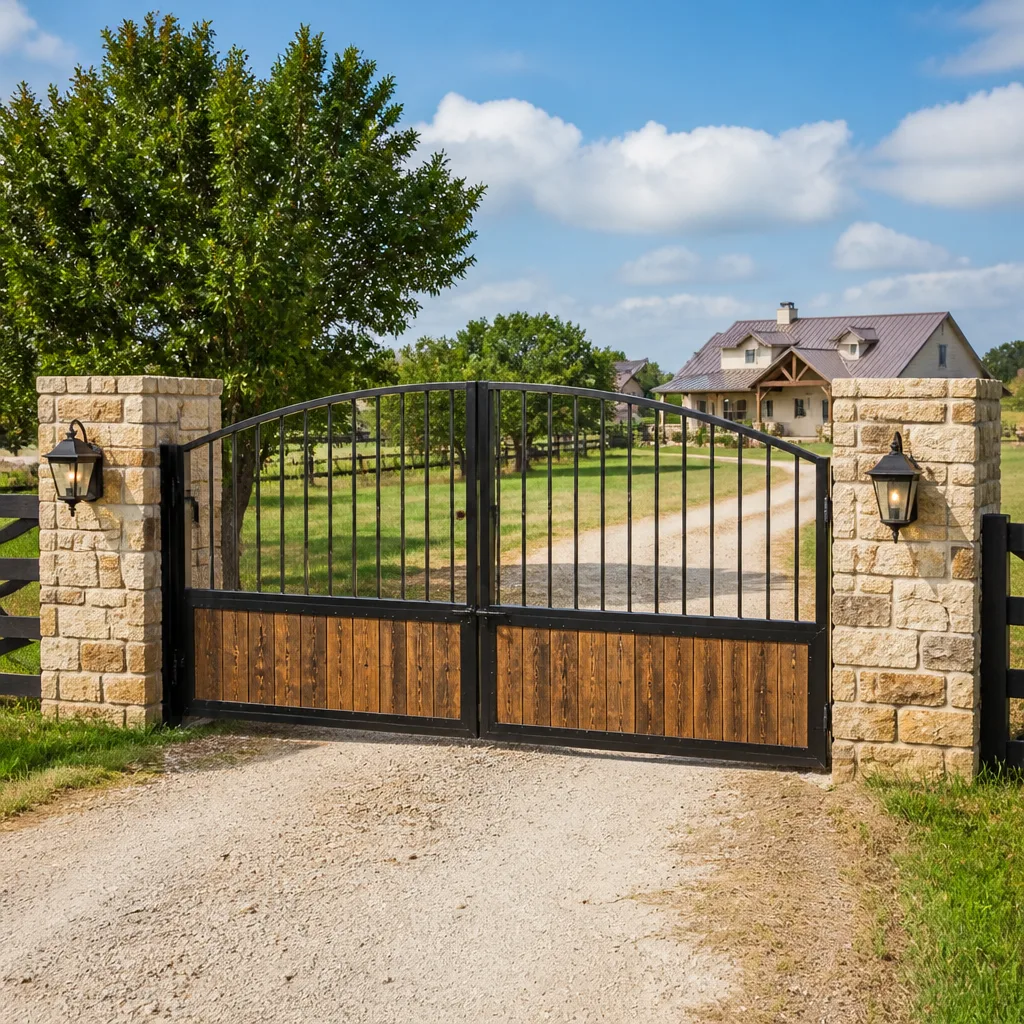 Farm & ranch
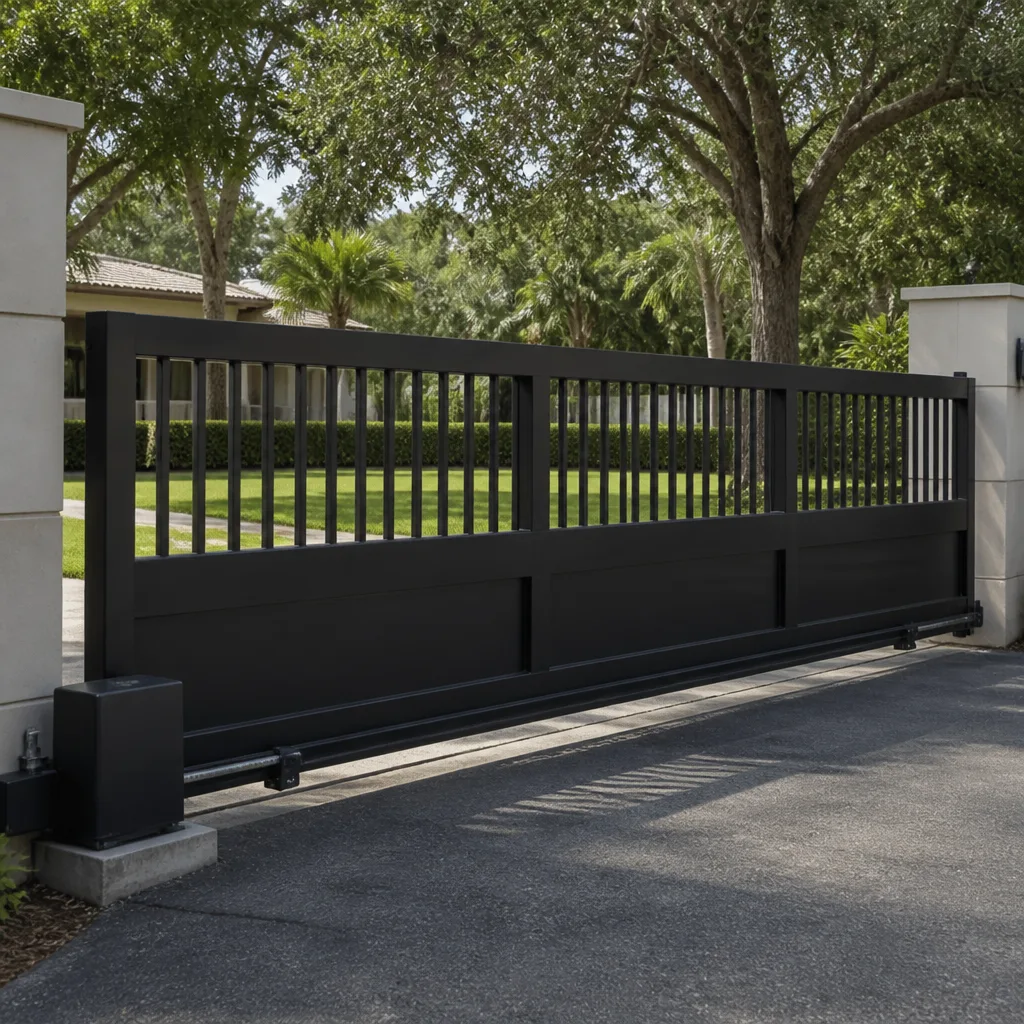 Sliding driveway gates
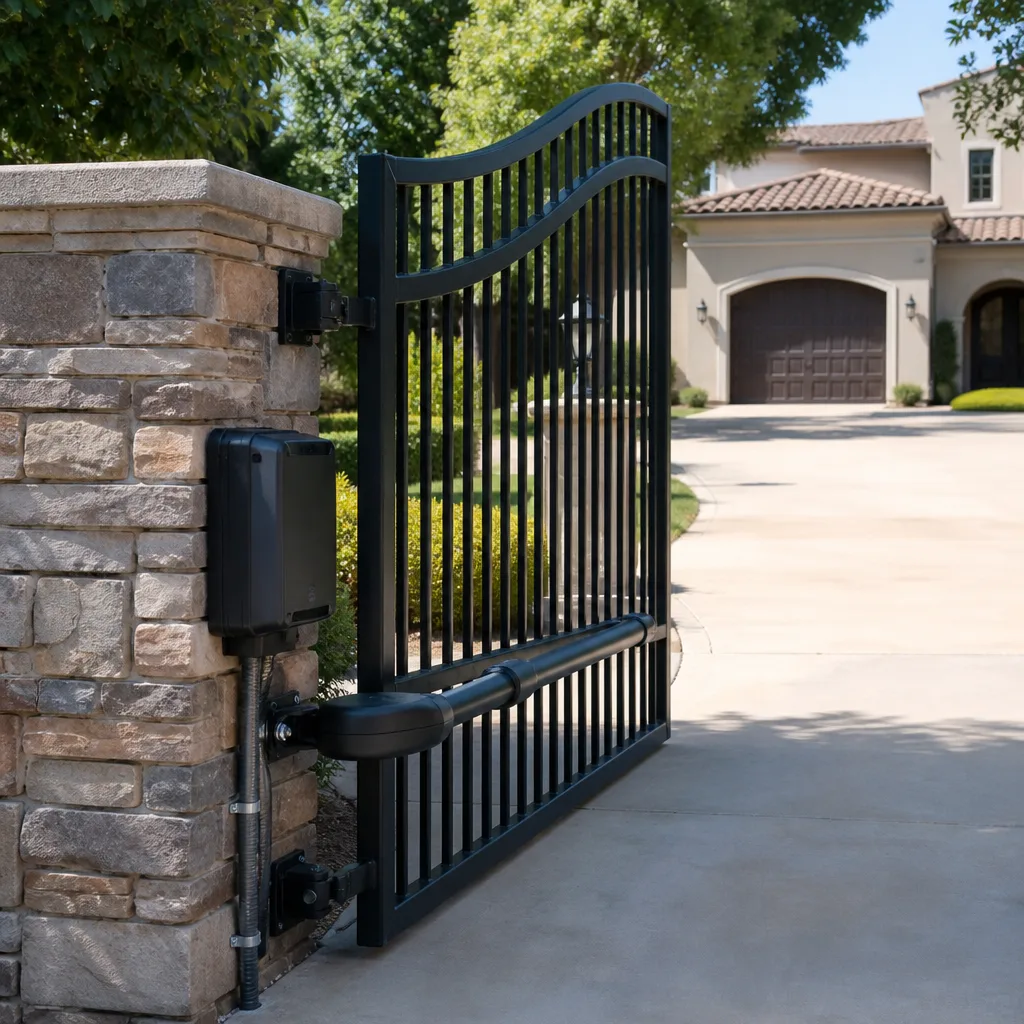 LiftMaster operators
Free on-site gate assessment - hinges, posts, and your LiftMaster or Nice gate operator checked before anything is quoted
The assessment is free and the quote is the invoice.
Get your free estimateHow to Hire a Gate Repair Contractor in Highland Park: A Step-by-Step Guide
Most homeowners shop for gate repair the way they shop for a new water heater: get three quotes, pick the middle one. That approach fails here. The real risk in Highland Park isn’t overpaying by a few hundred dollars. It’s hiring a fencing company that reads a control-board fault as a bent post, then quotes a full replacement for a gate that needed a $200 sensor. This guide is built around that specific problem. You’ll learn the exact questions that separate a gate specialist from a generalist, what a proper written scope of work should contain, which licensing and insurance details to verify, and how to spot a quote that diagnoses before it prices.
Quick Answer
To hire a gate repair contractor in Highland Park, verify three things before you discuss price: that the contractor specializes in gate operators and not general fencing, that their quote names a specific fault and a specific fix rather than a replacement, and that they carry liability coverage appropriate to automated gate systems, not just passive fencing. Ask technical screening questions about your operator brand, request the written scope of work, and insist the price is agreed before any work begins. A real gate specialist answers diagnostic questions in plain terms; a generalist deflects to a site visit and a ballpark.
Styles & brands we work with
- Wrought iron
- Wood & steel frame
- Farm & ranch
- Sliding driveway gates
- LiftMaster operators
Table of Contents
- Why Highland Park Gate Repair Is a Credentialing Problem, Not a Shopping Problem
- What Illinois Licensing and Registration Should You Verify?
- Five Technical Screening Questions to Ask Before You Hire
- Red Flags in a Gate Repair Quote: Diagnosis-First vs. Parts Fishing
- How Do You Verify the Right Insurance Coverage?
- What Should a Written Scope of Work Include?
- The Step-by-Step Hiring Process
- What to Expect During and After the Repair
Why Highland Park Gate Repair Is a Credentialing Problem, Not a Shopping Problem
Ask your next gate repair quote candidate this one question: “What’s the difference between a limit switch fault and a torque overload fault on a LiftMaster LA500?” If they hesitate, you’re talking to a fence installer, not a gate technician. That single question matters more than any price comparison, because the two faults produce nearly identical symptoms, a gate that stops mid-travel or reverses without warning, and the fixes are completely different. A limit switch fault is a position-sensing problem. A torque overload fault is the operator telling you something is physically resisting the gate. One is a sensor or programming issue. The other could be a sagging hinge, a worn roller, or debris in the track. Treat them as the same thing and you’ll either replace a healthy motor or keep resetting a board that’s protecting itself from a mechanical problem.
In Highland Park, this misdiagnosis problem is amplified by the housing stock. The city has a wide mix of older properties with mature trees and long driveways, plus newer construction with tighter lots and shorter gate runs. A gate on an older lot may have settled posts and a slightly out-of-plumb hinge, which loads the operator in ways the original installer never planned for. That kind of fault looks electrical from the keypad and mechanical from the hinge, and a generalist will usually pick whichever answer leads to the bigger quote. A specialist reads both.
There’s a second reason shopping by price alone backfires. Gate systems are integrated assemblies. The operator, the safety edges, the keypad or intercom, and the physical gate hardware all talk to each other. A contractor who touches one part without understanding the others can leave you with a gate that opens but no longer closes safely, or a keypad that works for one vehicle and not another. If you’re weighing whether to repair or replace, our guide to gate repair walks through how a diagnosis-first approach actually works. The point of this page is narrower: how to choose the person who does that diagnosis.
What Illinois Licensing and Registration Should You Verify?
Illinois does not issue a single statewide “gate contractor” license, and that’s exactly why verification matters. Gate work sits at the intersection of three regulated areas: general contracting, electrical work, and in some cases plumbing-adjacent low-voltage work for intercom and access-control wiring. A company can legally operate as a fencing contractor and still not be the right outfit to open up a control board or run a new power feed to an operator.
Here’s what to ask for and why.
- State registration as a roofing, siding, and fence contractor. Illinois requires registration for fence contractors through the state agency that handles contractor registration. Ask for the registration number and confirm it’s current. A fence installer doing gate mechanical work should hold this at minimum.
- Electrical qualification for the power side. Gate operators run on line voltage, and new installs or rewiring of an existing operator generally require an electrician licensed by the local authority. Ask whether they handle the power run in-house with a licensed electrician or coordinate with one. If they say “we just tie in,” ask who signs off on the electrical.
- Local permit knowledge. Ask the contractor to tell you whether your specific job needs a permit from the City of Highland Park. A specialist knows the answer because they pull permits regularly. A generalist will say “probably not” and hope you don’t check. You can also call the city’s building department yourself and ask whether a gate operator replacement or new circuit requires a permit.
- Proof of general liability and workers’ compensation. Request a certificate of insurance made out to you as the certificate holder. It should list the contractor’s legal business name, the policy effective dates, and both general liability and workers’ comp. If a subcontractor is doing the electrical portion, ask for their certificate too.
None of this is about catching anyone out. It’s about knowing who is legally responsible if something goes wrong on a job that combines heavy moving parts with household current. Highland Park property managers in particular should keep these documents on file for every vendor who touches an access-controlled entry point, because a single uninsured incident at a shared gate can become a multi-unit problem.
Five Technical Screening Questions to Ask Before You Hire
You don’t need to become a gate technician to screen one. You need five questions and a sense of what a good answer sounds like. Ask these before you let anyone put a number on paper.
- “What operator brand is on my gate, and what’s the typical failure mode for that model?” A specialist identifies the brand from the housing, the arm, or the control box and names a known failure pattern. Someone working across Linear, Viking, Ghost Controls, and DoorKing systems sees the same failure modes repeatedly and can tell you which parts fail first. A generalist says “I’d have to look at it.”
- “When my gate reverses mid-travel, what are the possible causes?” A strong answer lists several: safety edge triggered, limit switch out of adjustment, torque setting too low, obstruction in the track, or a failing control board. A weak answer gives one cause.
- “How do you test the safety reverse on my gate?” The answer should describe an actual physical test with an obstruction, not just “we check the sensors.” Safety edges and photo-eyes on automated gates are life-safety equipment, and anyone who treats them as an afterthought is a liability.
- “What’s included in your diagnostic, and will you show me the fault before you quote the fix?” A specialist explains what they’ll measure and test, and offers to walk you through what they found. A generalist quotes a repair before diagnosing.
- “If my operator is discontinued, how do you source parts?” Brand-agnostic technicians can cross-reference and source aftermarket parts without pushing you toward a full replacement just because one model is out of production. Ask how they handle obsolete boards and remotes.
Write the answers down. The pattern matters more than any single response. A specialist gets more specific as you ask more. A generalist gets vaguer and starts steering the conversation back to scheduling.
Red Flags in a Gate Repair Quote: Diagnosis-First vs. Parts Fishing
A diagnosis-first quote names a fault, explains how it was confirmed, and prices the specific fix. A parts-fishing quote names a laundry list of components and prices a “system refresh.” The difference is usually visible in the first line.
Here’s what a diagnosis-first quote looks like: “Gate reverses at approximately 60% travel. Tested safety edges, both functioning. Limit switch on the open side out of adjustment; re-set and re-tested. Torque setting verified against gate weight. Recommend replacing the open-side limit switch assembly, which is showing intermittent contact.” That quote tells you what was wrong, what was ruled out, and what one part fixes it.
A parts-fishing quote looks like this: “Gate not operating correctly. Recommend new operator, new control board, new safety edges, new remotes, and full re-wiring.” No fault named. No test described. Every component priced. That’s not a diagnosis; that’s a replacement proposal dressed up as a repair.
Watch for these specific signals:
- A quote with no stated fault. If the contractor can’t tell you in one sentence what’s actually wrong, they haven’t diagnosed anything.
- “Your board is fried” without a test. Control boards are the most commonly blamed and least commonly failed part on a gate operator. Ask how they confirmed it.
- Replacement quoted before repair is discussed. A specialist will always tell you when replacement genuinely makes more sense than repair, but they’ll explain the reasoning, not skip to it.
- Safety equipment bundled into a repair without explanation. New safety edges can be a legitimate recommendation, but they should be justified, not slipped in as a line item.
- Pressure to decide on the spot. Gate repair isn’t an emergency purchase. A specialist is comfortable letting you think about a written estimate.
Highland Park’s older properties make parts fishing especially common, because a settled post or worn hinge can mimic an electrical fault convincingly enough that an unscrupulous or inexperienced contractor will replace the motor and never touch the actual cause. Then the gate fails again in a month.
How Do You Verify the Right Insurance Coverage?
Automated gates present different risk than passive fencing, and the insurance needs to match. A fence contractor’s policy may cover a static structure. It should also cover a powered machine with moving parts that can crush, pinch, or strike. Ask specifically and get it in writing.
Here’s what to confirm on the certificate of insurance:
- General liability limits. Confirm the policy is active and the limits are adequate for a powered gate installation or repair. Ask whether the policy excludes “automated equipment” or “electrical work.” Some fencing policies do.
- Workers’ compensation. If a technician is injured on your property and the contractor has no workers’ comp, the claim can come back to you as the property owner. Confirm the policy is active and covers the state of Illinois.
- Completed operations coverage. This covers claims arising after the work is finished, which matters if a gate fails weeks later due to a repair error.
- Subcontractor coverage. If the electrical portion is subcontracted, the subcontractor’s certificate needs to be on file too, with the same limits.
- Certificate made out to you. Ask the contractor to have their insurer issue a certificate naming you or your property management company as certificate holder. This is routine and a legitimate contractor will not hesitate.
Property managers should keep these on file and update them as policies renew. A gate that fails and injures someone is a liability question before it’s a repair question, and the paper trail should be in place before the work starts, not after.
What Should a Written Scope of Work Include?
The scope of work is the document that protects you if the invoice grows. It should be specific enough that a different technician could read it and understand exactly what was done. Most homeowner complaints about gate repair trace back to a scope that said “repair gate” and nothing more.
A proper written scope for gate repair should include:
- The operator brand and model as identified on site, plus the serial number if visible.
- The stated fault in plain language, and the tests performed to confirm it.
- The specific parts to be replaced by name and part number where available, not by category.
- Any work ruled out, so you know what was checked and found healthy.
- Safety testing to be performed after the repair, including obstruction test and safety-edge check.
- Whether a permit is required and who is pulling it.
- The agreed price, stated as a fixed estimate, with a note that the final invoice will match the estimate unless you approve additional work in writing.
- What happens if additional faults are discovered mid-repair: a stop, a call to you, and a revised written estimate before any additional work begins.
That last line item is the one most homeowners don’t know to ask for, and it’s the one that prevents the surprise invoice. A specialist will put it in writing without being asked. If your quote candidate resists writing a scope this detailed, that resistance is your answer. For a deeper look at how the full system fits together, our page on gate motor & opener service covers the operator side in more detail.
The Step-by-Step Hiring Process
Here’s the sequence that works in Highland Park, from first call to signed estimate.
- Identify your operator brand before you call. Look at the control box or the arm housing for a label. Having the brand and model ready immediately separates you from the callers who can’t describe their own equipment.
- Call two or three specialists, not general contractors. Ask each whether gates are their primary work. If the answer is “we do fences and gates,” note it and move on.
- Ask the five screening questions. Write down the answers. Compare specificity, not price.
- Request proof of Illinois contractor registration and insurance. Get the certificate of insurance made out to you.
- Ask for a written diagnostic and scope of work. The estimate should be free and should not require a deposit before diagnosis.
- Confirm the price is agreed before work begins. If the contractor discovers additional faults, the work stops, you get a revised written estimate, and you approve it before the repair continues.
- Ask about safety testing after the repair. A proper gate repair ends with a physical test of the safety reverse and a walk-through of what was done.
If you have access control on the gate, keypad, intercom, or a smart-home tie-in, add a step. Ask whether the contractor programs and tests the access control as part of the repair, or whether that’s a separate vendor. A gate specialist handles the full system. A generalist may leave you with a working gate that no longer accepts your code. Our gate access control page explains what that programming and testing actually involves.
What to Expect During and After the Repair
Once you’ve hired, the repair itself should follow a predictable pattern. Expect a diagnostic on arrival, a verbal explanation of the fault before any parts come off, and a confirmation of the agreed price before work starts. If the fault is different from what was quoted, the contractor should stop and call you. That’s not an inconvenience; it’s the scope of work doing its job.
After the repair, expect a safety test: a physical obstruction test of the reverse function, a check of the safety edges, and a confirmation that the gate opens and closes through a full cycle without hesitation. Ask for the replaced parts back if you want them, and ask what the expected service life is for any new component. A specialist will tell you what to watch for and roughly how often the system should be inspected.
Keep the written scope and the invoice together. If the gate fails again in the same way, that paperwork is what lets the next contractor, or the original one, see what was already ruled out. Highland Park property managers who keep these records per gate end up spending less over time, because each service call starts from a known baseline instead of from scratch.
Common Mistakes to Avoid
- Hiring a fence company because they’re already doing work on the property. Fence installers are good at posts and panels. Gate operators are a different discipline, and a company that treats them as the same thing will misdiagnose your operator fault as a structural one.
- Accepting a quote without a stated fault. If the estimate lists parts but not the diagnosis behind them, you’re funding a guess. Ask what was tested and what was ruled out before you sign anything.
- Skipping the insurance certificate because the contractor seems reputable. A certificate made out to you takes a phone call and protects you if a technician is injured or your gate damages a vehicle after the repair.
- Assuming your gate doesn’t need a permit. A new operator circuit or a rewire may require a city permit. Ask the City of Highland Park building department directly rather than relying on the contractor’s assurance.
- Letting the price drift after the work starts. If additional faults are found mid-repair, the work should stop until you approve a revised written estimate. Any contractor who resists that stop is showing you how they’ll handle the invoice.
- Overlooking the access control side. A gate that opens but no longer accepts your keypad code or intercom call isn’t fixed. Confirm the contractor tests the full system, not just the operator.
- Not asking about parts sourcing for older operators. Highland Park has plenty of gates with older operators still in service. A brand-agnostic technician can source parts for discontinued models where a single-brand dealer might push a full replacement.
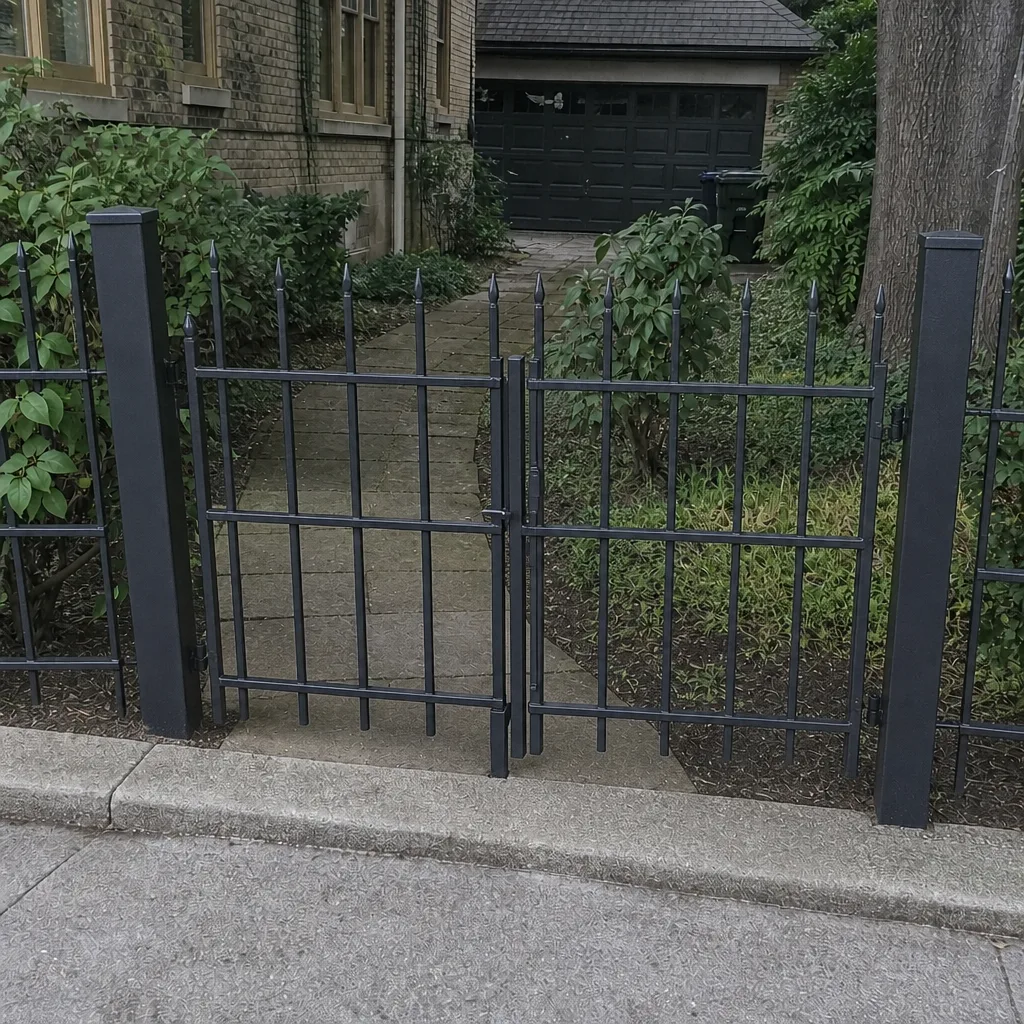
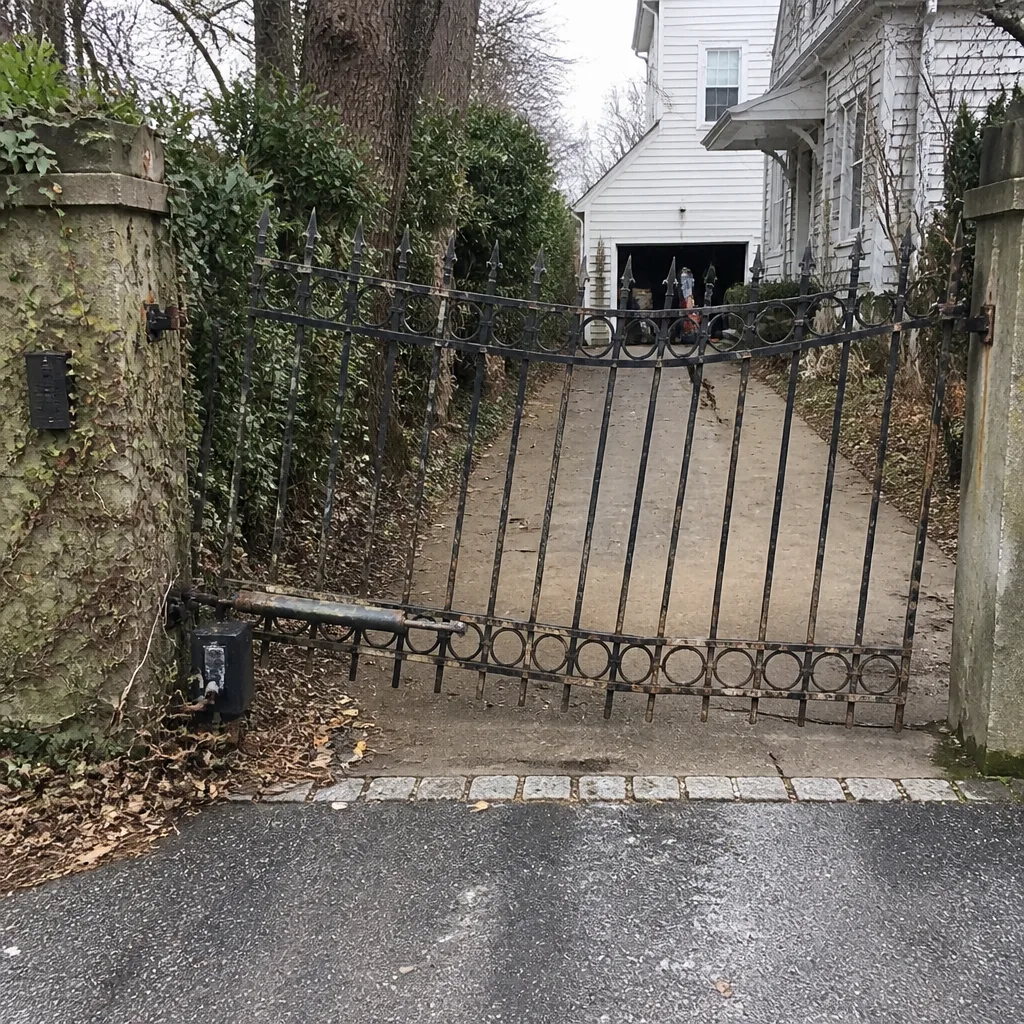
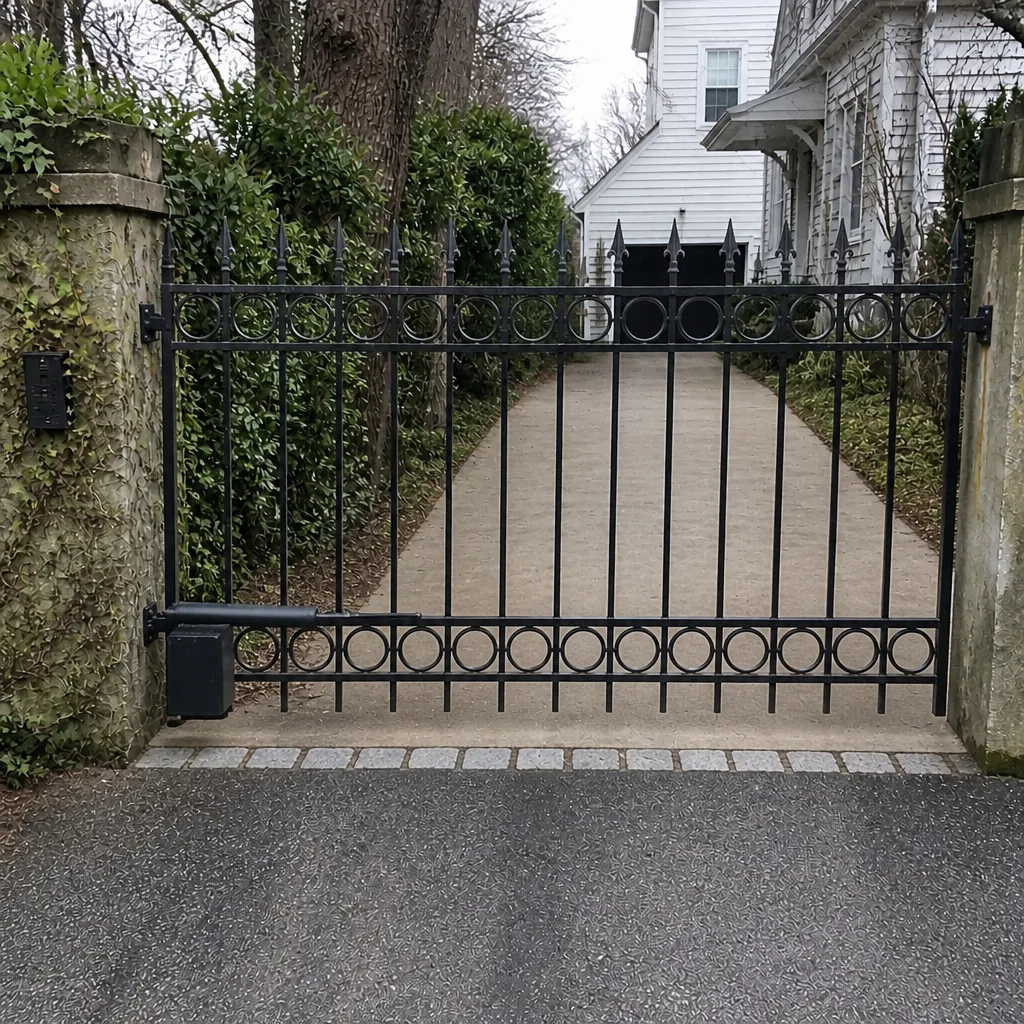
See the difference
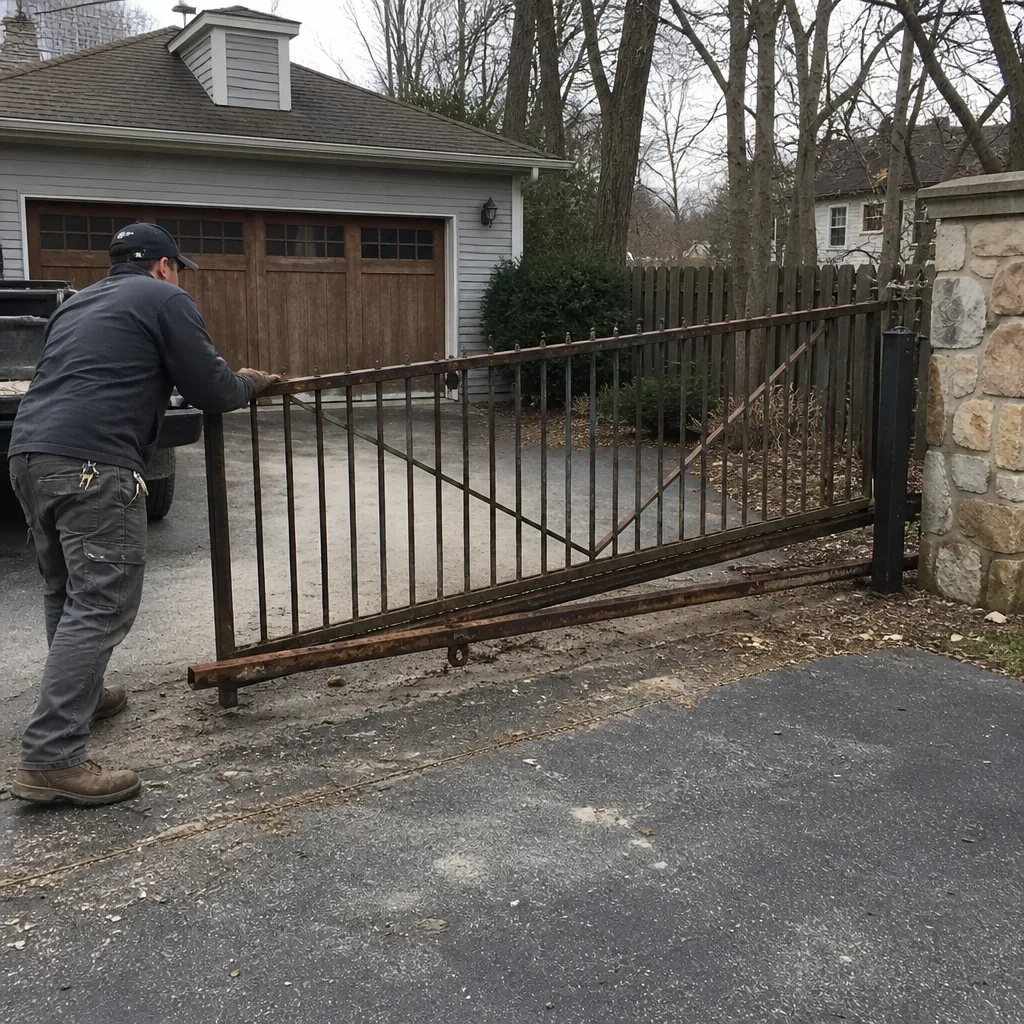 Before
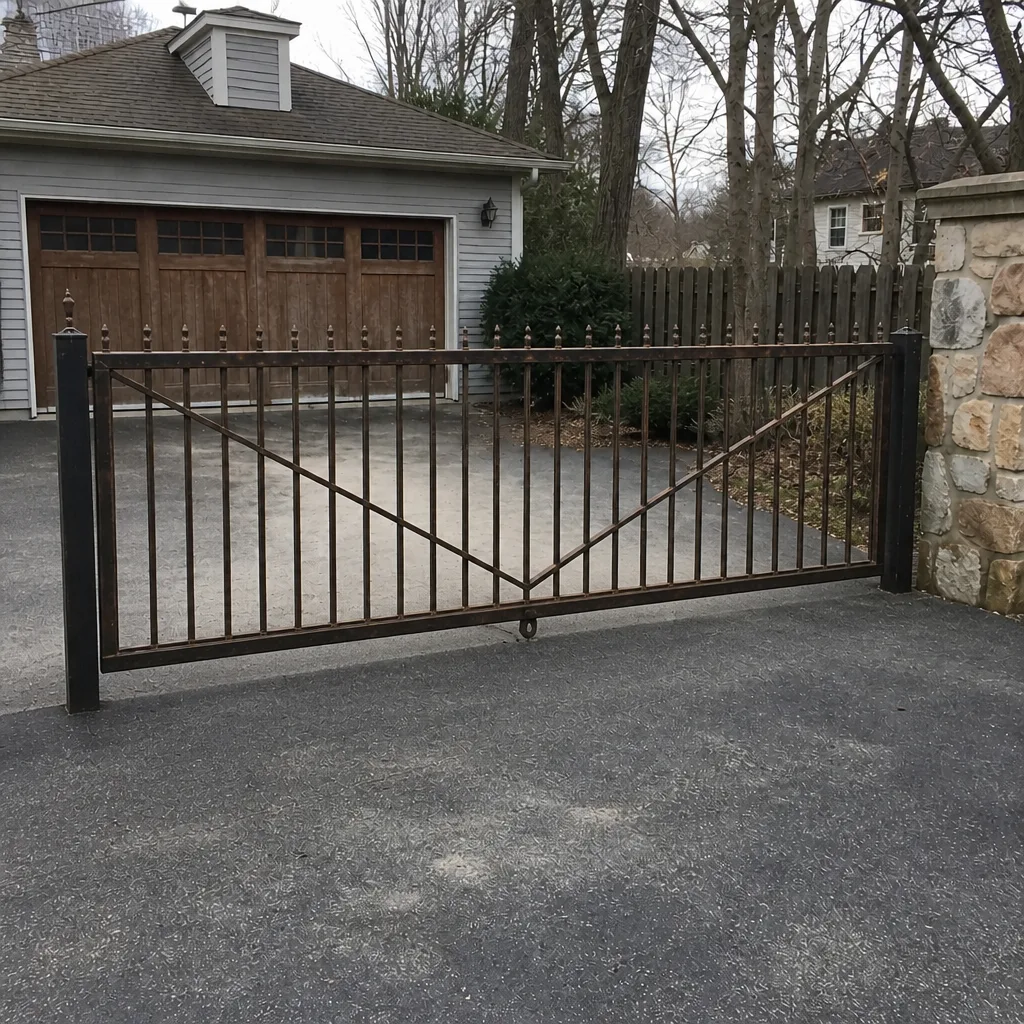 After
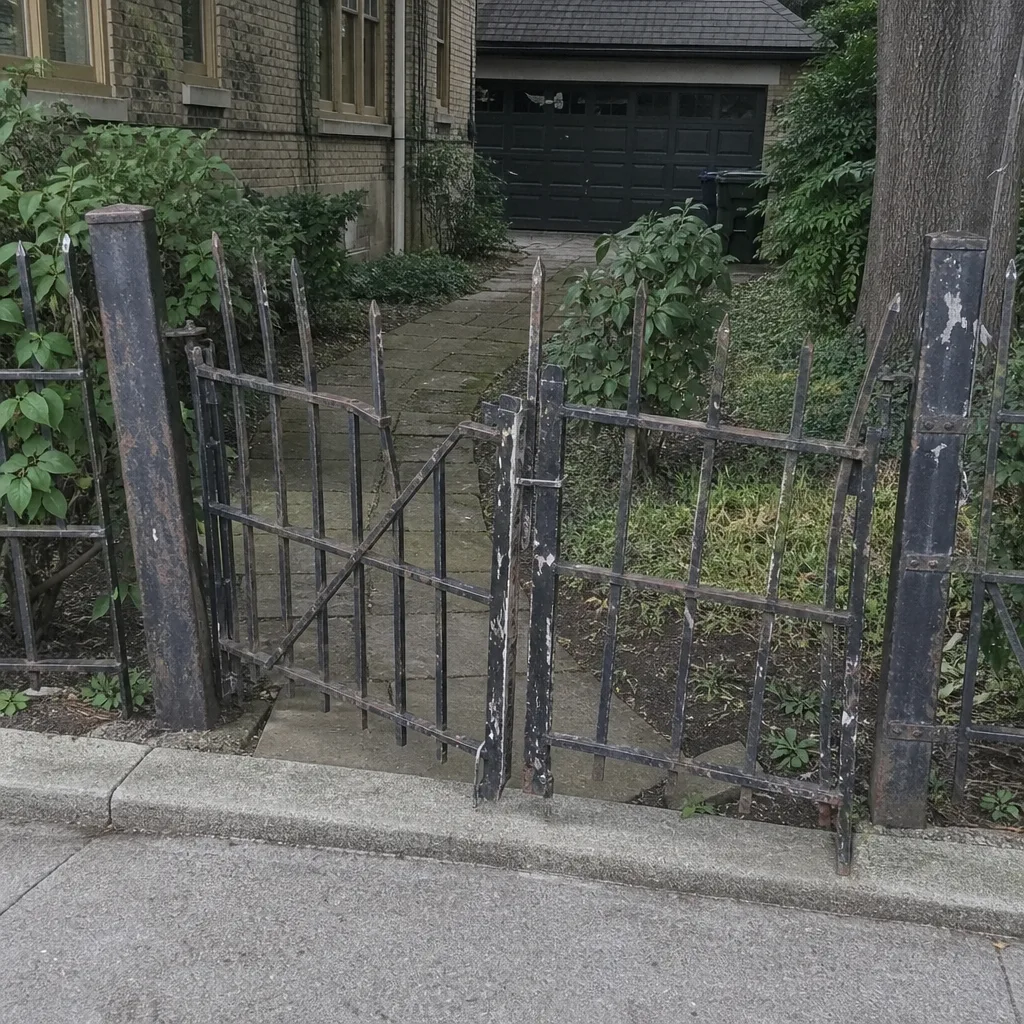 Before
 After
 Before
 After
When to Call a Professional
Some gate issues are genuinely dangerous to investigate yourself. The operator’s control box holds line voltage, and a gate that reverses unpredictably around people or vehicles is a safety hazard, not a puzzle. Call a professional if your gate reverses or stops mid-travel without an obvious obstruction, if the operator hums but the gate doesn’t move, if the safety edges or photo-eyes aren’t responding to a physical test, if a keypad or intercom has stopped accepting codes, or if the gate has come off its track or is dragging on the ground. Also call if the operator’s housing is damaged, if you smell burning from the control box, or if the gate’s motion has changed after a storm or a vehicle strike. Highland Park Gate Repair Pros offers free estimates in Highland Park. Call (833) 513-8561. We answer 24/7.
Frequently Asked Questions
Gate repair pricing depends on the fault, the operator brand, and the parts required, so there’s no single number that applies across Highland Park. The estimate is free, and the price is set per job by the written estimate. Ask for a scope that names the fault and the parts so you can compare quotes on equal terms. Call (833) 513-8561 for an exact quote, estimates are free.
Ask them to identify your operator brand and name a typical failure mode for that model. A true gate specialist answers specifically, because they work across brands like Linear, Viking, Ghost Controls, and DoorKing every day. A generalist deflects to a site visit or gives a generic answer that could apply to any gate.
Same-day gate repair is often possible when the fault is diagnosable on arrival and the parts are available. We answer 24/7 and run fast dispatch from 7am to 7pm, Sunday through Friday. A call outside dispatch hours is booked into the next opening. For the fastest result, have your operator brand and model ready when you call.
A proper written estimate should include the operator brand and model, the stated fault in plain language, the tests performed to confirm it, the specific parts to be replaced, any work ruled out, whether a permit is required, the agreed price, and a clause that additional faults stop the work until you approve a revised estimate. If any of those are missing, ask for them before you sign.
Not necessarily, but you do need to know who is qualified to do the electrical work. Illinois does not issue a single statewide gate contractor license, so ask the contractor whether the power run is handled by a licensed electrician, whether they coordinate with one, and what permits are required. Confirm this in writing before work begins.
A limit switch fault is a position-sensing problem, where the operator loses track of where the gate is in its travel and stops or reverses. A torque overload fault means the operator is detecting physical resistance and protecting itself from damage. The symptoms can look identical, but the causes and fixes are completely different, which is exactly why a diagnosis-first contractor matters in Highland Park.
The Bottom Line
Hiring a gate repair contractor in Highland Park is about confirming specialization before you compare price. Verify that the contractor works on gate operators as their primary trade, not as an add-on to fencing. Ask the technical screening questions and compare the specificity of the answers, not the numbers. Get the Illinois contractor registration and the certificate of insurance in writing. Demand a written scope of work that names the fault, the tests, the parts, and the agreed price, with a clause that stops the work if additional faults are found. A repair that’s diagnosed correctly costs less than a replacement that was never needed. That single distinction is worth more than any quote you’ll collect.
If you’re ready to talk to a specialist rather than a generalist, Highland Park Gate Repair Pros is a gate-only team. We service LiftMaster, FAAC, BFT, Linear, Viking, Ghost Controls, DoorKing, Elite, and Mighty Mule systems, and our technicians have up to 11 years of experience across residential and commercial gates. From the motor to the keypad, we handle the entire gate system. For a free estimate, call (833) 513-8561. We answer 24/7. Fast dispatch, 7am-7pm, Sunday through Friday.
Written by the team at Highland Park Gate Repair Pros.