
Last updated November 25, 2026
 Wrought iron
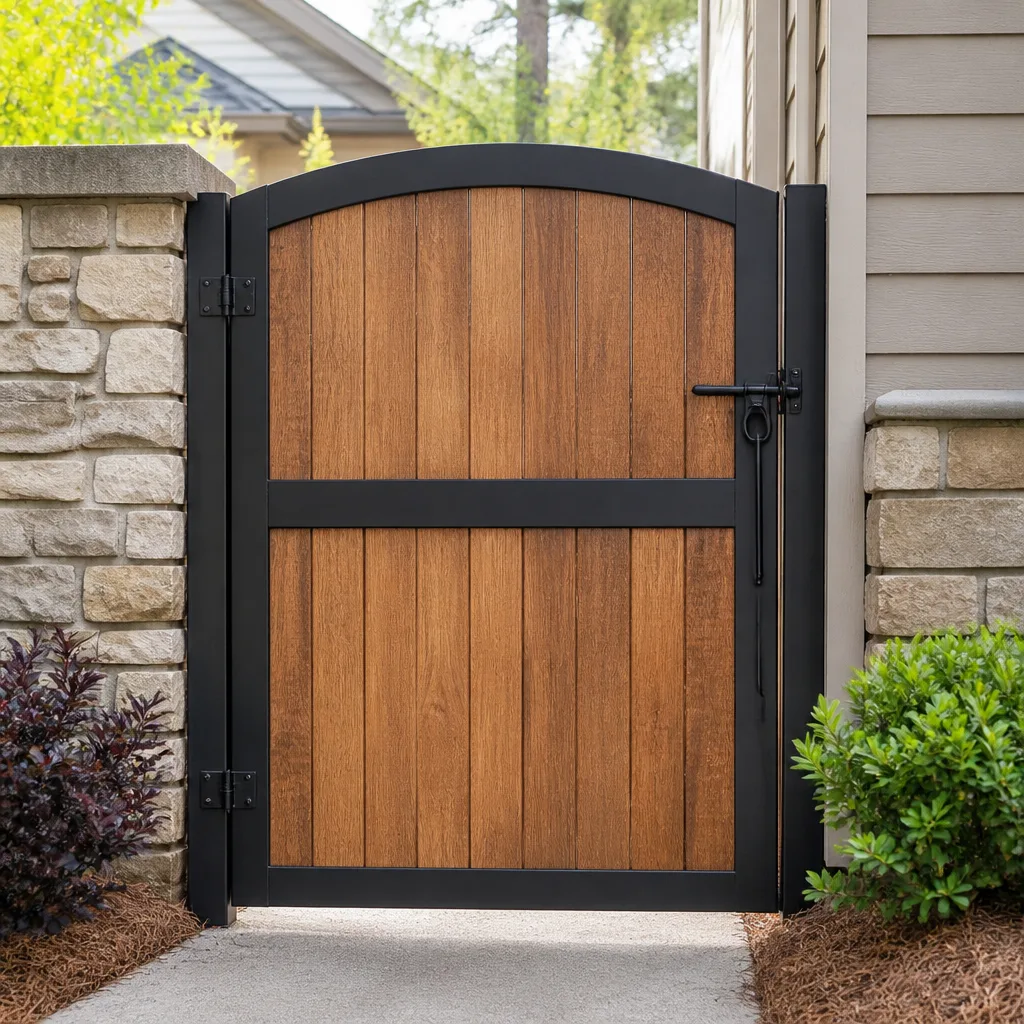 Wood & steel frame
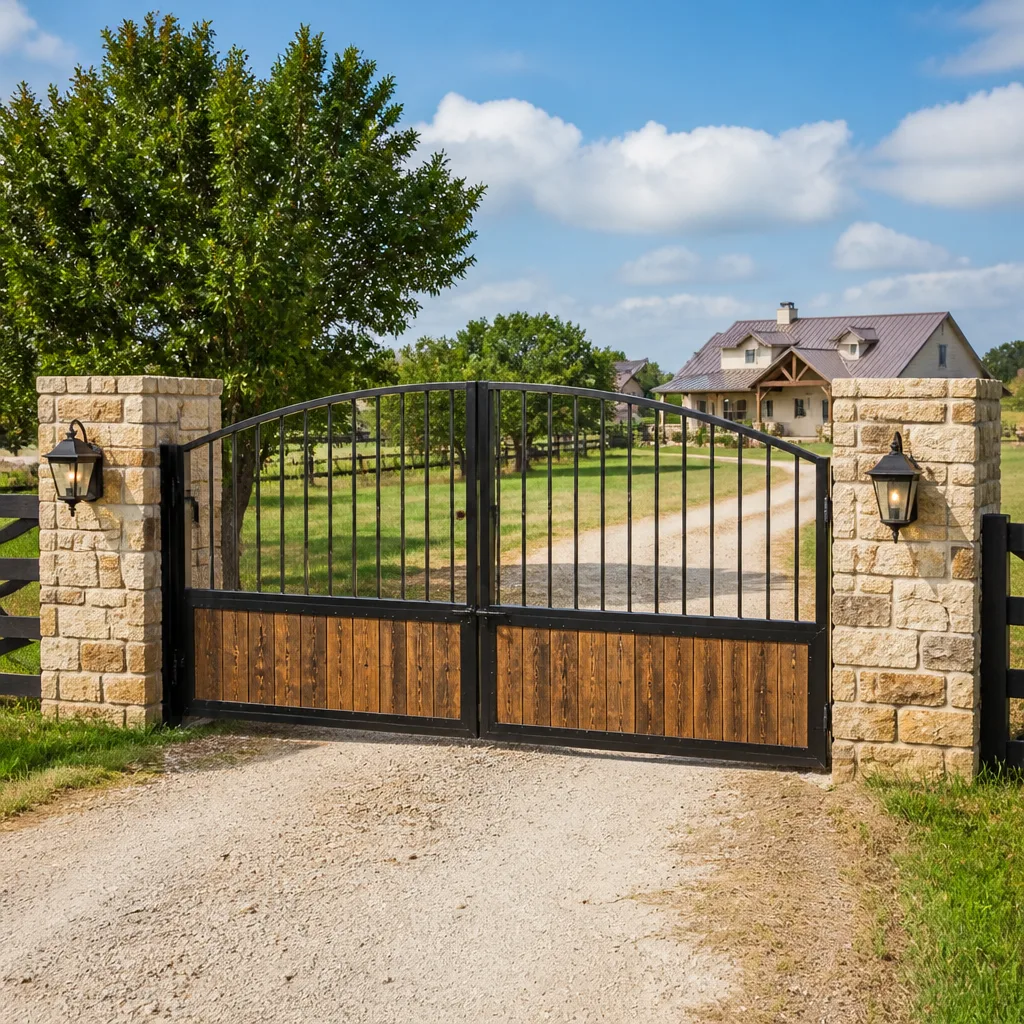 Farm & ranch
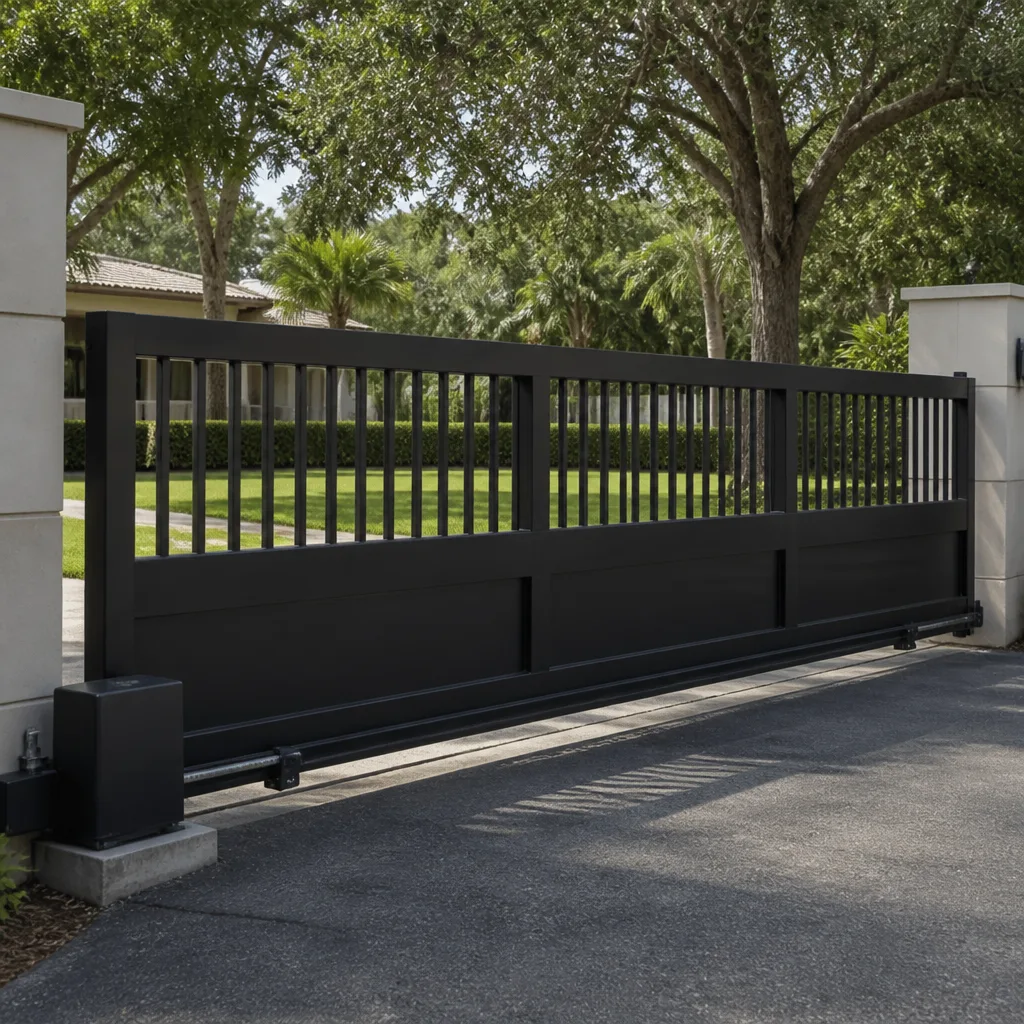 Sliding driveway gates
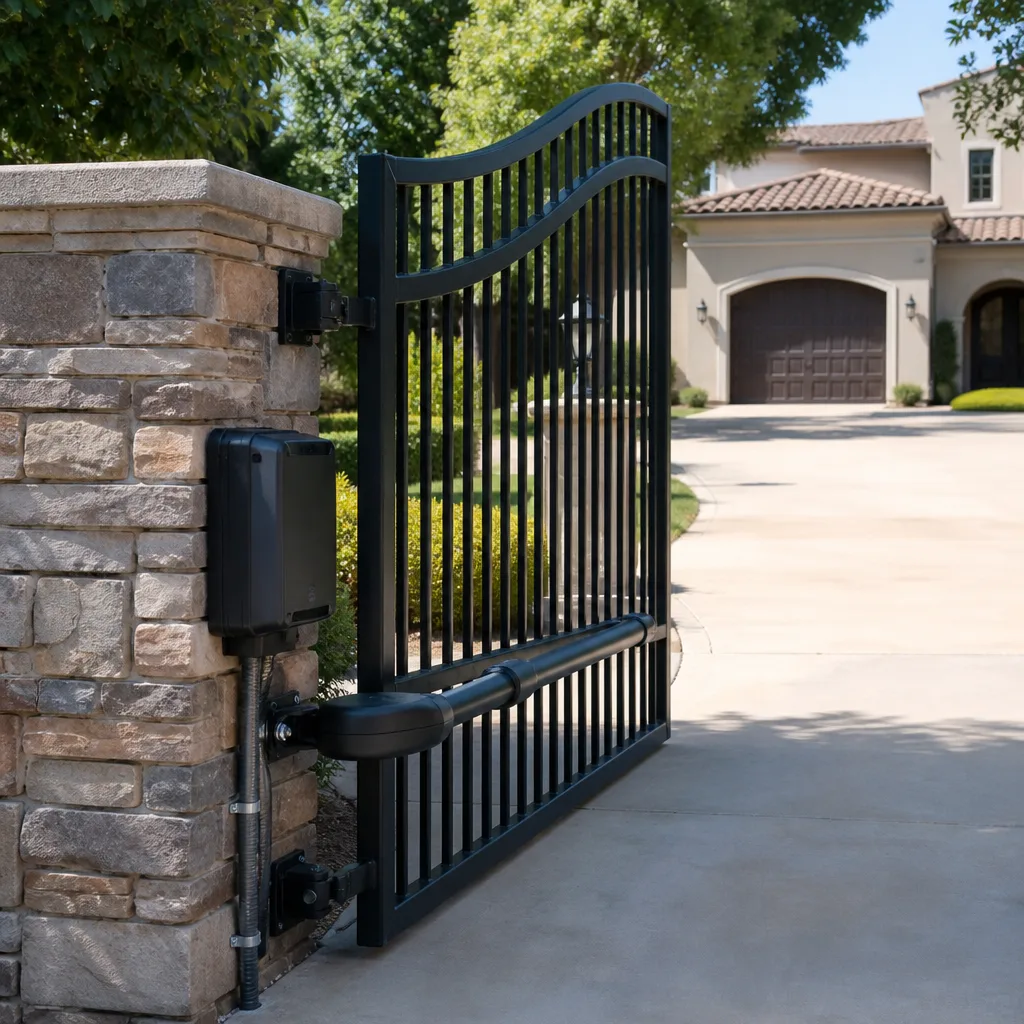 LiftMaster operators
Free on-site gate assessment - hinges, posts, and your LiftMaster or Nice gate operator checked before anything is quoted
The assessment is free and the quote is the invoice.
Get your free estimateGate Repair Maintenance Checklist for Highland Park Homeowners
The number-one item on every gate maintenance checklist, lubricate the chain, is also the most misapplied. In a Highland Park winter, the wrong lubricant turns a drive chain into grinding paste by February, and the operator works harder every cycle until something gives. Most generic checklists get written for mild climates and get copied around the internet unchanged. This one doesn’t. Here’s what we’ve learned servicing automated and manual gates in this lakeside, lake-effect climate, built around the failures that actually happen here: humidity, road salt drift, freeze-thaw cycles, and sub-zero cold snaps. You’ll get the lubrication spec, the salt-inspection protocol, a photographic baseline, a real battery load test, and the fasteners that loosen first.
Quick Answer
A gate maintenance checklist for Highland Park should prioritize cold-weather lubrication with a synthetic low-temperature grease or dry PTFE spray, monthly inspection of hinges and pivot pins for road salt corrosion, a battery backup load test with a clear pass/fail threshold, and a photo baseline of key components at each visit. Drive chains should never be coated in heavy grease or standard WD-40 in this climate. Swing gate operators need specific fastener checks that generic checklists leave out entirely.
Styles & brands we work with
- Wrought iron
- Wood & steel frame
- Farm & ranch
- Sliding driveway gates
- LiftMaster operators
Table of Contents
- Why Highland Park Climate Breaks Generic Checklists
- The Correct Lubrication Spec for Below-Freezing Winters
- Road Salt Inspection Protocol for Highland Park Properties
- The Photographic Baseline: What to Photograph and Why
- Battery Backup Load Test: Pass or Fail, Not Guesswork
- Three Fasteners That Loosen Faster Than Any Others
- Seasonal Walk-Through: A Numbered Checklist
- Brand Notes: Linear, Viking, Ghost Controls, and DoorKing
Why Highland Park Climate Breaks Generic Checklists
Highland Park sits on the Lake Michigan shore, and that geography quietly dictates how gate hardware ages. The lake moderates summer temperatures and feeds humidity into joints and control enclosures. Come winter, the same proximity means road salt gets applied aggressively on the arterials and residential streets as temperatures drop, and it drifts onto surfaces within blocks of a plowed street. Add freeze-thaw cycling across dozens of days each winter, and you get a specific failure profile that a checklist written in Southern California has no vocabulary for.
What actually fails first here, in our experience:
- Chain and drive components that hold the wrong lubricant and stiffen below roughly 10°F.
- Hinge pins and pivot points that collect salt and corrode into immobility over a season or two.
- Control enclosures where humidity finds the seam, condenses, and slowly degrades terminals.
- Concrete footings that heave with frost and throw a slide gate off level.
- Battery backups that read fine on a meter but can’t carry the gate through a cold-morning open cycle.
Highland Park’s housing stock runs from older homes near the lakefront to newer builds west of Green Bay Road, and the age of the installation matters. A 12-year-old Linear arm on a wooden swing gate ages differently than a newer Ghost Controls system on a vinyl driveway gate. The checklist below works for both, but the inspection weight shifts. If something has already failed, our gate repair service covers diagnosis across every brand we handle, so you don’t need to guess the failure mode first. The point of maintenance is to catch it before this stage.
The Correct Lubrication Spec for Below-Freezing Winters
Drive chains, hinge pins, and pivot points need a lubricant that stays fluid below 10°F and doesn’t collect grit. In Highland Park, that means a synthetic low-temperature grease for the chain if your manual specifies grease, or a dry PTFE spray for exposed chains and hinges. Both hold viscosity through a cold snap. The wrong choices are the ones every generic checklist recommends.
What NOT to use in this climate:
- Standard garage-door or chain grease at room temperature thickens to a paste around or below 10°F and loads the motor on every cycle.
- Regular WD-40 is a solvent and water displacer, not a long-term lubricant. On a chain, it strips what’s left of the good lubricant and leaves bare metal to corrode.
- Motor oil runs off the chain onto the track and driveway, collects grit, and gives no protection at cold temperatures.
- White lithium grease on swing gate hinges works fine in summer and turns tacky and stiff in a Highland Park February.
The correct application matters as much as the product:
- Wipe the chain with a dry rag first. Adding lubricant over grit just makes grinding paste.
- Apply a thin coat of synthetic low-temperature grease or PTFE spray along the full length of the chain.
- Cycle the gate two or three full open-close cycles so the lubricant works into the rollers.
- Wipe off excess. A heavy bead attracts dust and salt spray.
- Do the same for hinge pins and pivot points, using PTFE spray rather than grease where the pin is exposed.
Spring and fall are the two moments when lubricant needs refreshing in this climate. Do it before the first hard freeze, then again once winter breaks. If your chain is already stiff and the operator is straining, the lubricant has failed you. A gate motor & opener check will tell you whether the motor has been damaged by drag before you catch it.
Road Salt Inspection Protocol for Highland Park Properties
If your gate sits within roughly four blocks of a regularly plowed street, road salt drift is landing on your hardware every winter. That’s the practical line where we start seeing accelerated corrosion on Highland Park properties, and the difference between a gate a quarter-mile off any plowed route and one near a main arterial is visible within a couple of seasons.
Here’s the inspection protocol, in order of what fails first:
- Hinge pins and pivot points. Wipe each hinge at the top and bottom of the gate leaf with a clean rag. Brown or red staining on the rag means active corrosion. Movement should be smooth through the full swing arc; any binding is the early corrosion sign.
- Pivot pin caps and covers. Push a finger inside the gap between the pin and the gate frame. Grit and rust flakes collected there mean salt is winning.
- Control enclosure seams and latch. Look for white powdery residue along the bottom seam, brittle weatherstrip, or rust bloom on the latch. Salt ends up here through drift and snow contact.
- Ground-level fasteners. Bolts holding the gate post or operator pedestal collect salt and corrode from the exposed head downward.
- Track and rollers on slide gates. Grit and salt collect in the track low points. The rollers should turn freely; if any grind, they’re contaminated.
After the inspection, wash exposed metal with fresh water, dry it, and reapply PTFE spray or low-temperature grease. This is a one-time job, repeated each spring after the last salt application. It’s also a job we do during a routine visit; if you’d rather have someone with a trained eye walk the gate, we offer free estimates on any Highland Park property. We handle gate access control hardware too, and the enclosures that hold keypads and intercoms face the same salt attack as the gate itself.
The Photographic Baseline: What to Photograph and Why
Slow drift and frost heave happen at the pace of a season, not a single event. By the time you notice a gate failing to latch, the shift has been underway for months. A photographic baseline fixes that. We take the same six angles at every maintenance visit and compare them side by side.
The six photos to take every visit:
- Both hinge sides, full height, from a fixed position on the driveway. Shift over time shows in the gap between gate and post.
- Operator arm and mount for swing gates, or the track and trolley for slides. Look for the arm pulling off-level or the trolley sliding out of alignment.
- The latch or strike plate, showing gap and contact point. A widening gap is the earliest frost heave signal.
- Bottom of the gate leaf and hinge post base. Frost heave shows as a growing or shrinking gap between gate bottom and grade.
- Control enclosure interior: wiring, terminal blocks, and battery. Condensation streaks and corrosion progress over months.
- Wide shot of the whole gate from the street, showing the top rails’ vertical alignment against a house line or tree.
The value is comparison. A 1/16-inch shift between two photos taken three months apart is a warning. A 5/8-inch shift is a footing problem. Without the baseline, you’re guessing. We keep photographic records on our service visits that cover the entire gate system, which is why a visit in October catches what would otherwise be a May emergency.
Battery Backup Load Test: Pass or Fail, Not Guesswork
Checking that a backup battery “has voltage” tells you almost nothing about whether it can power the gate through an open cycle in a Highland Park cold snap. A load test does. It’s the difference between a battery that reads 12.4 volts and one that sags to 8 volts the moment the motor draws current.
The load test procedure:
- Disconnect the operator from AC power at the breaker or the designated disconnect.
- Measure and record the battery’s resting voltage with a multimeter. A healthy 12-volt AGM or gel battery should read 12.6 volts or higher when fully charged and at rest.
- Command the gate to run one full open cycle on battery alone.
- Watch the voltage during the cycle. If it drops below roughly 11.5 volts during the cycle and doesn’t recover to 12.4-plus within a few minutes once loaded off, the battery is failing.
- Run a second cycle. If the gate slows or stalls mid-cycle, that’s a hard fail regardless of what the meter said.
- Restore AC power and verify the operator resumes charging.
Pass/fail threshold, stated plainly: the battery passes if a full cold-morning open cycle completes with voltage staying above about 11.5 volts and the battery recovers quickly. It fails if voltage sags below 11.5 during the cycle, if the gate stalls, or if the battery doesn’t recover above 12.4 after a rest. Any of those three means replace. A failing battery is the single most common cause of “works in summer, dead in winter” gate faults, and no amount of lubricant fixes it.
Three Fasteners That Loosen Faster Than Any Others
Generic checklists tell you to “check fasteners.” On a swing gate operator in Highland Park, three specific fasteners loosen faster than all the others combined, and they’re almost never on a standard checklist. If you check only three bolts this season, check these.
- The operator arm attachment bolt at the gate leaf. This bolt sees the full dynamic load of stopping and reversing the gate on every cycle. Freeze-thaw heave pushes the gate off-level, which side-loads the arm and backs the bolt out over months. Once it’s loose, the arm misaligns and the motor fights the gate.
- The rear operator mount bolts at the post or pedestal. These are exposed to salt drift and ground-level snow. They corrode and work loose together, and a loose rear mount makes the whole operator unit rock. Replacing the operator arm won’t fix it. Retorque the mount.
- The hinge pin set screws on swing gate hinges. Small and easy to miss, these set screws hold the hinge pin in position. Vibration from operator cycles combined with cold contraction backs them out, and the hinge develops slop before anyone notices.
Check these three after every major cold snap and again in the spring when frost is leaving the ground. Use the manufacturer’s torque spec where the manual gives one; don’t guess with a hand-tight bolt on any of the three. For a walk-through of the entire operator, our gate motor & opener team can retorque the full mounting hardware and check alignment in a single visit.
Seasonal Walk-Through: A Numbered Checklist
This is the checklist we use on a Highland Park property when the goal is a real, four-season maintenance pass. Not everything applies to every gate; if you have a manual gate, skip the operator and battery items. If you have a slide gate, add the track and roller items.
Each visit, in order:
- Visual inspection from the driveway with the gate closed: alignment, top rails, gap at the latch.
- Hinge and pivot check: wipe, look for rust, feel for binding.
- Chain check: grit, stiffness, contamination from the old lubricant.
- Lubrication: remove grit, apply low-temperature grease or PTFE spray, wipe excess.
- Fastener check: the three listed above, plus the operator bracket bolts.
- Battery load test: two cycles on battery alone with voltage recorded.
- Photo set: six fixed angles, filed for comparison.
- Enclosure inspection: seam, latch, interior condensation and terminal corrosion.
- Safety function check: photo-eye alignment if the operator has them; reverse-on-obstacle test.
- Salt wash and protect: fresh water rinse for exposed metal, followed by a PTFE reapplication.
Timing-wise, this makes the most sense just before the first freeze, once during winter if the gate runs daily, and once in early spring when the thaw cycle starts. If you can only do one, do the fall. If you can do two, add the spring salt wash. That captures the worst of what Highland Park weather does to gate hardware.
Brand Notes: Linear, Viking, Ghost Controls, and DoorKing
Brand matters less than the failure mode, but a few differences are worth flagging for Highland Park homeowners when they build their own checklist. We work across nine major brands, and these four come up most often on residential properties in the area.
Linear
Linear swing and slide operators are common on older residential installations in Highland Park. The chain-drive units benefit most from the low-temperature lubricant rule above; the older control boards are sensitive to condensation in the enclosure and benefit from the interior photo we take at each visit. Battery backup in older Linear units frequently needs attention after five or six winters.
Viking
Viking operators show up on residential swing gates and are reliable in cold, but the hinge-side arm bolt and the rear mount bolts are the loose-fastener candidates to watch. Viking enclosures are generally sealed well against humidity; when we find moisture inside, it’s usually a degraded gasket that got caught between seasons.
Ghost Controls
Ghost Controls units are popular on newer residential installs, and their batteries tend to be among the first components to complain in a cold snap. The battery load test matters most here. Their open-loop controls respond well to the anchor-and-photograph method, since small footing shifts show up as gate misalignment within a season.
DoorKing
DoorKing is common on larger residential driveways and light commercial properties. Access control hardware in the enclosure (keypads, wireless receivers, entry systems) needs the same salt-drift wash as the gate itself. The photo baseline on DoorKing installations catches keypad corrosion and enclosure drift earlier than any electrical diagnostic will.
If you can’t identify the brand on your gate, most of the time our technicians can on arrival. We handle every brand on the checklist through the same routine; brand determines what the manual specifies, not which failure mode to look for.
Common Mistakes to Avoid
- Using standard WD-40 as a chain lubricant. It displaces water and strips grease but doesn’t protect the chain in a Highland Park winter. It leaves bare metal to oxidize within weeks.
- Coating the chain in heavy grease. Looks thorough, but heavy grease thickens below 10°F and turns into a load on the motor. Use low-temperature grease or dry PTFE instead.
- Skipping the spring salt wash. Salt keeps attacking hardware long after the road crews stop. A rinse and PTFE reapplication in early spring is the highest-value maintenance item on the calendar.
- Testing the battery with a voltmeter and calling it good. A resting 12.4 volts means nothing if the battery sags to 8 volts under a loaded cycle. Load test or don’t test.
- Assuming frost heave is a footing problem immediately. A lot of slow drift comes from a hinge settling or a mount bolt backing out. Photograph and check fasteners before you dig.
- Turning up the operator force to overcome binding. When the gate sticks, the answer is diagnose the drag, not raise the limit. Higher force masks the problem and strains every component in the drivetrain.
- Ignoring control enclosure humidity after a wet season. Condensation in Highland Park enclosures starts as a film on terminals and ends as a no-start on the coldest morning of the year. Check the interior once a season.
See the difference
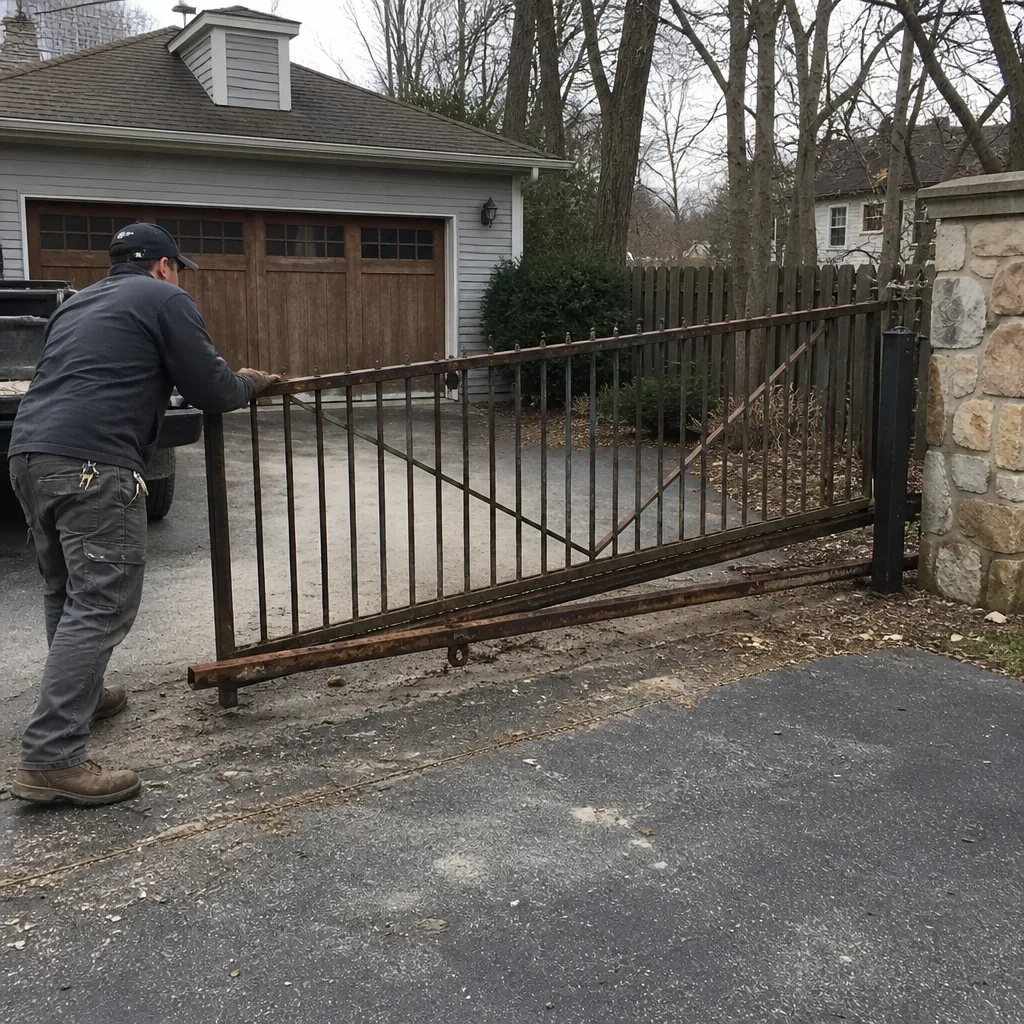 Before
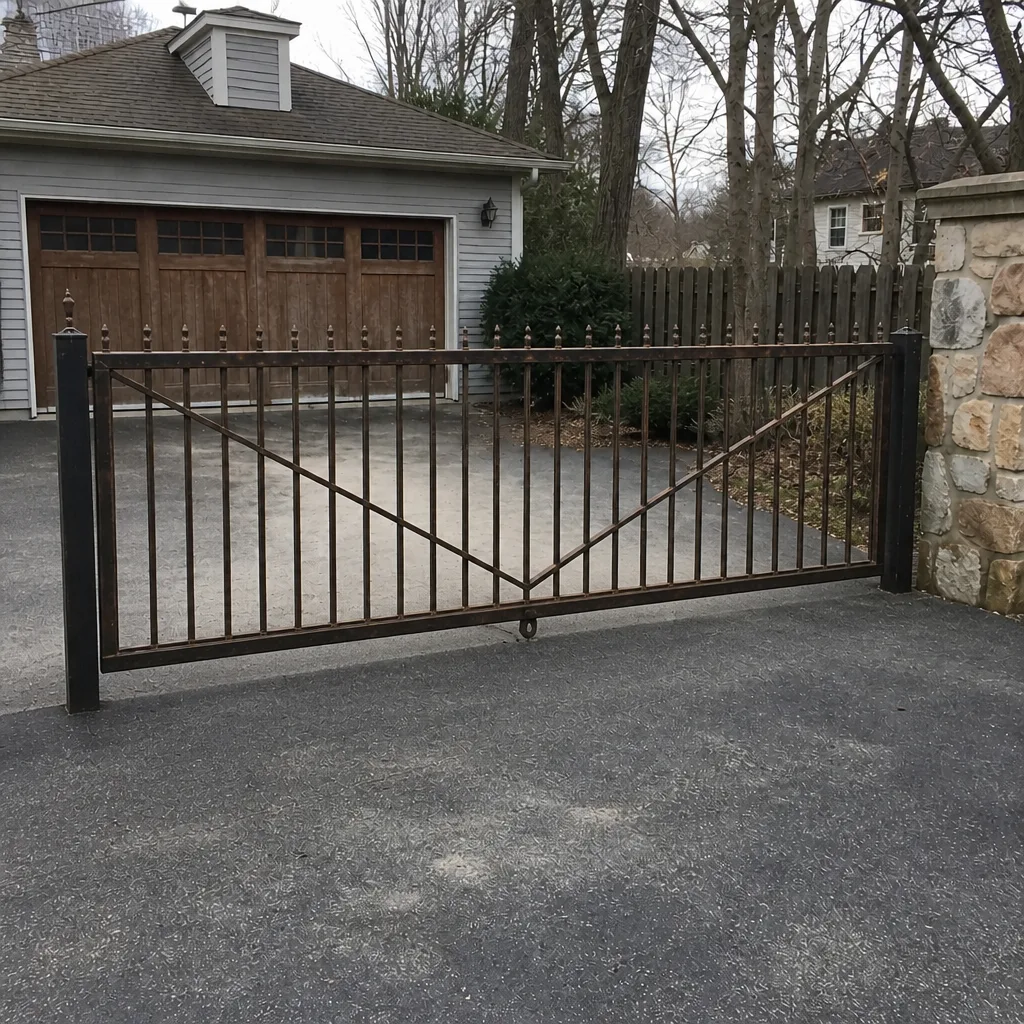 After
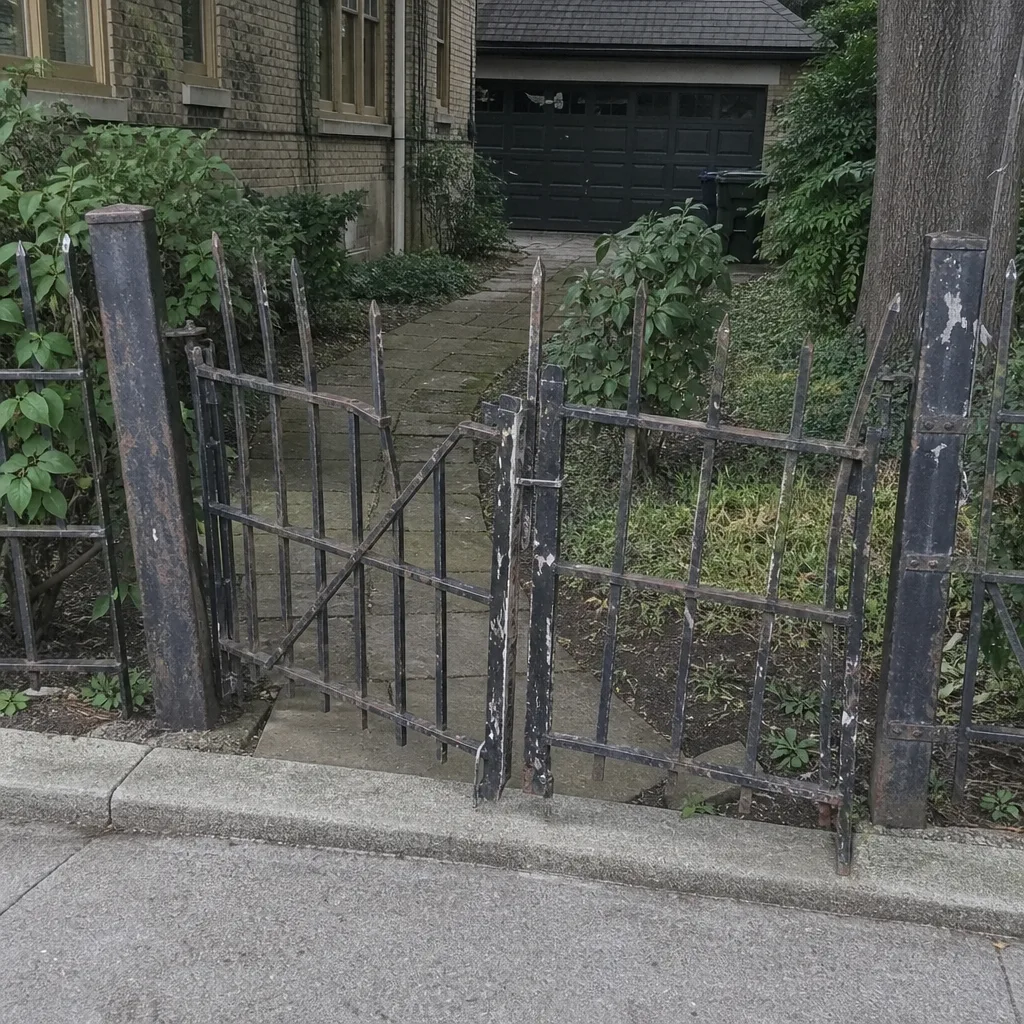 Before
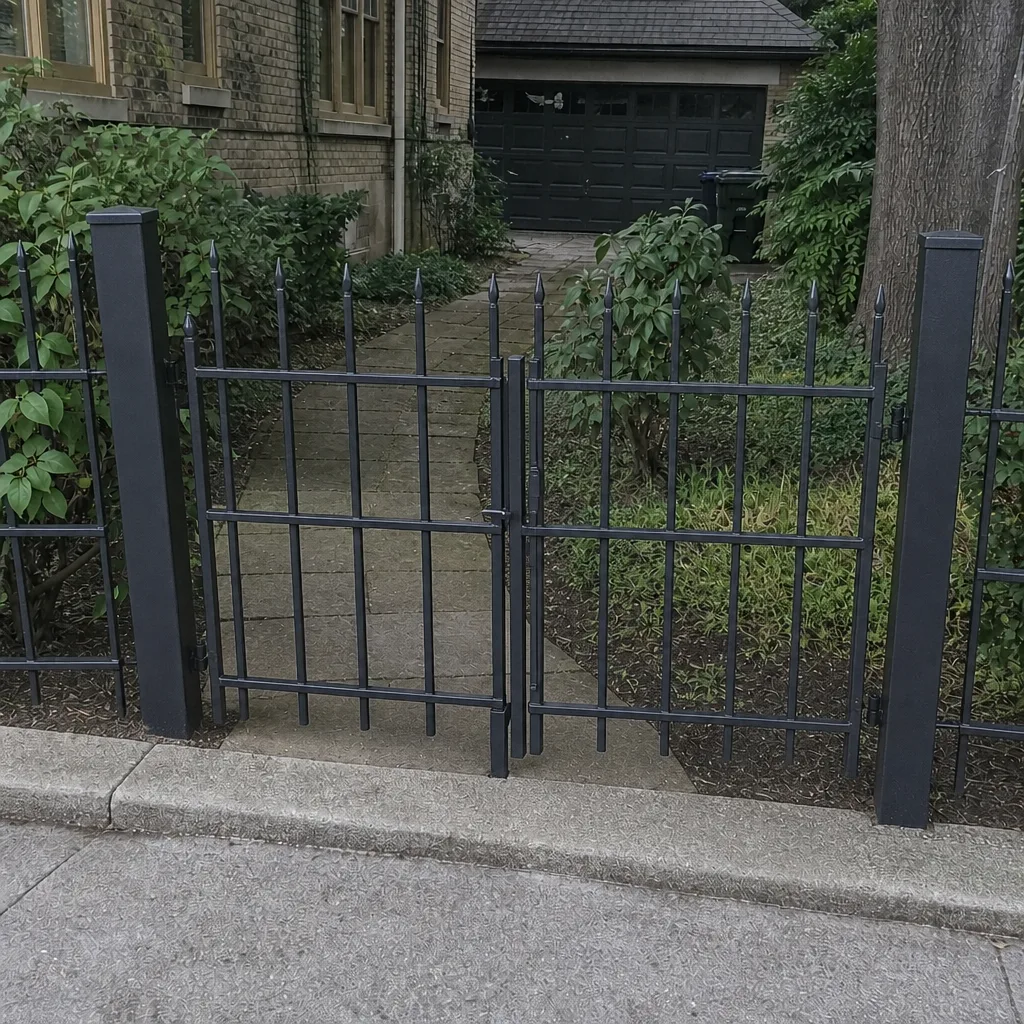 After
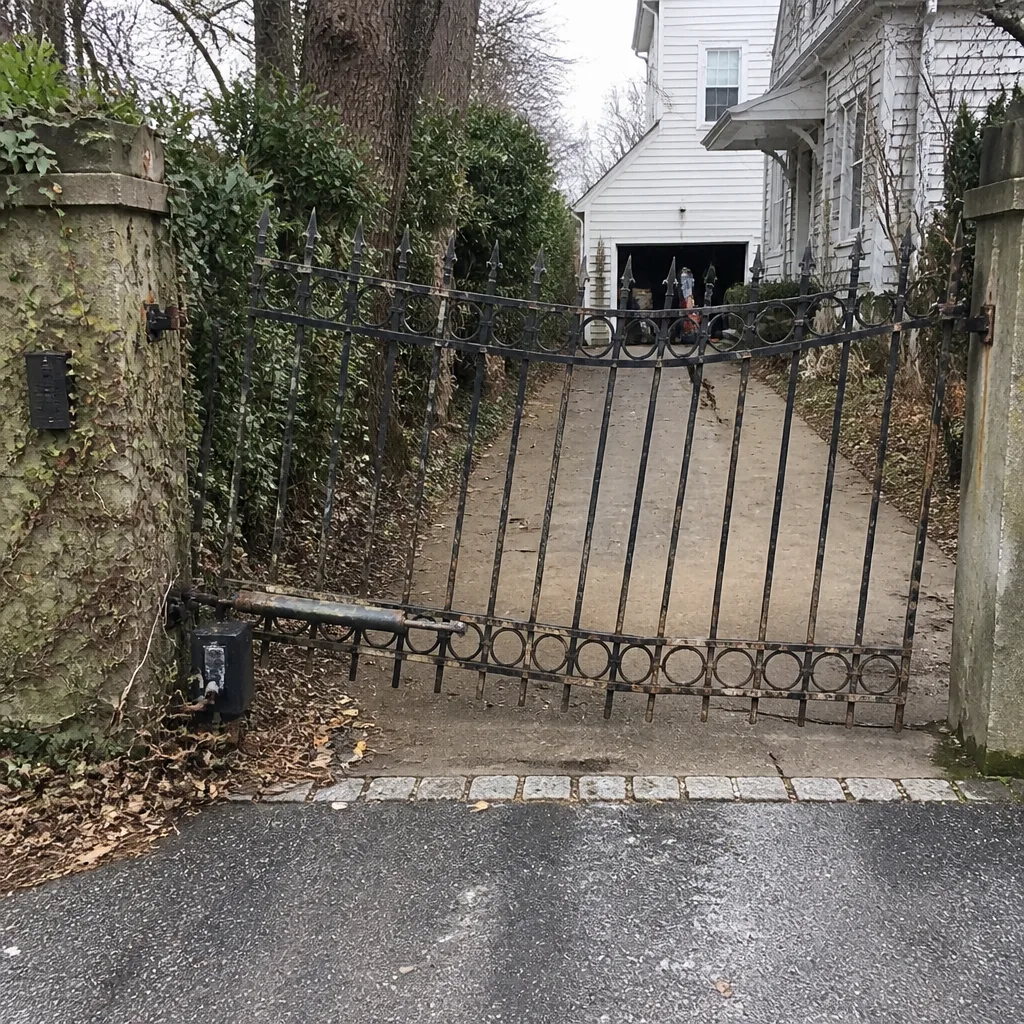 Before
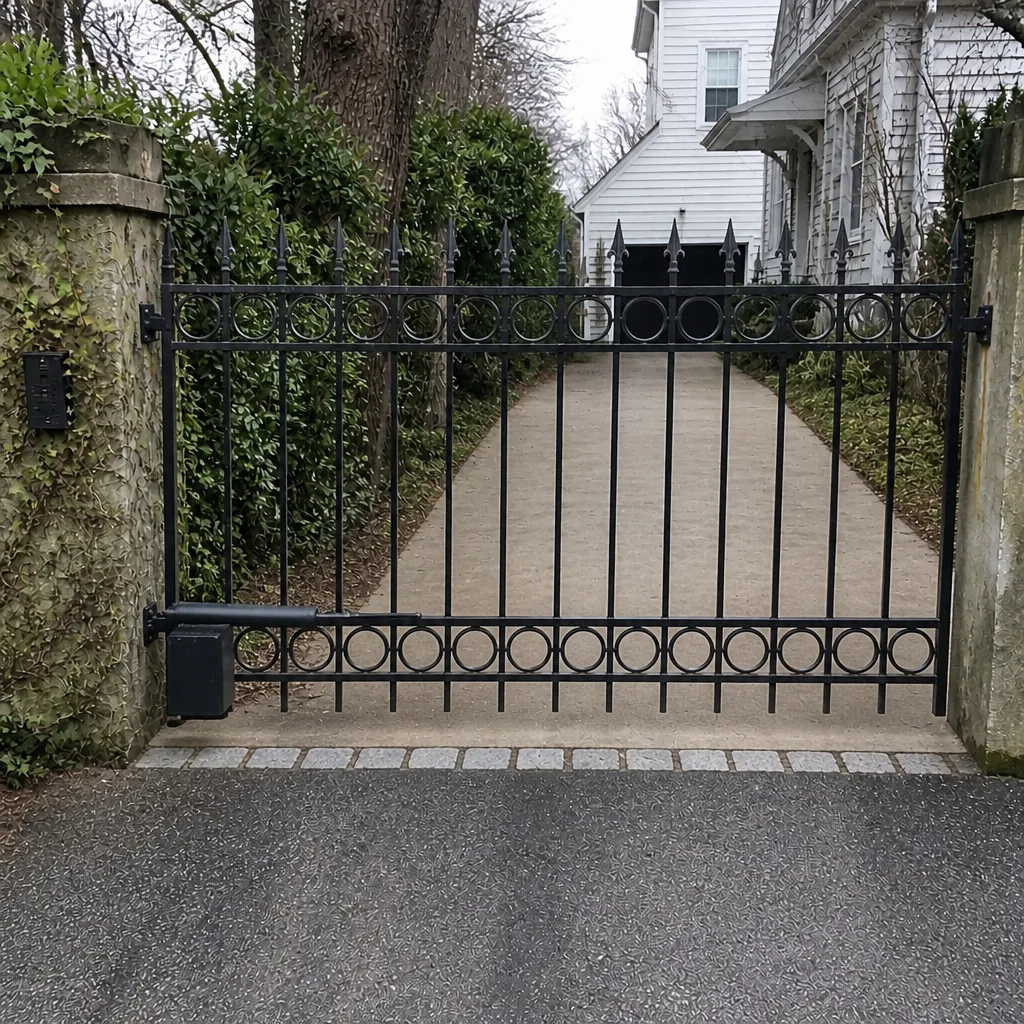 After
When to Call a Professional
If your gate reverses unpredictably, makes grinding noises on the chain, won’t complete a cycle on battery alone, or has shifted so the latch no longer contacts cleanly, that’s a call. If a photo comparison shows more than roughly half an inch of drift between visits, that’s a call. If the operator trips a breaker, that’s a call today, because electrical faults on gate wiring can be dangerous and shouldn’t be diagnosed by trial and error.
Highland Park Gate Repair Pros offers free estimates in Highland Park. Call (833) 513-8561. We answer 24/7. Fast dispatch from 7am to 7pm, Sunday through Friday. Our technicians have up to 11 years of experience working exclusively on gates, so the first visit diagnoses what’s actually failed instead of what a generic checklist assumes. Visit Highland Park Gate Repair Pros for the full service lineup.
Frequently Asked Questions
Twice a year is the practical benchmark here: once before the first hard freeze, and once in early spring after the last road salt application. A gate that runs daily benefits from a mid-winter look too. Properties within about four blocks of a plowed Highland Park street sit in a harsher corrosion zone and often merit a slightly more frequent inspection. Call (833) 513-8561 and we can set up a free estimate for a routine walk-through.
Use a synthetic low-temperature grease or a dry PTFE spray. Both hold viscosity below 10°F and don’t attract grit. Standard garage grease, motor oil, regular WD-40, and white lithium grease are the four to avoid on Highland Park chains; they thicken, strip protection, or run off in the cold. Wipe the chain clean before applying, then cycle the gate twice so the lubricant works into the rollers.
Run a load test. Disconnect AC power, record the resting voltage, and watch what happens during a full open cycle. If voltage sags below roughly 11.5 volts under load, if the gate stalls mid-cycle, or if the battery doesn’t recover above 12.4 volts after a rest, it’s failed. In our experience this is the most common “works all summer, dead in winter” gate fault in Highland Park. A failing battery is a repair, not a maintenance issue.
Three usual suspects: the wrong lubricant thickening below 10°F, road salt corrosion binding a hinge pin, and a swelling wood gate leaf from lake-effect humidity. All three are seasonal. The lubricant fix is the fastest; the salt corrosion needs the wash-and-protect routine above; a swelling wood leaf usually wants a planed edge and a hardware adjustment. Call (833) 513-8561 if the gate is struggling on multiple mornings and we’ll diagnose which of the three is causing it.
Routine items like the lubricant refresh, salt wash, and photo baseline are reasonable for a homeowner to do. Anything involving the operator’s electrical components, the battery load test on a live control board, or a gate that’s binding or stalling is best handled professionally. Gate operators combine stored energy, electrical components, and heavy moving parts, and a mistake there can cause serious injury. Call (833) 513-8561 for a free estimate on any electrical or mechanical fault.
Six fixed angles: hinge sides full height, operator arm and mount, latch and strike plate, bottom of the gate leaf with hinge post base, control enclosure interior, and a wide shot from the street. Consistency of angle matters more than the camera. A side-by-side comparison across visits turns drift and heave into visible evidence within a season. We keep these records on our visits; if you want to start your own baseline, do it before the first freeze and then once in spring.
The Bottom Line
A gate maintenance checklist that works in Highland Park has to account for lake humidity, road salt drift, and sub-zero cold. That means low-temperature lubricant rather than standard grease, a spring salt-wash routine on hinges and enclosures, a real battery load test with a pass/fail line, a photo baseline of the six key angles, and three specific fasteners that loosen faster here than a generic checklist will ever flag. Do the fall pass and the spring pass, photograph everything, and your gate will go into every Highland Park winter in better shape than a gate that only sees attention when it fails. When something does fail, that’s ours to handle.
Call (833) 513-8561 for a free estimate. We answer 24/7. Fast dispatch from 7am to 7pm, Sunday through Friday. Gate repair, motor and opener service, access control, and installation, all handled by a team whose work is exclusively gates.
Written by the team at Highland Park Gate Repair Pros.