
Last updated November 25, 2026
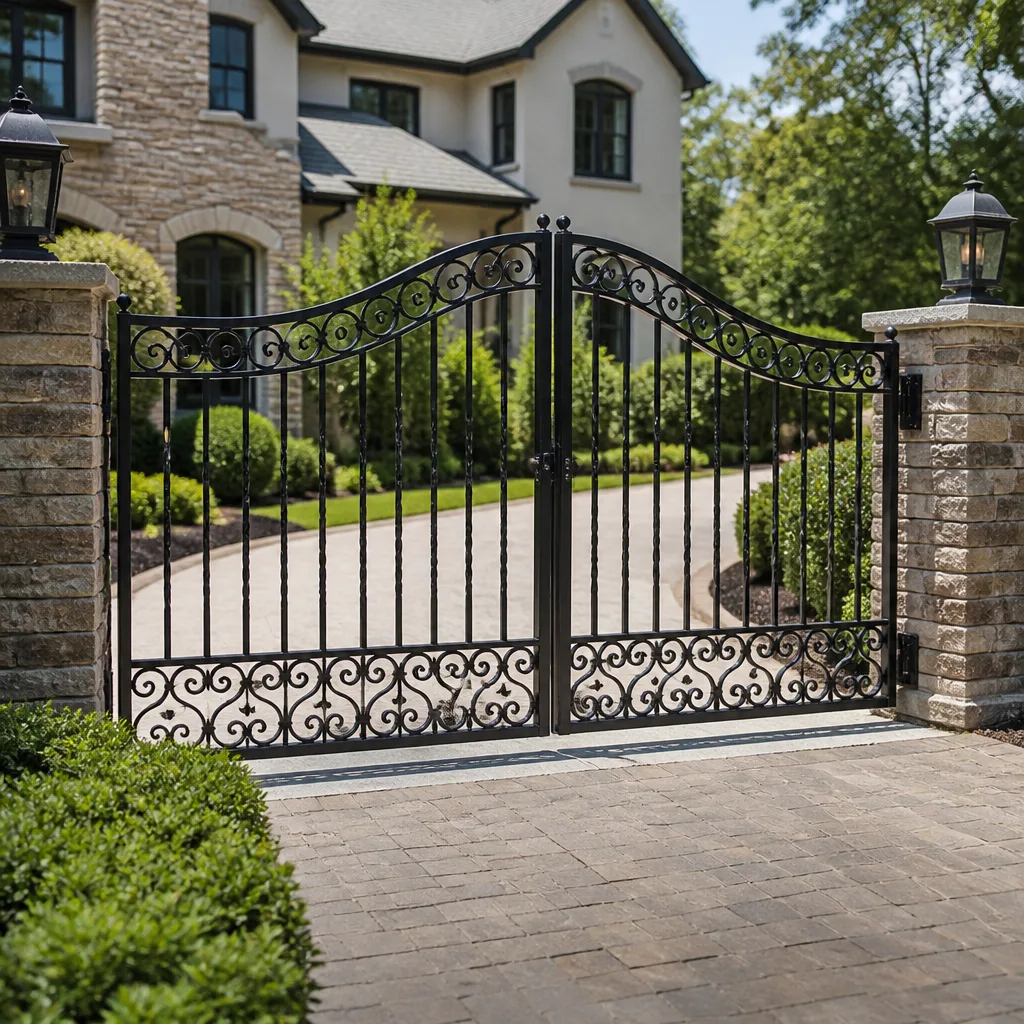 Wrought iron
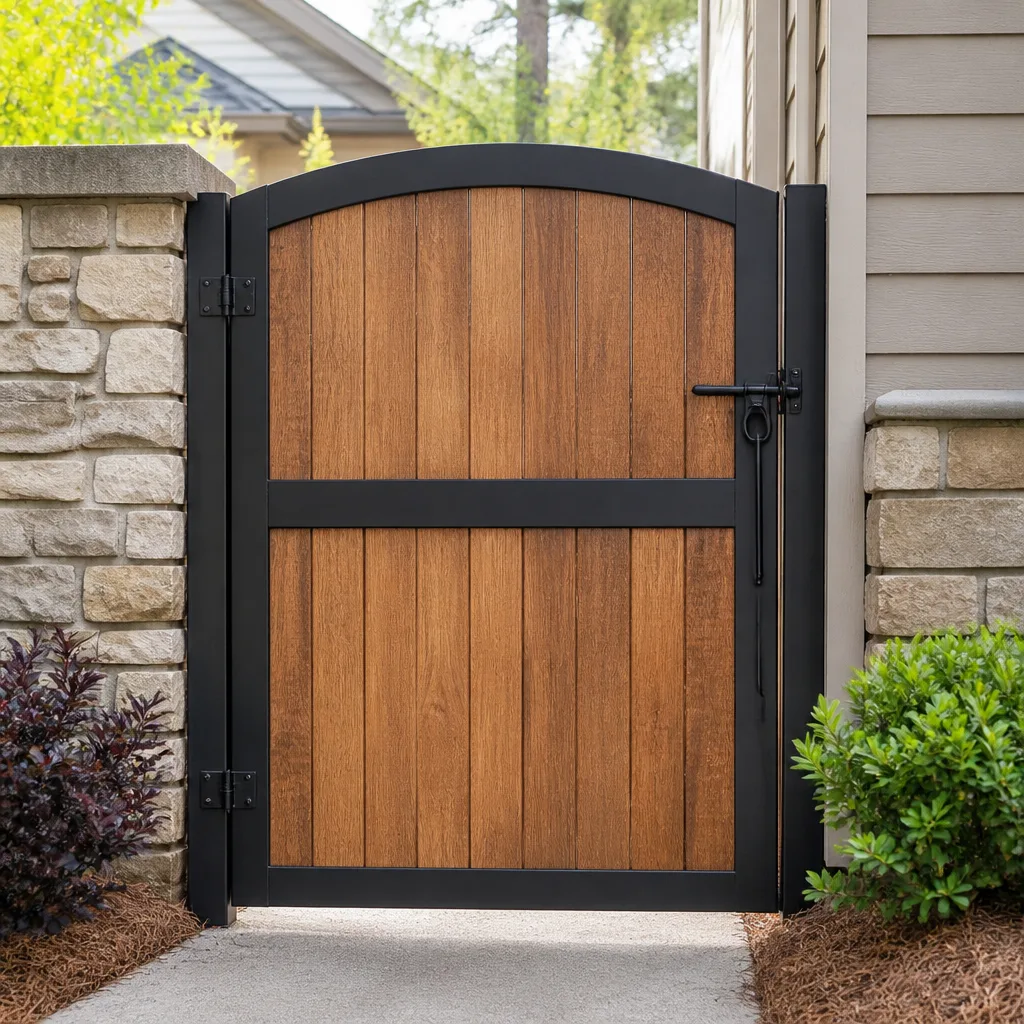 Wood & steel frame
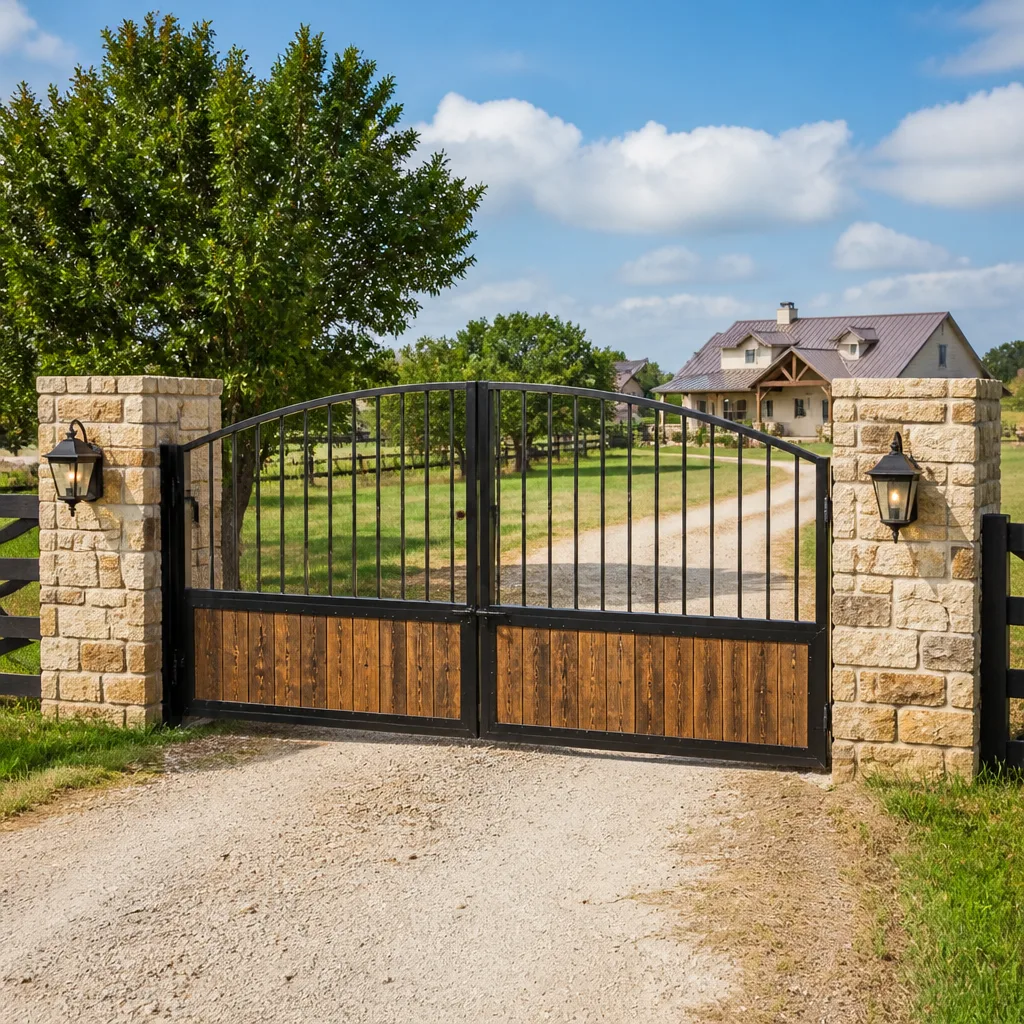 Farm & ranch
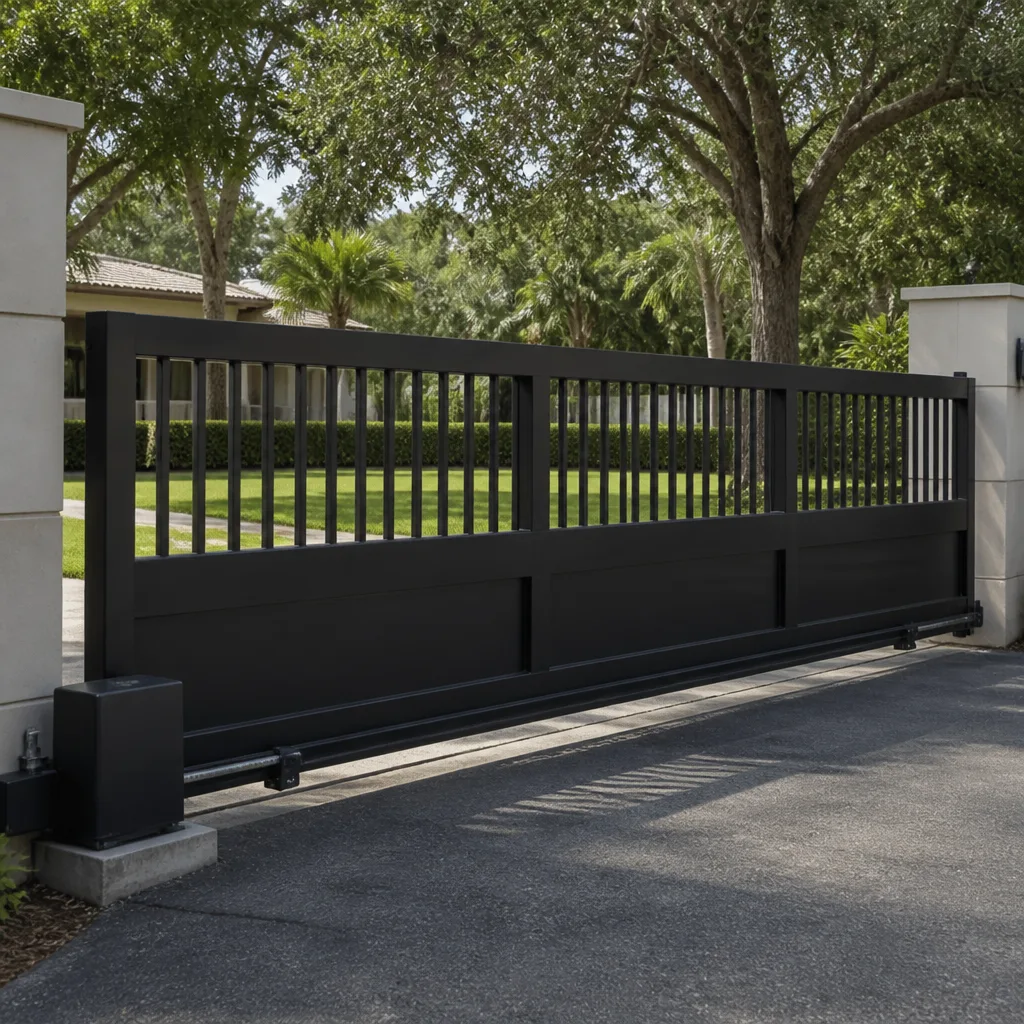 Sliding driveway gates
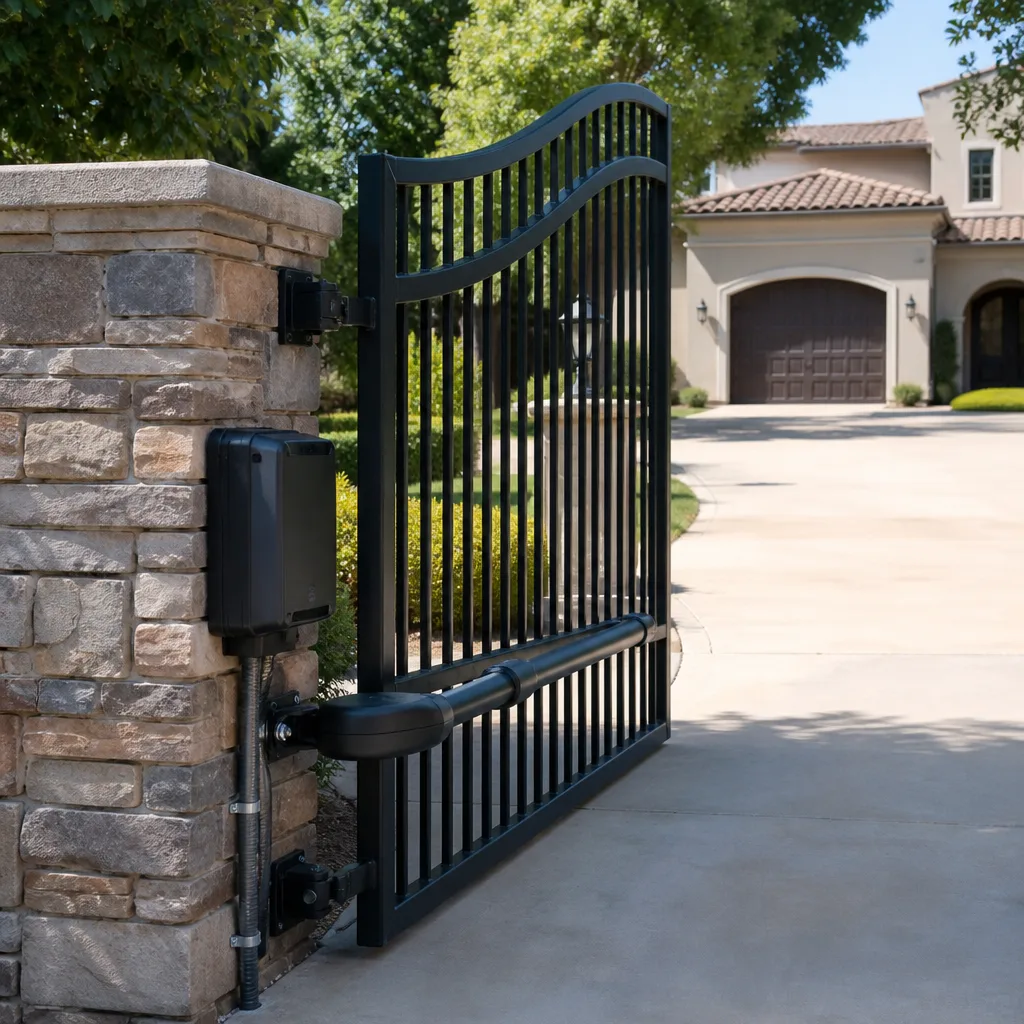 LiftMaster operators
Free on-site gate assessment - hinges, posts, and your LiftMaster or Nice gate operator checked before anything is quoted
The assessment is free and the quote is the invoice.
Get your free estimateThe Complete Guide to Gate Repair in Highland Park
Most Highland Park gate repairs fail again within a couple of years, and it’s rarely because the technician did bad work. It’s because they fixed the part that was complaining instead of the part that caused the complaint. A motor that keeps tripping its overload isn’t a motor problem if the post it’s bolted to has lifted a half inch and is torquing the drive arm on every cycle. This guide walks the whole system from the soil up: foundation, hinges and track, operator, control board, and access control. You’ll learn how to tell which layer is actually failing before anyone shows up, so the fix holds.
Quick Answer
Gate repair in Highland Park usually means diagnosing a five-layer system – posts and footings, hinges or track, the operator, the control board, and access control – because failure in one layer loads the layer above it. Freeze-thaw movement in local soil is the most common root cause we trace, not the motor itself. A proper diagnosis starts at the ground and works up, and it’s the difference between a repair that lasts and a service call you repeat.
Styles & brands we work with
- Wrought iron
- Wood & steel frame
- Farm & ranch
- Sliding driveway gates
- LiftMaster operators
Table of Contents
- Why Gates Fail in Layers, Not All at Once
- How Highland Park’s Freeze-Thaw Cycle Stresses Gate Systems
- How to Diagnose Your Gate Before Anyone Arrives
- Brand-Specific Failure Patterns You’ll See in Highland Park
- Repair or Replace? How to Know Which You’re Facing
- Electric Gate Problems: What’s Safe to Check and What Isn’t
- How to Document Your Gate System Before You Call
- Access Control in Multi-Unit and Commercial Settings
Why Gates Fail in Layers, Not All at Once
An automated gate is a chain of components that each depend on the one below it. When the bottom layer moves, every layer above it works harder until something gives – and the thing that gives is usually the most expensive part, the operator. That’s why a gate can “suddenly” stop opening when nothing about the motor actually changed. The motor was compensating for weeks, and then it couldn’t.
The stack looks like this, from the ground up:
- Post and foundation: the concrete footing and the post that carries the gate leaf and the operator arm.
- Hinge, roller, or track: the mechanical path the gate travels, whether it swings, slides, or rises.
- Operator or motor: the drive that pushes the leaf open and closed.
- Control board: the logic that reads limits, monitors obstruction, and manages the cycles.
- Access control: the keypad, intercom, remote, or smart-home integration that tells the gate to move at all.
When a footing lifts or settles, the post tilts slightly, the hinge axis changes, and the leaf drags. The operator compensates by drawing more current. The control board, reading that extra current as an obstruction, reverses or stalls. The homeowner sees a gate that “won’t open” and calls about the motor. The real fix is at the bottom of the stack. We specialize exclusively in gates, and mapping that stack before touching the operator is how we avoid replacing a motor that was never the problem. If you want the full picture of what our gate repair work involves, that page breaks it down by symptom.
How Highland Park’s Freeze-Thaw Cycle Stresses Gate Systems
Highland Park sits on ground that freezes and thaws repeatedly through the winter, and every one of those cycles nudges posts and footings. Water gets into the soil around a footing, freezes, expands, and pushes the concrete up or sideways. Then it thaws and the footing drops back, but not always to the exact same spot. Do that enough times and the post is no longer plumb. That’s post heave, and it’s the single most underdiagnosed cause of gate failure on the North Shore.
What makes this worse in Highland Park is the housing stock. Many properties have mature trees whose roots shift soil moisture seasonally, and old driveways whose grade directs runoff straight at gate footings. A footing that was fine when it was poured can be fighting water every spring.
What post movement does to the layers above it:
- Hinges: a tilted post changes the swing axis, so hinges bind and wear unevenly.
- Operator arm: a swing operator mounted to a moving post gets torqued through its travel, stressing the arm and the gearbox.
- Limits: the open and close positions drift, so the gate over-travels or stops short.
- Safety sensors: a shifting leaf trips the obstruction sensor mid-cycle, which reads as a “phantom reversal.”
This is why one common repair pattern we see in Highland Park is a motor replacement that doesn’t stick. If the footing still moves, the new operator inherits the same stress. Any honest diagnosis has to answer one question first: is the post stable? If it isn’t, correcting the footing is part of the job, not an upsell. Ask about that before you approve a motor swap.
How to Diagnose Your Gate Before Anyone Arrives
You don’t need to open a control box to figure out which layer of your gate is failing. You need to watch the gate move and note what it does. A few minutes of observation tells a technician more than a 20-minute phone description, and it tells you whether you’re looking at a foundation issue, a mechanical bind, or an operator problem.
Work through these steps in order:
- Watch one full open-and-close cycle without touching anything. Note whether it stalls, jerks, reverses, or moves smoothly but slowly.
- Put your hand on the post as the gate moves. If you can feel the post flex or shift, you have a foundation problem, not a motor problem.
- Check the gate by hand. With the operator disengaged (use the manual release), swing or slide the leaf. It should move easily and stay where you put it. A gate that binds by hand will strain any motor.
- Listen. A grinding or clicking from the operator points to gears or the drive. Silence with a dead gate points to power or the control board.
- Look at the safety sensors. A small leaf, a spider web, or a shifted photo-eye lens causes reversal that looks exactly like a motor fault.
- Note what changed and when. A gate that failed after the first hard freeze is telling you something different than one that failed quietly over a dry summer.
Steps 1 through 3 catch the majority of root causes without a wrench. For anything past the manual release and the sensors, stop and call – the operator’s internals run on line voltage, and the gate leaf itself is heavy enough to injure. Our gate motor & opener service exists for exactly the layer most people misdiagnose.
Brand-Specific Failure Patterns You’ll See in Highland Park
Every brand fails in its own way, and knowing the brand shortens diagnosis considerably. We work across nine major manufacturers – LiftMaster, FAAC, BFT, Linear, Viking, Ghost Controls, DoorKing, Elite, and Mighty Mule – and because we’re not tied to one, we can tell you what your specific unit tends to do rather than what a single vendor’s catalog recommends. Here’s what the brand mix on this stretch of the North Shore actually produces.
- Viking: a workhorse for residential swing gates, and its limits and sensitivity settings need attention after a post shifts. A Viking that reverses for no reason after winter is often reading a leaf that’s dragging, not a board fault.
- DoorKing: common on commercial and multi-unit entries, where it does heavy cycle counts. The wear pattern shows up in the control logic and access points before the motor itself quits.
- Elite: residential swing and slide operators that handle well but punish a bad hinge axis. Bind one up and the arm wears fast.
- Ghost Controls: a popular DIY-friendly choice, and the most common issue we see is an install that was close but not quite right – limits set against a leaf that wasn’t true, so it compensates from day one.
The point isn’t that one brand is better. The point is that brand-agnostic diagnosis lets us compare and recommend parts without a manufacturer’s bias, and it means we aren’t learning your system on your call. If your brand is a LiftMaster, a FAAC, or something else entirely, the diagnosis still starts at the ground. For help identifying what you have, our Highland Park Gate Repair Pros team handles the brand question on the first call.
Repair or Replace? How to Know Which You’re Facing
There’s a clean line between a repair that’s a true fix and a repair that’s buying time, and it’s rarely about the age of the motor. It’s about whether the failure will come back. Fix the actual layer and the repair holds. Patch the symptom and you’ll be back – which is why a straightforward “just replace the motor” diagnosis should make you ask about the post.
A repair is a true fix when:
- The post and footing are stable and the gate travels true by hand.
- The failure is isolated to one component – a worn hinge, a failed control board, a bound limit switch.
- The operator is sound and its settings can be reset to match the actual leaf.
Repair is buying time when:
- The footing has heaved and the post can’t be made plumb without foundation work.
- The gate leaf or frame is bent enough that no adjustment gets it true.
- You’ve already replaced the same component more than once.
- A commercial operator has run past its designed cycle life for the traffic it sees.
The reason this matters so much in Highland Park is the freeze-thaw reality: a footing that moves once tends to move again. We’d rather tell you when a repair is temporary and quote the real fix than collect a service call you’ll repeat in 18 months. For most residential gates across nine brands, the honest answer is available in a single visit.
Electric Gate Problems: What’s Safe to Check and What Isn’t
An electric gate combines a heavy moving leaf with line voltage and, often, a control board and intercom running low voltage alongside it. A gate leaf can crush, and the operator and its wiring can shock. That’s the safety duty we take seriously on every call. Some things are safe for you to check; others belong to a trained technician, full stop.
Safe for you to check:
- Whether the gate has power at all (is the breaker on, is the operator’s power switch on).
- Whether the safety sensors are clean and aligned.
- Whether the manual release works and the gate moves freely by hand.
- Whether the keypad or remote responds at all – a dead keypad can be as simple as its own power or battery.
Belongs to a professional – do not attempt:
- Opening the operator housing, the control box, or touching any wiring inside.
- Adjusting limit switches or force/sensitivity settings on an energized unit.
- Working on the operator’s power run or the intercom and access-wiring terminations.
- Standing in the path of a gate that’s behaving erratically, or reaching through it while it’s in motion.
If your gate is reversing randomly, has stopped mid-travel, or is hitting the safety edges improperly, that’s a technician job. Electric gate repair on a system tied to a keypad or intercom is exactly what our gate access control work covers, and it’s why we ask what the gate is doing before we touch anything. A quick call is the safe move.
How to Document Your Gate System Before You Call
The single biggest time-saver – for you and for whoever diagnoses your gate – is a short, accurate record of what you have. Most phone calls take 45 minutes because the caller is describing a symptom from memory and doesn’t know the brand or model. Document once and your diagnosis call drops to about 10 minutes, and the technician arrives knowing which layer to check first.
Put these together before you call:
- Brand and model of the operator. It’s usually on the housing or inside a cover the manual mentions – note the brand name if nothing else. LiftMaster, Viking, DoorKing, Elite, Ghost Controls – any of them.
- A note on the gate type: swing, slide, or rising. Single or double leaf. Approximate size and material.
- The exact symptom, in sequence: “opens fully, pauses, reverses at the halfway point” tells us far more than “it’s broken.”
- When it started and what changed: after a freeze, after a power outage, after a delivery truck bumped it. Seasonality matters here.
- Access-control setup: how the gate is triggered – remote, keypad, intercom, smart-home app – and whether that piece still works.
- A short video of one full cycle. Film from a safe distance as the gate moves. Seeing the leaf travel is often enough to point at the post versus the motor.
This record also tells any honest technician whether the problem is even in the operator. When a homeowner arrives with a clear sequential symptom and a brand, we can often tell them on the call which layer is likely responsible. That’s the whole point of a gate-only specialist: the person on the phone works gates every day, not plumbing yesterday and gates today.
Access Control in Multi-Unit and Commercial Settings
Commercial and multi-unit gates fail differently from a single driveway gate because every failure point gets more traffic and every access point has a user behind it. A DoorKing entry serving dozens of units cycles far more than a home gate, and the strain shows up first in the access layer – keypads, intercoms, call boxes, and the wiring that ties them together – before the motor gives out. When one resident can’t get in, the whole property feels it.
What commercial and multi-unit properties in Highland Park need to think about:
- Cycle count and operator match: the operator has to be rated for the traffic the property actually generates, not the traffic at installation.
- Access-control wiring: intercoms, keypads, and remote systems need to be integrated correctly, and a fault in any one branch can read as a gate failure.
- Complex configurations: multiple entry points, shared and private access, and smart-home or building-management tie-ins that have to work together.
- Documentation for managers: a per-gate record of brand, model, access method, and maintenance history, so a failure gets diagnosed without guesswork.
This is where brand-agnostic experience pays off. A property with a mix of manufacturers – a DoorKing at the main gate, an Elite at the parking entrance – needs someone who can service both without recommending a wholesale swap to one ecosystem. We handle the entire system, from the motor to the keypad, including the intercom and access-control programming that ties it into the building. Property managers can call and describe the whole site in one conversation instead of hunting for a vendor per gate.
Common Mistakes to Avoid
- Replacing the motor first. In Highland Park’s freeze-thaw ground, the post is the prime suspect, and a new motor bolted to a moving footer inherits the same torque. Check the bottom layer before the top.
- Ignoring a post that “looks fine.” A quarter inch of post tilt is invisible to the eye but enough to bind a full-length gate leaf. Put a hand on the post during a cycle and feel for flex.
- Adjusting limits to fix over-travel. If you’re resetting the limits every season, the gate is telling you the footing or the hinge axis is moving. Chasing it with settings won’t stop it.
- Choosing a technician from another trade. A generalist who does gates on the side learns your system on your call. A gate-only specialist diagnoses the brand you have on the first visit.
- Calling without the brand or a video. A 45-minute phone call usually becomes a 10-minute one when you have the model, the symptom in sequence, and footage of one cycle. Document before you dial.
- Treating a phantom reversal as a motor fault. A misaligned or dirty safety sensor reverses a gate to look exactly like a failing operator. Clean and check the sensors before assuming the worst.
- Assuming the fix will hold without correcting the cause. Any repair that doesn’t address the layer that caused the failure is buying time, not fixing the gate. Ask whether the underlying cause has been corrected.
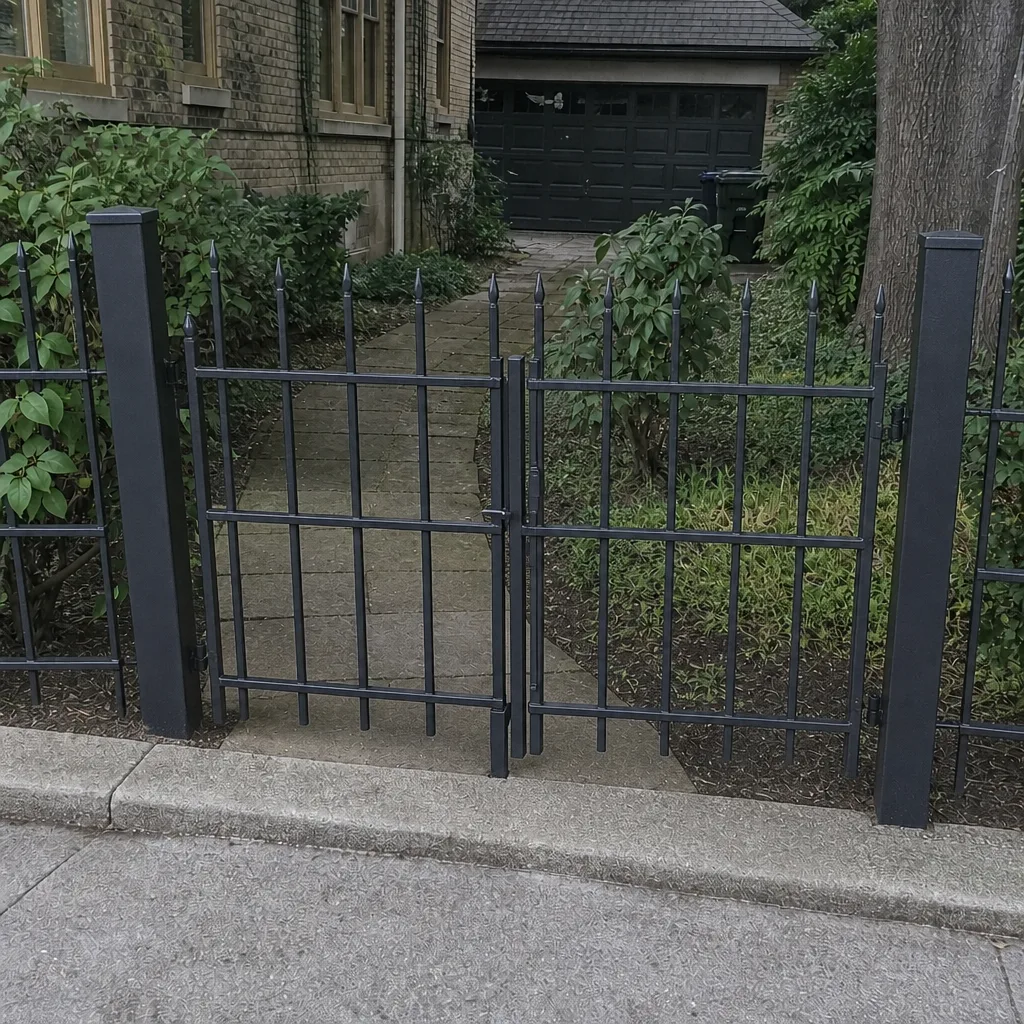
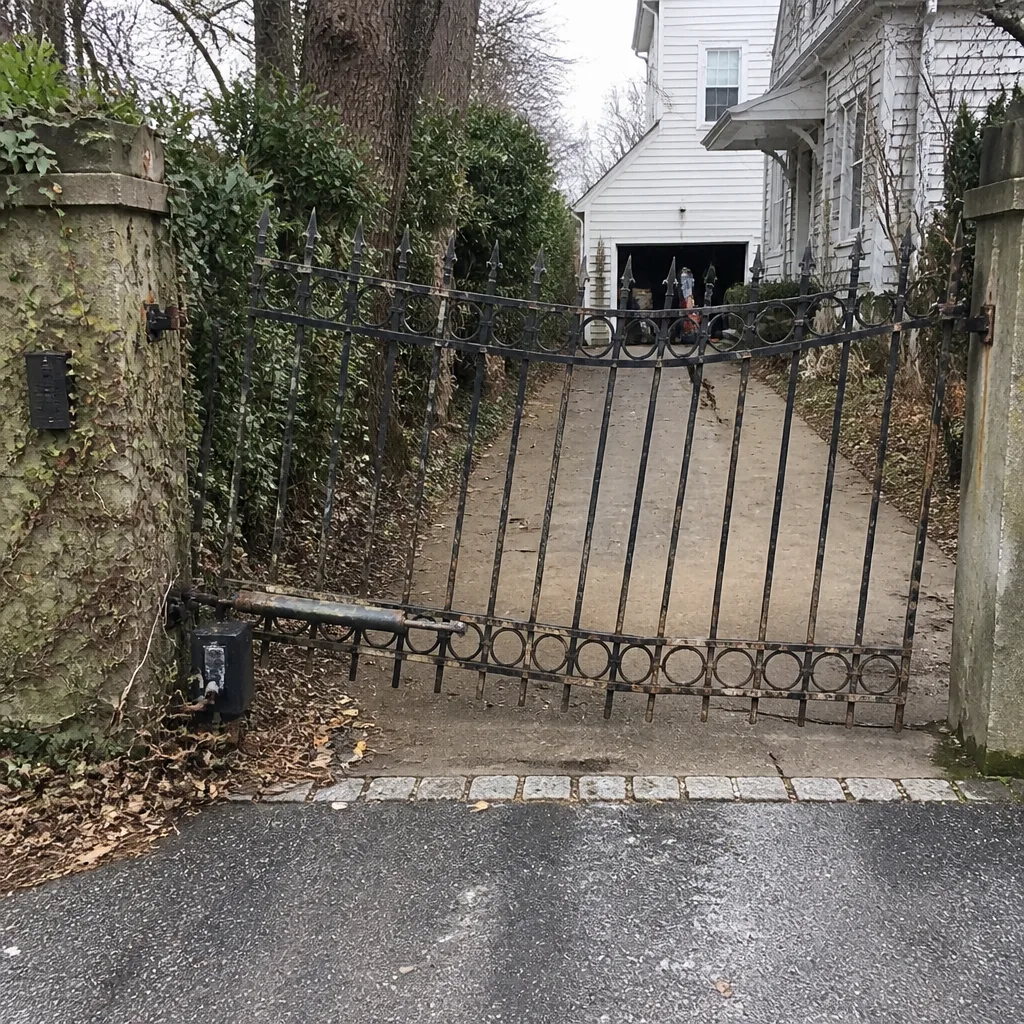
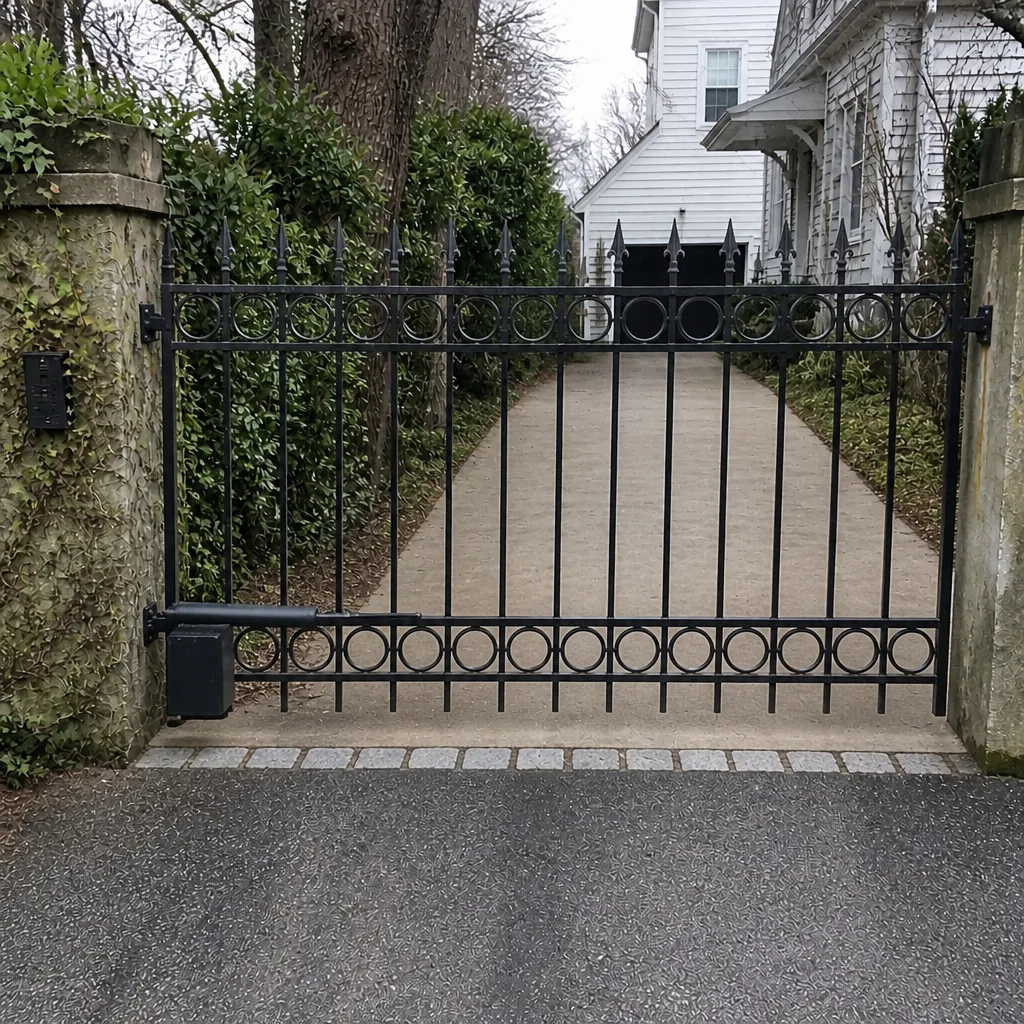
See the difference
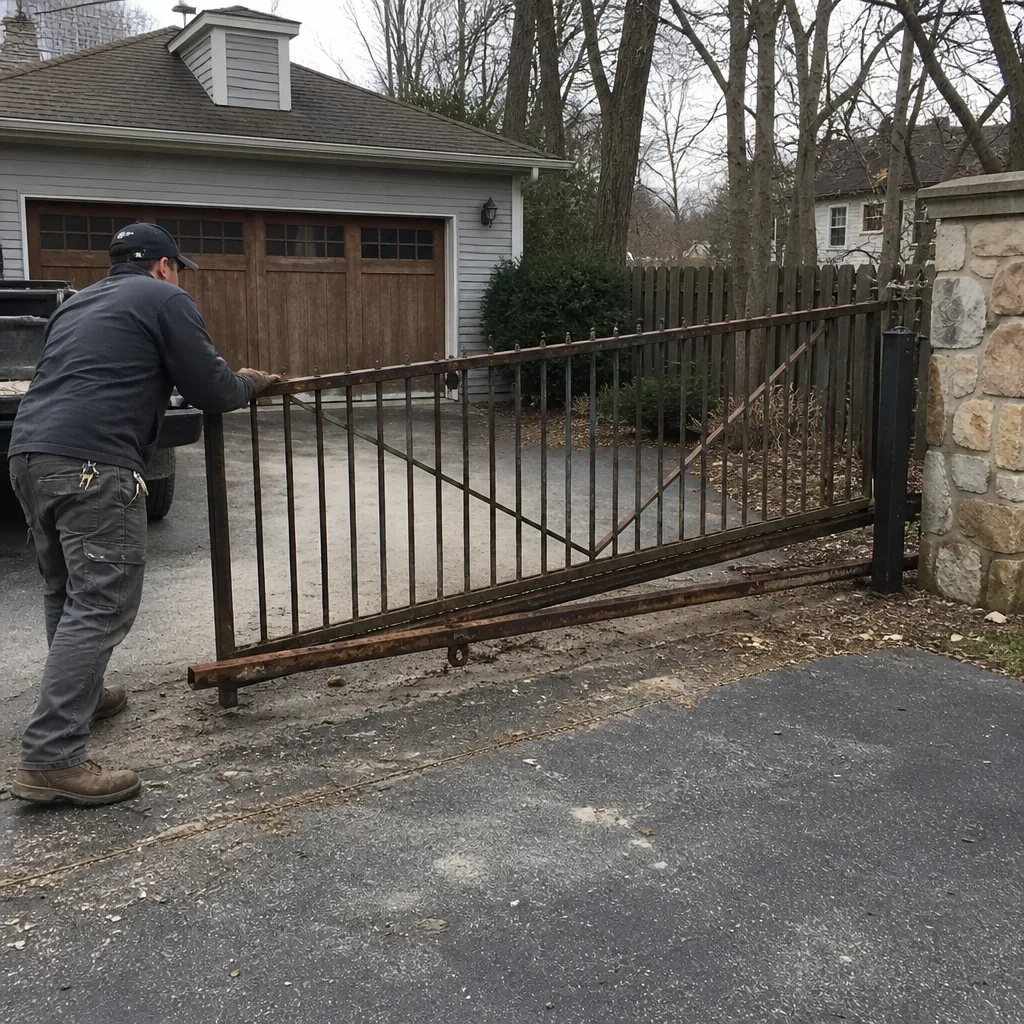 Before
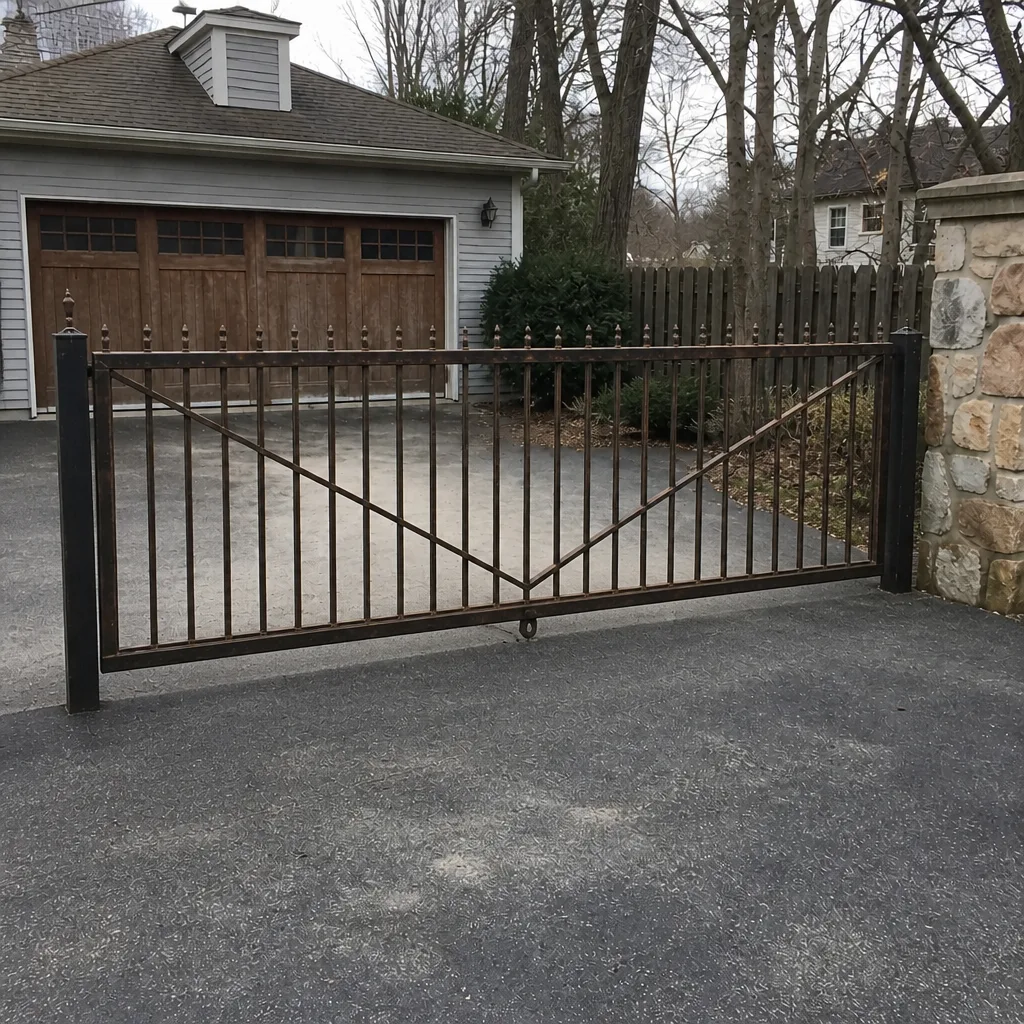 After
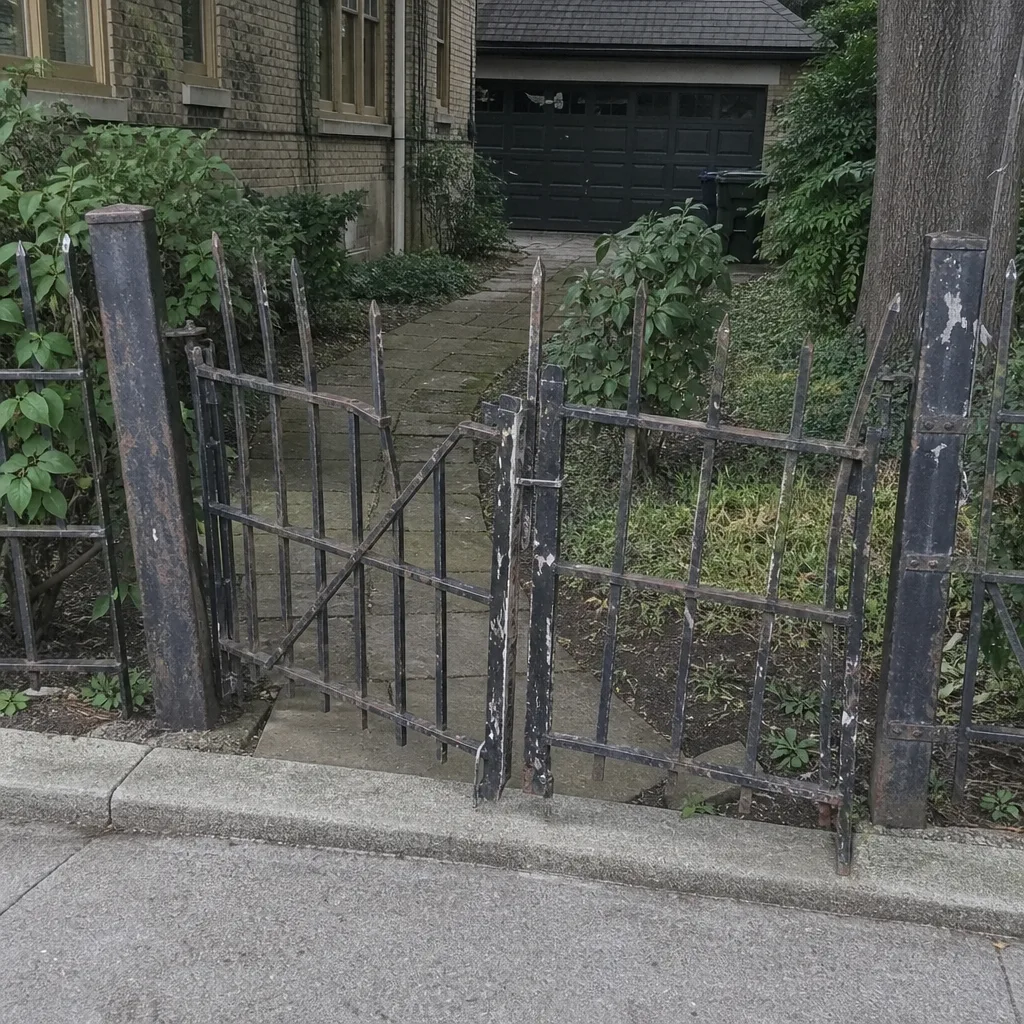 Before
 After
 Before
 After
When to Call a Professional
Call a professional the moment the problem crosses from cosmetic to the safely-checkable-and-done territory. That includes any gate that has stalled mid-travel, reverses without an obstruction, makes a grinding or clicking noise from the operator, or trips a breaker. It includes a post you can feel shift, a gate you can’t move by hand after releasing the operator, and any access-control fault that leaves people locked out. Anything involving the operator’s wiring, limit settings, or safety-edge adjustment is a call, not a project. Highland Park Gate Repair Pros offers free estimates in Highland Park – call (833) 513-8561. We answer 24/7. Fast dispatch from 7am to 7pm. The written estimate sets the price, and it’s quoted and agreed before any work starts.
Frequently Asked Questions
Gate repair is priced per job on a free written estimate, not by a flat rate, because the fix depends on which layer failed. A sensor or limit adjustment on a sound system is a very different job from correcting a heaved footing that’s been torquing an operator arm. The written estimate you get sets the final price, and it’s quoted and agreed before any work starts. Call (833) 513-8561 – estimates are free.
We dispatch Sunday through Friday, 7am to 7pm, and same-day service is often possible when you call early. We answer 24/7, so call and we’ll book you into the next opening for fast dispatch. The written estimate sets the price before any work begins. Call (833) 513-8561 for an exact quote – estimates are free.
Usually not. A gate that reverses with no obstruction is most often reading a dragging leaf or a misaligned safety sensor, which the control board interprets as an obstruction. A post that’s shifted in Highland Park’s freeze-thaw ground is a common root cause, especially if the reversal started after winter. Call (833) 513-8561 – we diagnose the brand you have, not the one we prefer to sell.
We work across nine major brands: LiftMaster, FAAC, BFT, Linear, Viking, Ghost Controls, DoorKing, Elite, and Mighty Mule. That range means we can compare, recommend, and source parts without a manufacturer bias. If your brand isn’t obvious, call (833) 513-8561 and we can help identify it – estimates are free.
Installation is measured, ordered, and priced per job on a free written estimate, so the number depends on gate type, operator, and access-control setup. That’s not same-day work – it’s planned around what the property actually needs, whether it’s a residential swing gate or a commercial entry. Call (833) 513-8561 to schedule a measuring and a written price.
Yes, we handle the full electric side – the operator, the power and low-voltage connections, the safety edges, and the access control that ties the gate into keypads, intercoms, and smart-home systems. That’s a technician job; don’t open the operator housing or adjust settings on a live unit yourself. Call (833) 513-8561 for an exact quote – estimates are free.
The Bottom Line
Gate repair in Highland Park is a diagnosis problem more than a parts problem, and the diagnosis starts at the ground. Freeze-thaw movement from a heaved footing loads every layer above it – hinges, operator, control board, access control – until the top layer fails and takes the blame. Fix the layer that caused the failure and the repair holds; patch the symptom and you’ll be back. Know your brand, document the symptom before you call, check the safe things yourself, and leave the live wiring and heavy leaf to a gate-only specialist. That sequence is what separates a true fix from buying time.
Call (833) 513-8561 for a free estimate. We answer 24/7, with fast dispatch from 7am to 7pm, Sunday through Friday. The written estimate sets the price, and nothing starts until you agree to it.
Written by the team at Highland Park Gate Repair Pros.